Short answer: at a steady 225–250°F smoker temperature, plan on roughly 30–40 minutes per pound — about 5–8 hours for a 10–12 lb bird up through 9–13 hours for an 18–20+ lb bird. But unlike ribs, brisket or pork butt, turkey doesn’t have a separate “cook it further for tenderness” number. The USDA’s poultry safety minimum — 165°F, measured in the thickest part of the breast and the innermost part of the thigh and wing — is also the practical doneness target. There’s no second, higher number to chase.
Here’s the honest breakdown: times by weight class at a stated smoker temperature, why turkey collapses to one number instead of two, and the rest before you carve.
How long to smoke a turkey, at a glance
Planning estimates at a steady 225–250°F smoker temperature, roughly 30–40 minutes per pound. Always confirm with a thermometer — size, stuffing, ambient temperature and how steady your fire runs all shift these numbers.
| Weight class | Total time at 225–250°F | Notes |
|---|---|---|
| 10–12 lb | ~5–8 hours | A smaller bird for a smaller gathering — still budget the full range; smokers run cooler than ovens |
| 12–14 lb | ~6–9 hours | The most common Thanksgiving size |
| 14–18 lb | ~7–12 hours | Budget extra time and start early — a stalled smoker on a big bird is not a quick fix |
| 18–20+ lb | ~9–13 hours | Consider spatchcocking or smoking in parts to cut this significantly |
How to smoke a whole turkey, step by step
1. Fully thaw the bird first
A whole turkey must be completely thawed before it goes on the smoker — a partially frozen bird cooks unevenly and can leave the center in the food-safety danger zone far too long. Refrigerator thawing takes roughly 24 hours per 4–5 lb, so a 16 lb turkey needs about 3–4 days.
2. Pat dry and season
Remove the turkey from any brine or packaging, pat the skin thoroughly dry with paper towels (drier skin crisps better in smoke), then season generously inside the cavity and under the skin if you like — simple salt, pepper and herbs work, or see our best BBQ rubs and seasonings guide. Want flavor and moisture deeper inside the bird, not just on the surface? See our best meat injectors guide.
3. Preheat your smoker to 225–250°F
The fire logic differs by smoker type — a pellet grill’s controller holds the target once you set it, an electric or propane cabinet just needs the dial set, and a charcoal or offset cooker needs a stable fire established first. See our guide to controlling temperature on a smoker if yours won’t hold steady. A mild fruitwood such as apple or cherry, or a moderate wood like oak, complements turkey without overpowering it.
4. Insert a probe before the bird goes on
Place a leave-in probe thermometer into the thickest part of the breast, away from bone, before you close the lid for the first time — this is the single best way to avoid guessing on a multi-hour cook. See our instant-read or wireless meat thermometer guides if you need one.
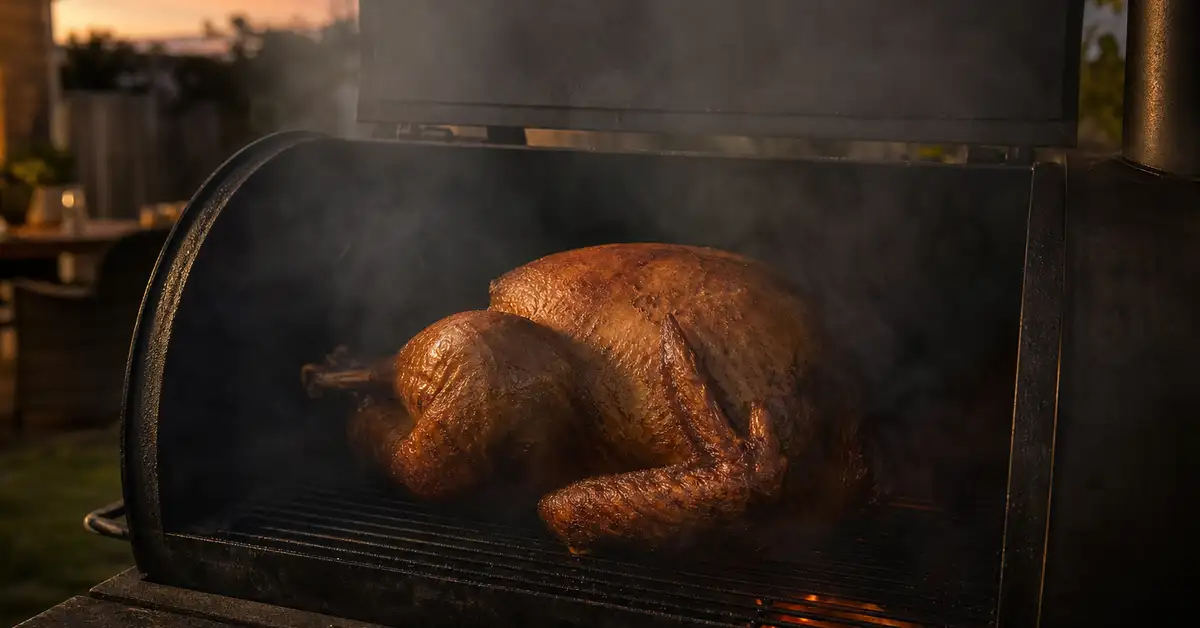
5. Smoke at a steady 225–250°F, breast-side up
Place the turkey on the grate breast-side up and let it ride at a steady chamber temperature. Budget roughly 30–40 minutes per pound — see the at-a-glance table above for your weight class — and resist opening the lid more than necessary, since every open costs you recovery time.
6. Watch for a stalling temperature, and tent if the skin darkens too fast
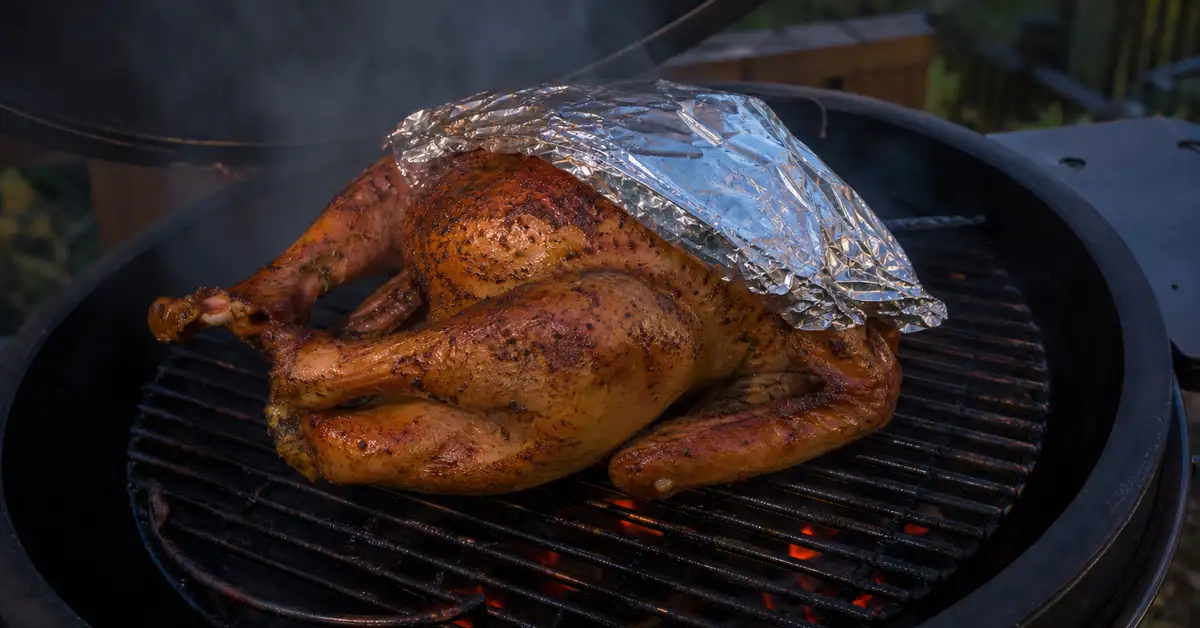
Large birds can plateau for a stretch mid-cook as moisture evaporates from the surface — that’s normal, not a sign anything’s wrong, though it’s worth confirming your smoker temperature is actually holding. If the skin is browning faster than the interior is cooking, loosely tent the breast with foil to slow it down without stopping the cook.
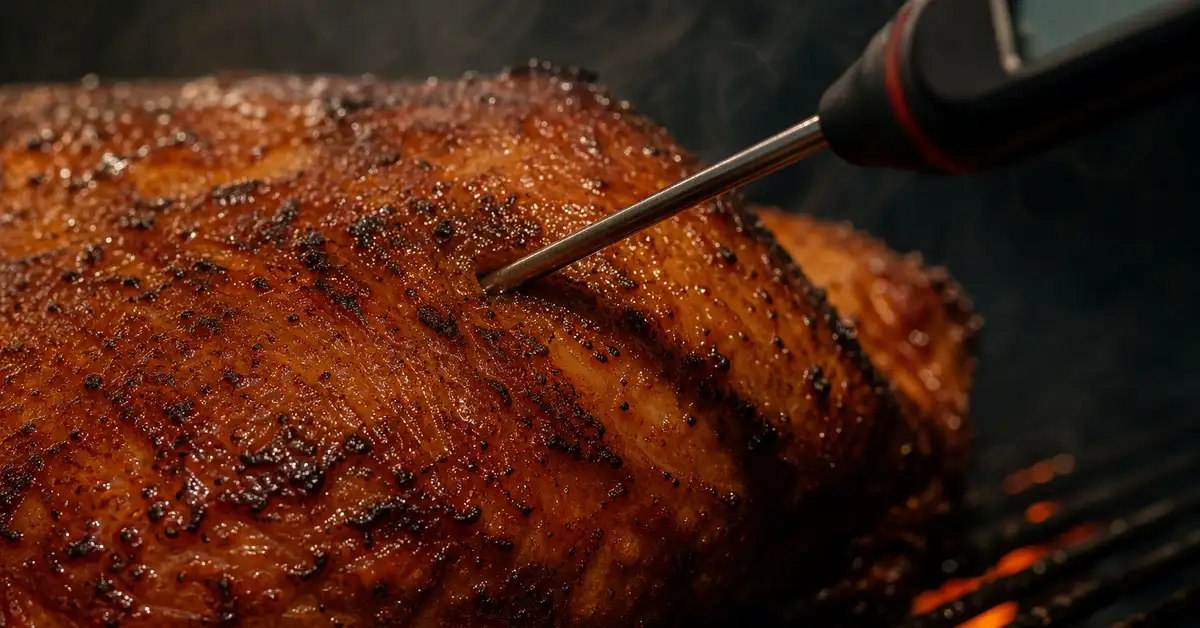
7. Pull at 165°F in all three spots
Check the thickest part of the breast, the innermost part of the thigh, and the innermost part of the wing — all three need to read 165°F. Pulling a couple of degrees early to account for carryover cooking during the rest is common practice, but don’t guess: confirm with the probe once it’s off the heat if you do.
8. Rest 15–20 minutes before carving
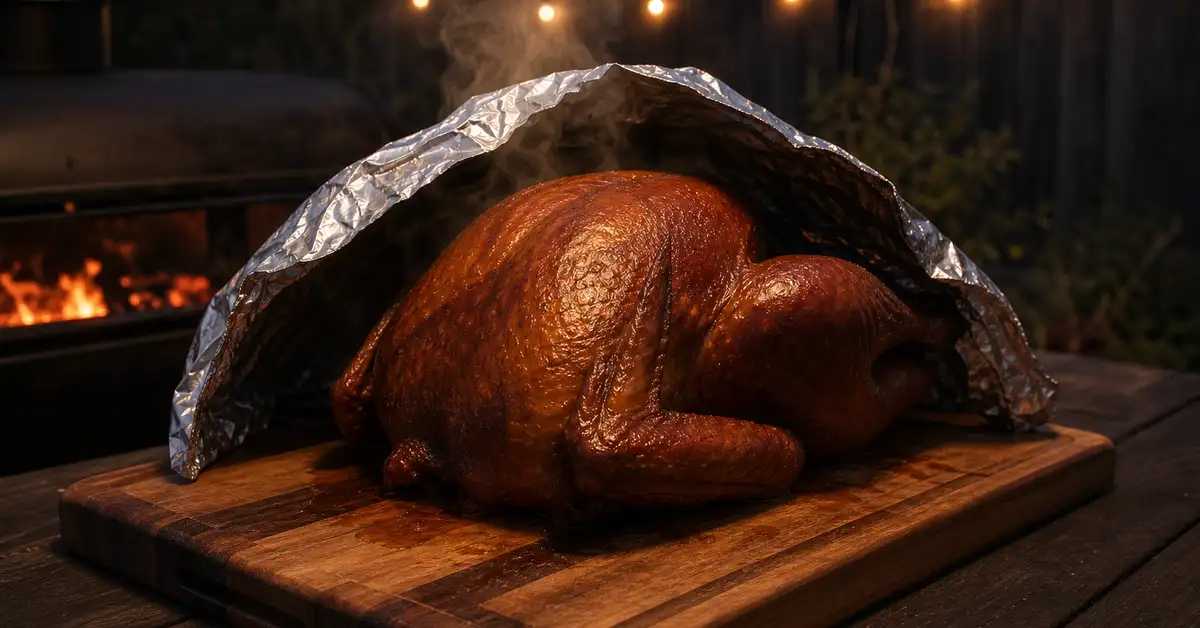
Tent loosely with foil and let it stand for 15–20 minutes. This lets the juices settle so they don’t run out onto the board, and carryover cooking finishes evening out the temperature across the bird. Then carve and serve.
Is it done? Why turkey gets one number, not two
Ribs, brisket and pork butt each have two different numbers: a food-safety minimum (lower) and a separate tenderness target (higher), because those cuts are dense with connective tissue that only breaks down into gelatin after extended time well past the safety line. Turkey doesn’t work that way, and it’s worth understanding why rather than just repeating a number.
The USDA’s safe minimum internal temperature for a whole turkey is 165°F, measured with a food thermometer in the thickest part of the breast and the innermost part of the thigh and wing. That’s not just the safety floor — for turkey, it’s also close to the ceiling of what you actually want. Turkey breast is relatively low in collagen compared with a heavily worked cut like pork shoulder or brisket, so there’s little payoff in cooking it well past 165°F: the connective tissue that would benefit from breaking down into gelatin simply isn’t there in the same quantity. What happens instead is that the muscle fibers keep contracting and squeezing out moisture, so breast meat pushed significantly past 165°F just gets drier and more fibrous — it doesn’t get more tender the way an extended pork butt or brisket cook does.
Dark meat (thighs and legs) does have a little more connective tissue and can taste better carried a bit higher, into the 170s, but that’s a matter of preference on an already-safe piece of meat, not a second official target the way the 195–203°F rib or brisket number is. For a whole bird cooked as one piece, 165°F in all three spots is the number that matters: it’s both the line you have to cross and the point past which you’re trading juiciness for nothing in return.
Big bird, big cook: budgeting the time
A turkey at the top of the weight range — 18–20+ lb — can take 9 to 13 hours at 225–250°F, which is a long day for anyone running a fire or babysitting a controller. A few honest options if that timeline doesn’t fit your Thanksgiving schedule: run the chamber a little hotter (up to around 275°F cuts the time noticeably, though it firms the skin faster and leaves less margin for error), spatchcock the bird (butterflying it flat roughly halves the cook time by evening out the thickness), or smoke it in parts (breast and legs separately, pulling each at 165°F on its own schedule). None of these are cheating — they’re all legitimate ways to manage a genuinely long cook on a large bird.
Safety: fire, carbon monoxide and food handling
Outdoor use only. Every fuel-burning smoker — charcoal, gas, wood or pellet — produces carbon monoxide while it runs, and CO is colorless and odorless. Per the U.S. Consumer Product Safety Commission and NFPA-aligned guidance: never run a smoker in a garage (even with the door open), a tent, camper, enclosed porch or any covered or semi-enclosed space. Run it fully outdoors, away from doors, windows and vents. For fuel-specific fire-handling details, see our guides to starting a charcoal grill and controlling temperature on a smoker, and our propane & charcoal grill safety guide for gas setups.
Food safety. The turkey must be completely thawed before smoking — a partially frozen bird spends too long in the USDA’s 40–140°F danger zone, where bacteria multiply rapidly. Food shouldn’t sit in that range for more than about 2 hours total (1 hour above 90°F ambient). If your smoker genuinely dies or runs cold for an extended stretch and the bird sits below 140°F for several hours, USDA-consistent guidance is to discard it rather than continue cooking. Never rely on color or a pop-up timer alone — check the internal temperature in all three spots with a reliable probe. We never fabricate testing: every time, temperature and safety figure here traces to a food-safety agency, a manufacturer, or a reputable published BBQ source.
The gear that helps
A leave-in probe thermometer — ideally with an alarm, so you’re not opening the lid to check — takes most of the guesswork out of a long turkey cook, and a mild wood keeps the flavor from overpowering the bird.
Transparency first: This guide contains affiliate links. If we’re enrolled in an affiliate program, we may earn a commission at no extra cost to you — it never affects how we research or rank. Read our full affiliate disclosure policy.
Check leave-in probe thermometers on Amazon →
Want to get flavor and moisture into the bird before it goes on the smoker, not just on the surface? See our best meat injectors guide.
For our research-led picks, see the best wireless meat thermometers or best instant-read meat thermometers guides. Stocking up on smoke wood? See our best wood pellets for smoking and best wood chips and chunks guides.
Related guides
New to smoking altogether? Start with our best smokers for beginners guide. Cooking on a pellet grill? See how to use a pellet grill for your first cook, or how to start a charcoal grill for lighting and the two-zone setup on a charcoal cooker. Smoking on a dedicated vertical cabinet? See our best vertical pellet smokers guide. Still choosing a pellet grill before the holidays? See our Black Friday pellet grill deals guide. If your smoker won’t hold a steady temperature, our temperature control guide covers the intake-vs-exhaust rule. Tackling other low-and-slow cuts? See how long to smoke ribs. Once it’s carved, see how long smoked meat lasts for safe storage and reheating. Our How We Choose page explains the research behind every recommendation on this site.
Frequently asked questions
How long does it take to smoke a turkey at 225°F?
Budget roughly 30–40 minutes per pound. That works out to about 5–8 hours for a 10–12 lb bird, 6–9 hours for 12–14 lb, 7–12 hours for 14–18 lb, and 9–13 hours for 18–20+ lb. Always confirm with a thermometer rather than the clock alone.
What temperature should a smoked turkey be when it’s done?
165°F in the thickest part of the breast and the innermost part of the thigh and wing — the USDA’s safe minimum for whole turkey. Unlike ribs or brisket, there’s no separate higher “tenderness” number to chase: 165°F is both the safety floor and the practical doneness target for turkey.
Why doesn’t turkey have a separate tenderness target like ribs or brisket?
Ribs and brisket are dense with connective tissue that needs extended time well past the safety minimum to break down into gelatin for a tender bite. Turkey breast has much less collagen, so pushing it significantly past 165°F mostly just dries the meat out through continued moisture loss — it doesn’t get more tender the way a long-cooked pork shoulder does.
What smoker temperature should I use for a whole turkey?
225–250°F is the standard low-and-slow range used by most BBQ sources and manufacturers for whole-bird smoking. Running hotter, up to around 275°F, shortens the cook but firms the skin faster and leaves less margin for error — always finish by internal temperature, not the clock.
Does a turkey need to be fully thawed before smoking?
Yes, completely. A partially frozen turkey cooks unevenly and can leave the center in the food-safety danger zone (40–140°F) for too long. Refrigerator thawing takes about 24 hours per 4–5 lb of turkey, so plan several days ahead for a large bird.
How long should a smoked turkey rest before carving?
15–20 minutes, tented loosely with foil. This lets the juices settle so they don’t run out when you carve, and carryover cooking evens out the temperature across the bird.
Does spatchcocking a turkey speed up the smoke time?
Yes, meaningfully. Butterflying the bird flat evens out its thickness so the breast and thighs cook at closer to the same rate, which can roughly halve the total smoke time compared with a whole trussed bird at the same temperature.
Is it safe to run a smoker in a garage or enclosed porch to smoke a turkey?
No — never, regardless of the weather. Every fuel-burning smoker produces carbon monoxide, which is colorless and odorless and can build to lethal levels within minutes in a garage (even with the door open), a tent, an enclosed porch, or any covered or semi-enclosed space. Run smokers fully outdoors, every time.
Sources
The 165°F safe minimum internal temperature and the three-point check (thickest breast, innermost thigh, innermost wing) verified against USDA FSIS — Safe Minimum Internal Temperature Chart and USDA — Keep Food Safety in Mind this Thanksgiving. Smoker chamber temperature and time-per-pound figures verified against Traeger — Best Smoked Turkey Guide, Hey Grill Hey — The Best Smoked Turkey and Smoked BBQ Source — How to Smoke a Turkey in an Electric Smoker. The food-science reasoning for why poultry doesn’t carry a separate tenderness target — low collagen relative to connective-tissue-dense cuts, and the protein-denaturation sequence as internal temperature rises — drawn from Serious Eats — Stop Overcooking Chicken alongside the USDA sourcing above. Rest-time guidance from USDA FSIS — Let’s Talk Turkey and USDA — How to Cook a Thanksgiving Turkey. Danger-zone and thaw-time guidance from USDA — Keep Risky Habits Out of the Kitchen this Thanksgiving. Carbon monoxide and outdoor-only guidance from the U.S. Consumer Product Safety Commission — Charcoal and NFPA — Carbon Monoxide Safety. Details were current at the time of research (August 2026).