Short answer: get smoked meat into the fridge within 2 hours of cooking (1 hour if it’s above 90°F outside), then it’s good for about 3–4 days in the refrigerator at 40°F or below. In the freezer at 0°F it’s safe indefinitely, but for best texture and flavor, plan to eat it within roughly 2–3 months. One myth to drop right away: smoking doesn’t buy you extra time the way curing does — treat smoked meat’s storage window the same as any other cooked meat.
Here’s the honest breakdown: why smoking isn’t a preservation method, the numbers a food-safety agency actually stands behind, how to tell if it’s gone bad, and what to do with a big batch fresh off the smoker.
Smoking is a cooking method, not a preservation method
It’s an easy assumption to make — the smoke, the long cook time, the “old-timey” feel of it all suggests smoked meat should last longer than a regular roast. It doesn’t, at least not the way most backyard cooks smoke. The hot smoking used for brisket, ribs and pulled pork — a steady 225–275°F chamber temperature — is fundamentally a cooking and flavoring process. It brings the meat safely past the USDA’s danger zone and builds bark and smoke flavor along the way, but it doesn’t meaningfully extend how long the cooked meat stays safe to eat afterward.
Smoke compounds do have a real antimicrobial effect — phenolic and aldehyde compounds from the smoke settle on the meat’s surface and inhibit some bacterial growth there, and the surface also dries out a little in the process. That’s a genuine, USDA-documented effect. But it’s a small, surface-level assist, not a preservation system. It doesn’t change the refrigerator or freezer clock for your brisket, and it’s not a reason to leave smoked meat out longer or skip refrigeration.
True preservation — the kind that lets country ham sit at room temperature or jerky last for weeks in a backpack — combines curing (salt and nitrite/nitrate) with drying, usually alongside a much lower-temperature “cold smoke” (well under 90°F). That’s a different process with its own rules, done deliberately to pull moisture out and make the meat inhospitable to bacteria. A hot-smoked backyard brisket hasn’t gone through any of that — treat it exactly like any other cooked meat for storage purposes.
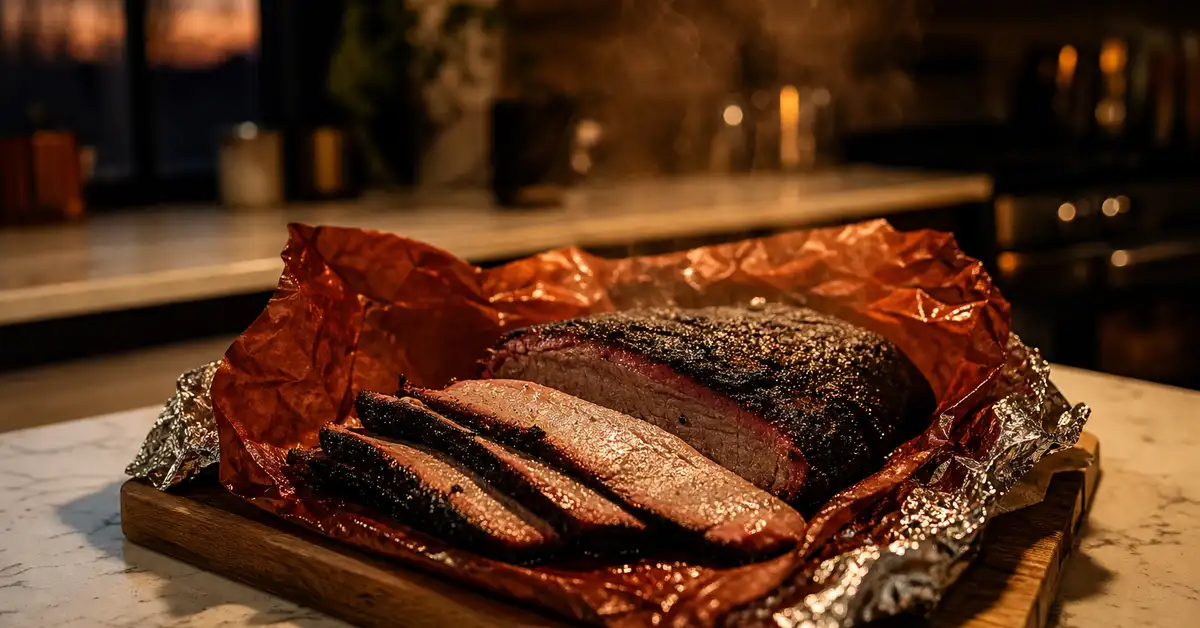
How long smoked meat lasts, at a glance
| Stage | Time limit | Notes |
|---|---|---|
| Left out at room/outdoor temperature | 2 hours max (1 hour above 90°F) | The USDA’s danger-zone rule — 40–140°F is where bacteria multiply fastest |
| Refrigerated (40°F or below) | 3–4 days | Same window USDA gives any cooked meat or poultry — smoking doesn’t extend it |
| Frozen (0°F or below) | Safe indefinitely; best quality ~2–3 months | Safety doesn’t expire in the freezer, but texture and flavor decline over time |
How to store smoked meat safely, step by step
1. Start the clock the moment it comes off the smoker
The USDA’s 2-hour rule applies here just like any other cooked food: get smoked meat refrigerated within 2 hours of coming off the heat, or within 1 hour if it’s sitting in outdoor temperatures above 90°F. Past that, it’s spent too long in the 40–140°F danger zone where bacteria multiply rapidly — don’t rely on how it looks or smells to judge that.
2. Slice or portion a big batch before it goes in the fridge
A whole brisket or pork shoulder cools far too slowly as one solid mass. Slice or shred it and spread it into shallow containers (a couple of inches deep is the general guidance) so it passes through the danger zone quickly rather than staying warm at the center for hours in the fridge.
3. Wrap or seal it well
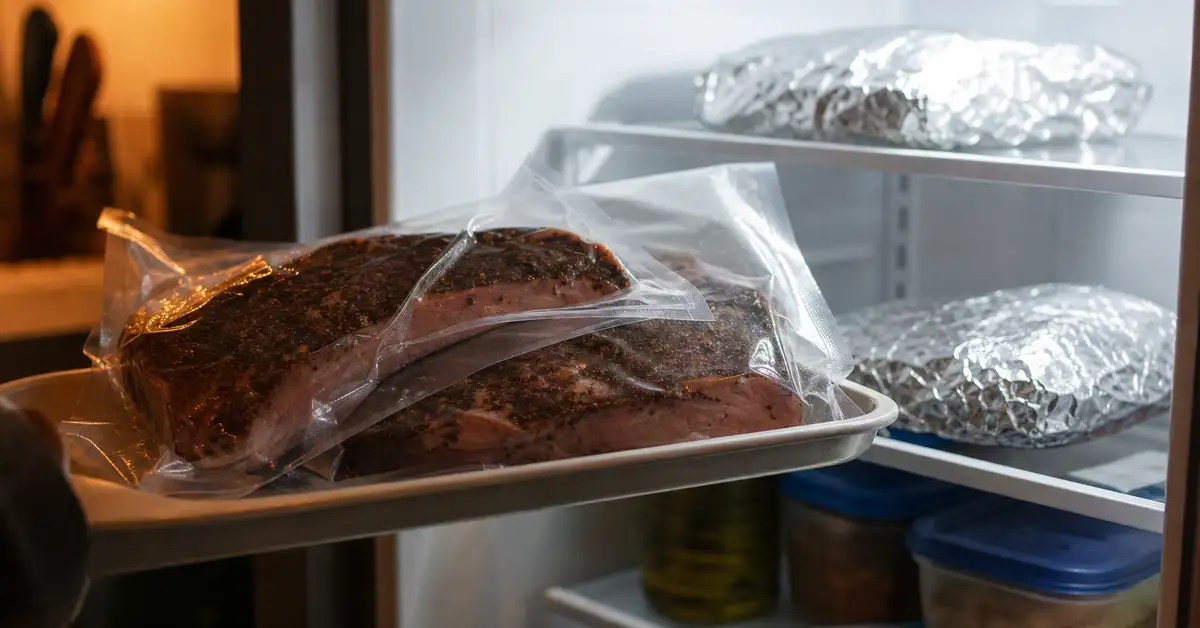
Butcher paper and foil work for a few days in the fridge; for the freezer, an airtight wrap or a vacuum sealer makes a real difference to quality by keeping air and moisture loss to a minimum. Loosely wrapped meat dries out and picks up freezer burn much faster.
4. Label it with the date
It’s an easy step to skip and the one that saves you from guessing later. A piece of tape with the date is enough — you’re tracking the freshness window, not the memory.
5. Choose fridge for this week, freezer for anything longer
Plan to eat it within 3–4 days? The refrigerator at 40°F or below is fine. Anything you won’t get to that soon should go in the freezer at 0°F or below — it’ll stay safe well beyond that, though quality is best within roughly 2–3 months.
6. Thaw safely and reheat to 165°F
Thaw frozen smoked meat in the refrigerator, not on the counter. When you’re ready to eat it, reheat to an internal temperature of 165°F, checked with a thermometer — not just “hot and steaming” by feel.
How to tell if smoked meat has gone bad
USDA guidance is consistent here: don’t rely on your eyes alone, and don’t taste-test something you suspect has turned. Signs to discard it rather than second-guess it:
- Off or sour smell — the clearest and most reliable sign.
- Sliminess or a noticeably different texture on the surface.
- Unusual color change compared with how it looked when fresh.
- Any visible mold — if you see it, the whole piece gets discarded, not just the moldy spot.
If smoked meat sat in the danger zone (40–140°F) for more than 2 hours — a smoker that died overnight, a cooler that lost its ice — USDA-consistent guidance is to discard it, even if it looks and smells fine. You genuinely can’t see, smell or taste the bacteria that cause foodborne illness.
Does smoke actually preserve meat? The honest answer
Smoke does have a documented, real antimicrobial effect on the surface of meat — it’s bacteriostatic and bactericidal to some surface organisms, and it dries the surface out slightly. That’s a genuine food-safety-agency-recognized effect, and it’s part of why traditional cured-and-smoked products work at all. But for a backyard brisket or rack of ribs smoked hot and fast, that surface effect is a minor assist, not a preservation strategy. It does not substitute for correct cooking temperature, prompt cooling, or refrigeration, and it does not mean smoked meat is safe to leave out longer than anything else.
The real preservation happens in products like country ham or jerky, and it’s a different, deliberate process: the meat is cured with salt and nitrite or nitrate first (which lowers water activity and directly inhibits bacteria, including the organisms responsible for botulism), then often dried and cold-smoked at temperatures well under 90°F over many hours. Skip the curing step and cold-smoke raw meat on its own, and you’re holding it in the danger zone for hours — genuinely risky, not a shortcut to jerky. If a hot-smoked cook is what you’re doing on a normal smoker weekend, none of that applies to you: your bark and smoke ring are flavor, not a preservative, and standard cooked-meat storage rules are the ones that matter.
The gear that helps
A reliable instant-read thermometer takes the guesswork out of the one number that actually matters when you reheat leftovers — 165°F, confirmed, not estimated.
Transparency first: This guide contains affiliate links. If we’re enrolled in an affiliate program, we may earn a commission at no extra cost to you — it never affects how we research or rank. Read our full affiliate disclosure policy.
Check instant-read meat thermometers on Amazon →
For our research-led picks, see our best instant-read meat thermometers guide.
Related guides
Cooking the meat itself, not just storing the leftovers? See how long to smoke ribs or how long to smoke a turkey for cook times and the safe-minimum internal temperatures to hit before it ever gets to your fridge. If your smoker won’t hold a steady temperature in the first place, our temperature control guide covers the intake-vs-exhaust basics. Worried about cross-contamination from injecting or seasoning raw meat before it smokes? Our best meat injectors guide covers safe handling there too. New to smoking altogether? Start with best smokers for beginners. Our How We Choose page explains the research behind every recommendation on this site.
Frequently asked questions
How long does smoked meat last in the fridge?
About 3–4 days at 40°F or below, the same window USDA gives any cooked meat or poultry. Get it refrigerated within 2 hours of coming off the smoker (1 hour if it’s above 90°F outside) for that window to apply.
How long does smoked meat last in the freezer?
It’s safe indefinitely if kept continuously at 0°F or below — freezing stops bacterial growth entirely. For best texture and flavor, though, aim to eat it within roughly 2–3 months; USDA’s broader guidance for cooked meat allows up to about 2–6 months before quality noticeably declines.
Does smoking preserve meat so it lasts longer?
Not meaningfully, if you’re talking about typical hot smoking at 225–275°F. Smoke does add a real but limited antimicrobial effect at the surface, but it doesn’t extend how long the cooked meat stays safe — treat it exactly like any other cooked meat. True preservation (jerky, country ham) combines curing, drying and a much cooler “cold smoke,” which is a different process entirely.
How long can smoked meat sit out before it’s unsafe to eat?
No more than 2 hours at room or outdoor temperature, or 1 hour if it’s above 90°F outside. Past that window it’s spent too long in the USDA’s 40–140°F danger zone, where bacteria multiply rapidly — discard it rather than guess based on how it looks or smells.
How can I tell if smoked meat has gone bad?
An off or sour smell, a slimy or noticeably different texture, an unusual color change, or any visible mold all mean it should be discarded. If it sat in the danger zone (40–140°F) for more than 2 hours at any point, discard it even if it still looks and smells fine — you can’t see, smell or taste harmful bacteria.
What temperature should I reheat smoked meat to?
165°F internal, checked with a food thermometer. That’s the USDA’s standard reheating temperature for any cooked leftovers, smoked meat included.
Is hot-smoked brisket the same as cured meat like jerky or country ham?
No, and this is the key distinction. Jerky and country ham are cured with salt and nitrite or nitrate, then dried and often cold-smoked at low temperatures — a deliberate preservation process. A hot-smoked backyard brisket or rack of ribs has only been cooked and flavored; it hasn’t gone through curing or drying, so it follows the same fridge/freezer rules as any other cooked meat, not the shelf-stable rules that apply to jerky.
Can I refreeze smoked meat that I already thawed?
Yes, if it was thawed in the refrigerator and kept at 40°F or below the whole time — USDA guidance says this is safe, though there may be some loss of texture and flavor. Meat thawed at room temperature or in warm water should be eaten, not refrozen raw.
Sources
The 2-hour/1-hour danger-zone rule and refrigerator storage window (3–4 days at 40°F or below) verified against USDA FSIS — Safe Handling of Take-Out Foods and the FoodSafety.gov Cold Food Storage Chart. Freezer safety-vs-quality guidance (safe indefinitely at 0°F; ~2–3 month quality window for cooked meat leftovers, up to ~2–6 months broadly) from the USDA FSIS refrigerator/freezer storage chart and USDA — 10 Smart Tips to Keep Your Restaurant Leftovers Safe. Spoilage signs and the reheat-to-165°F guidance from USDA — Protecting Your Family from Food Spoilage and USDA FSIS — Foodborne Illness and Disease. Cooling large batches into shallow containers and safe-refreezing guidance from USDA FSIS — Cooking for Groups: A Volunteer’s Guide to Food Safety and USDA FSIS — Turkey Basics: Safe Thawing. The smoke-as-surface-antimicrobial finding (bacteriostatic/bactericidal effect on surface organisms via phenolic and aldehyde deposition, distinct from true curing) from USDA FSIS — Cured Meat and Poultry Product Operations, cross-checked against Smoked BBQ Source — How Long Does Smoked Meat Last? and the Smoked BBQ Source Guide to Cold Smoking. Details were current at the time of research (August 2026).