Short answer: at a steady 225–250°F, plan on roughly 3 to 5 hours for baby back ribs, 4.5 to 6 hours for St. Louis-style, and 5 to 7 hours for spare ribs — spares are the biggest, meatiest cut of the three, so they take the longest. But ribs don’t have one clean “done” temperature the way a roast does. Pull them by feel: a probe should slide into the meat with little resistance, and the rack should crack slightly (not fully separate) when you lift one end with tongs — the bend test. That usually lines up with an internal temperature of roughly 195–203°F, well past the USDA’s 145°F pork safety minimum.
Here’s the honest breakdown: which cut you’re actually smoking, the 3-2-1 method and why it isn’t gospel, and the two temperatures — safety and tenderness — that do very different jobs.
How long to smoke ribs, at a glance
Planning estimates at a steady 225–250°F smoker temperature. Judge doneness by feel and temperature, not the clock — size, thickness and how steady your fire runs all shift these numbers.
| Cut | Total time at 225–250°F | Why |
|---|---|---|
| Baby back ribs | ~3–5 hours | Smaller, leaner and cut from the back — the fastest-cooking of the three |
| St. Louis-style | ~4.5–6 hours | Spare ribs trimmed square; similar timing to spares, slightly more even shape |
| Spare ribs | ~5–7 hours | Larger, with more fat and connective tissue than baby backs — the longest cook |
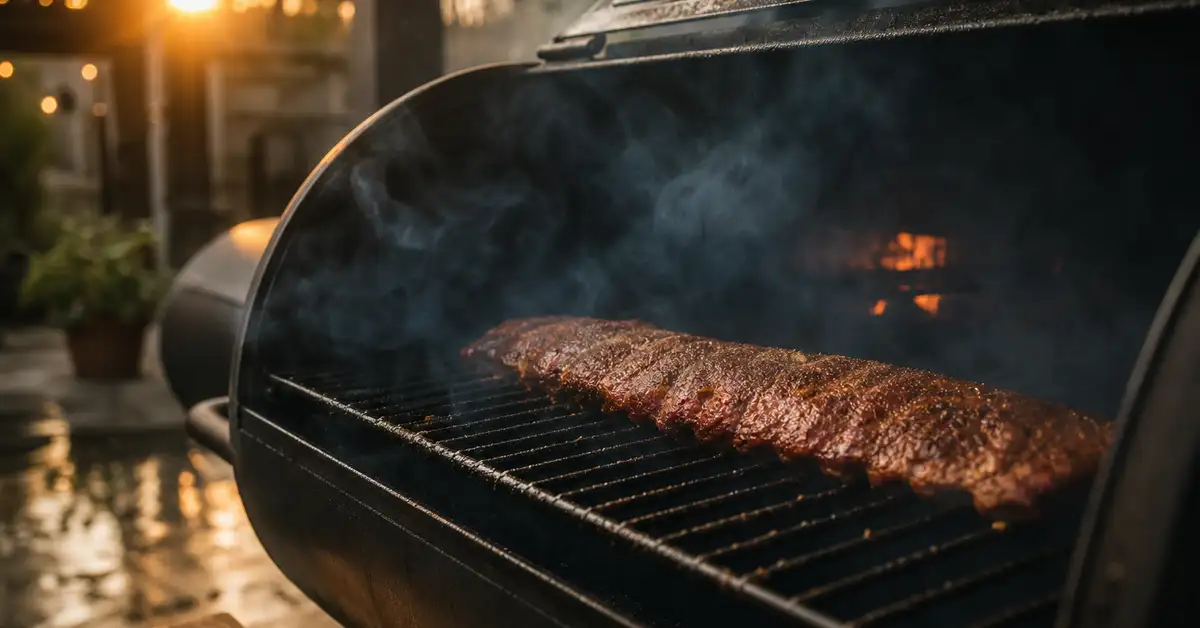
Which ribs are you smoking? The cut changes the timeline
“Ribs” isn’t one product, and averaging across cuts is how a lot of rib advice goes wrong.
| Cut | What it is | Cook profile |
|---|---|---|
| Baby back ribs | Shorter, curved ribs cut from the back near the spine, leaner with less connective tissue | Fastest cook; easiest to overcook in a full 3-2-1 — a shortened 2-2-1 often suits them better |
| Spare ribs | Longer, flatter ribs from the belly side, with more fat, cartilage and connective tissue | Longest cook; forgives the full 3-2-1 better than baby backs do |
| St. Louis-style | Spare ribs with the rib tips and cartilage trimmed off square | Cooks a touch faster and more evenly than untrimmed spares, similar overall timing |
How to smoke ribs, step by step
1. Trim and remove the membrane
Trim any loose flaps of fat or ragged cartilage, then peel the thin, papery membrane off the bone side — slide a butter knife under one end and pull it off in one motion with a paper towel for grip. Left on, it blocks smoke and rub and turns leathery.
2. Season with a rub
Coat both sides generously — a simple salt, pepper and paprika base works, or see our best BBQ rubs and seasonings guide for ready-made options. Let the rub sit while your smoker comes up to temperature.
3. Preheat your smoker to 225–250°F
The fire logic differs by smoker type — an offset or charcoal cooker needs a stable fire before food goes on, a pellet grill’s controller handles it once you set the target, and an electric or propane cabinet just needs the dial set. See our full guide to controlling temperature on a smoker if yours won’t hold steady. Add a mild-to-medium wood such as hickory, oak, cherry or apple once it’s stable.
4. Smoke unwrapped to build bark (roughly 2–3 hours)
Place the ribs bone-side down and let them ride undisturbed. You’re looking for the rub to set into a dark, dry bark and the meat to start pulling back from the bone ends by about a quarter inch — that’s your cue for the next step, not a fixed clock time.
5. Know the 3-2-1 method — and adjust it to your rack
The classic framework is 3 hours unwrapped, 2 hours wrapped, 1 hour unwrapped to finish — a useful starting heuristic, not a guarantee. It was built around spare ribs; run it unmodified on a smaller, leaner rack of baby backs and you risk mushy, overcooked meat. Many pitmasters use a shorter 2-2-1 for baby backs instead. Treat the numbers as a starting point and confirm with the bend test in step 8.
6. Wrap once the bark is set (the “Texas crutch”)
Wrap tightly in foil or butcher paper once the bark has darkened and set — foil (with a splash of liquid, such as apple juice, butter or honey) speeds tenderizing and keeps the most moisture in; butcher paper is slower but keeps the bark firmer. Skipping the wrap entirely gives maximum bark at the cost of a longer cook.
7. Unwrap and finish (roughly the final hour)
Unwrap, brush with sauce if you’re using it, and return to the smoker uncovered to set the glaze and firm the bark back up before pulling.
8. Check doneness with the bend test and a probe
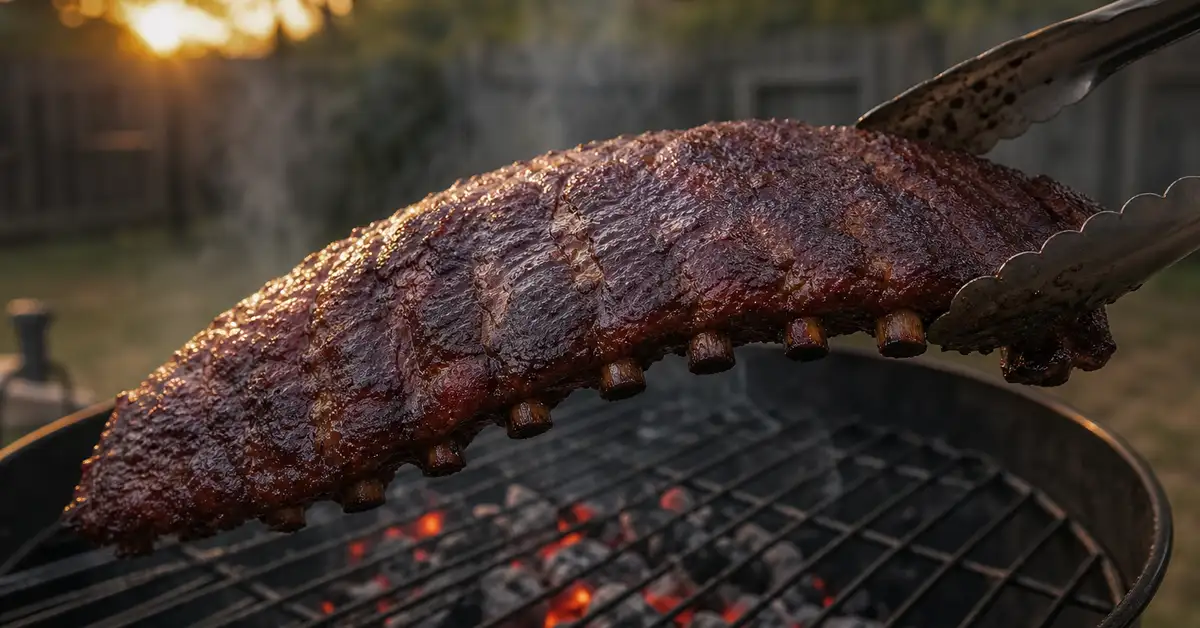
Lift one end of the rack with tongs: it should bend and the surface should crack slightly, but the rack shouldn’t fully separate — that’s the bend test. A thermometer probe should slide into the meat between the bones with little to no resistance, typically around 195–203°F. Neither test alone is perfect; use both.
9. Rest briefly, then slice and serve
Unlike brisket or pork butt, ribs don’t need a long rest — 10–15 minutes loosely tented in foil is enough to let the juices settle. Slice between the bones and serve.
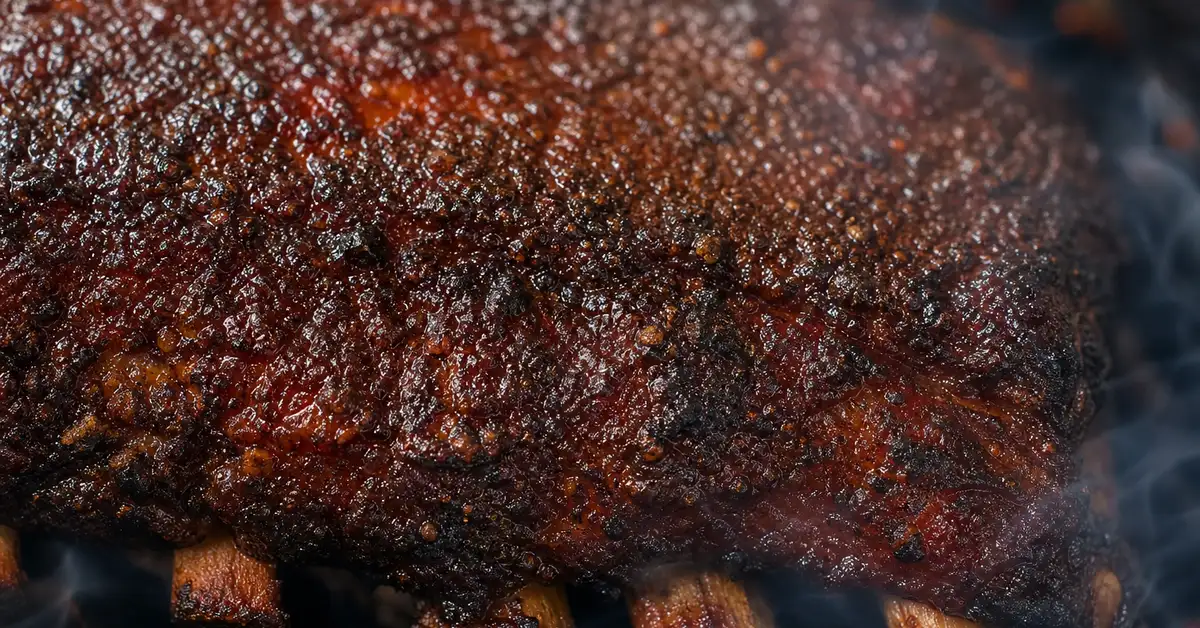
Is it done? Time is not doneness
Two different questions get two different numbers, and mixing them up is the single most common rib mistake.
The USDA’s safe minimum internal temperature for whole cuts of pork is 145°F, with a 3-minute rest — that’s the food-safety line, and ribs cooked to only that temperature are technically safe. But they’ll also be tough: at 145°F the collagen and connective tissue holding the meat together haven’t broken down. For genuinely tender ribs, you’re cooking well past the safety minimum, into a tenderness target of roughly 195–203°F (some sources cite a slightly wider 190–205°F window) — that’s where collagen melts into gelatin and the meat loosens from the bone.
Because that tenderness number is a feel-based target, not a hard cutoff, the bend test matters as much as the thermometer: lift the rack from one end with tongs, and it should crack and bend, with the meat pulled back from the bone ends by about a quarter to three-quarters of an inch, but not fully separate. If it doesn’t bend yet, it needs more time regardless of what the thermometer says on an oddly-shaped or unusually thick rack.
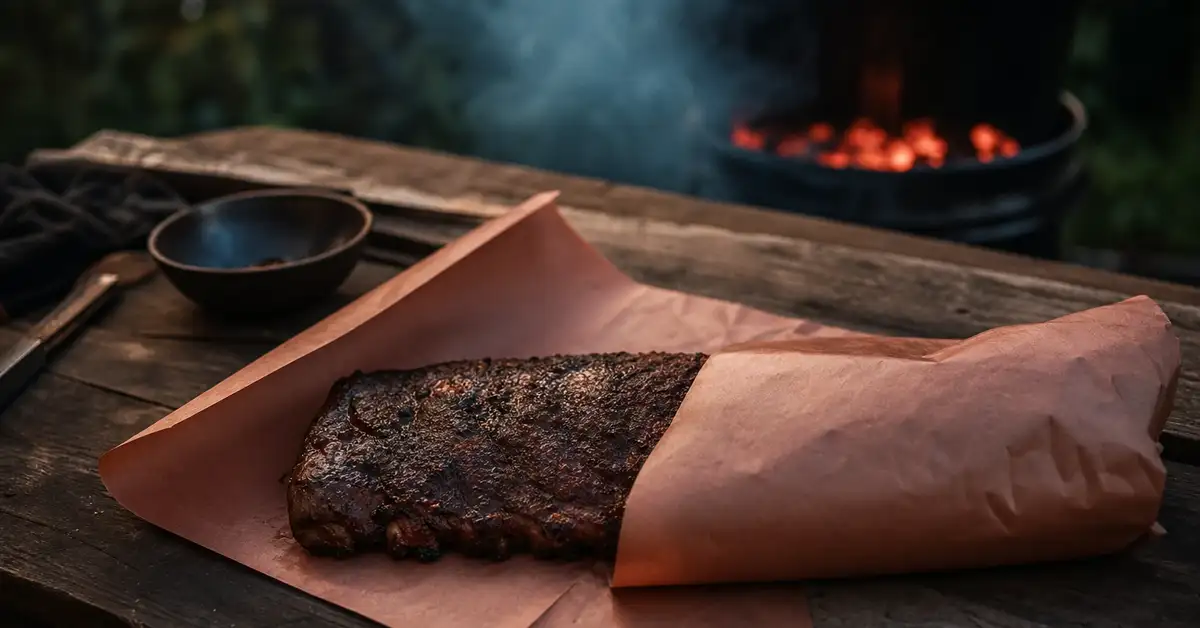
The 3-2-1 method, honestly
3-2-1 — three hours of smoke, two hours wrapped, one hour unwrapped to finish — is the most-searched rib timeline for a reason: it’s simple and it works, especially on spare ribs. But treat it as a starting heuristic, not a guarantee. Rack size, smoker type and ambient temperature all shift the real answer, and running the full schedule unmodified on a smaller, leaner rack of baby backs is a common way to end up with mushy, over-wrapped meat — a shorter 2-2-1 variant suits them better. “Time is not doneness” — the same rule that applies to brisket and pork butt applies here: use the schedule as a plan, then confirm with the bend test and a probe before you call it finished.
Safety: fire, carbon monoxide and food handling
Outdoor use only. Every fuel-burning smoker — charcoal, gas, wood or pellet — produces carbon monoxide while it runs, and CO is colorless and odorless. Per the U.S. Consumer Product Safety Commission and NFPA-aligned guidance: never run a smoker in a garage (even with the door open), a tent, camper, enclosed porch or any covered or semi-enclosed space. Run it fully outdoors, away from doors, windows and vents. For the fuel-specific fire-handling details — chimney starters, ash disposal, offset firebox management — see our guides to starting a charcoal grill and controlling temperature on a smoker.
Food safety. The USDA danger zone for meat is 40–140°F, and food shouldn’t sit in that range for more than about 2 hours (1 hour above 90°F ambient). The mid-cook rib “plateau” some racks show happens well above 140°F and isn’t a safety event — it’s a cooking-speed one. But if a smoker genuinely dies or runs cold for an extended stretch and a rack sits below 140°F for several hours, USDA-consistent guidance is to discard it rather than continue cooking. Check doneness with a reliable probe — see our instant-read meat thermometer guide — rather than judging by color or time alone. We never fabricate testing: every time, temperature and safety figure here traces to a manufacturer, a food-safety agency, or a reputable published BBQ source.
The gear that helps
A dual-probe thermometer — one probe in the meat, one at grate level — takes most of the guesswork out of a long rib cook, and the right wood shapes the flavor without you needing to babysit the fire.
Transparency first: This guide contains affiliate links. If we’re enrolled in an affiliate program, we may earn a commission at no extra cost to you — it never affects how we research or rank. Read our full affiliate disclosure policy.
Check dual-probe meat thermometers on Amazon →
For our research-led picks, see the best wireless meat thermometers or best instant-read meat thermometers. Stocking up on smoke wood? See our best wood pellets for smoking and best wood chips and chunks guides. Want more flavor beyond salt and pepper? See our best BBQ rubs and seasonings guide.
Related guides
New to smoking altogether? Start with our best smokers for beginners guide. Cooking on a pellet grill? See how to use a pellet grill for your first cook. Smoking on a dedicated vertical cabinet? See our best vertical pellet smokers guide. Running an offset or a charcoal cooker? Our how to control temperature on a smoker guide covers the intake-vs-exhaust rule that keeps a long cook steady, and how to start a charcoal grill covers lighting and the two-zone setup. Tackling a bigger cut next? See how long to smoke a brisket and how to smoke a pork butt. Wondering how long the leftovers will actually keep? See how long smoked meat lasts for safe fridge and freezer times. Our How We Choose page explains the research behind every recommendation on this site.
Frequently asked questions
How long does it take to smoke ribs at 225°F?
It depends on the cut. At a steady 225–250°F, baby back ribs typically take 3–5 hours, St. Louis-style ribs about 4.5–6 hours, and spare ribs 5–7 hours — spares are the largest and meatiest of the three, so they take the longest. Always confirm with the bend test and a probe rather than the clock alone.
What temperature should ribs be when they’re done?
Most BBQ sources put the tenderness target at roughly 195–203°F internal, with some citing a slightly wider 190–205°F window. That’s well past the USDA’s 145°F safety minimum for pork — ribs are safe at 145°F but still tough; the extra cooking is what breaks down the connective tissue for tenderness.
What is the bend test for ribs?
Lift one end of the rack with tongs. Done ribs will bend and the surface will crack slightly, and the meat will have pulled back from the bone ends by about a quarter to three-quarters of an inch — but the rack shouldn’t fully break apart. If it doesn’t bend yet, give it more time.
What is the 3-2-1 method for smoking ribs?
3 hours smoked unwrapped to build bark, 2 hours wrapped in foil or paper to tenderize, then 1 hour unwrapped to set the bark and any sauce — all at a steady 225°F. It’s a useful starting heuristic, especially for spare ribs, but not a guarantee: smaller, leaner baby backs often need a shorter 2-2-1 version to avoid overcooking.
Should I wrap my ribs, and when?
Wrapping once the bark has darkened and set speeds you through to tender and locks in moisture — foil is faster and moister, butcher paper is slower but keeps the bark firmer. You can skip the wrap entirely for maximum bark, but expect a longer cook and check doneness by feel more often.
Baby back vs. spare ribs vs. St. Louis-style — what’s the difference?
Baby backs are shorter, curved and leaner, cut from near the spine, and cook fastest. Spare ribs come from the belly side with more fat and connective tissue, and take the longest. St. Louis-style is a spare rib trimmed square with the tips and cartilage removed — similar timing to spares, in a more even shape.
Do I need to remove the membrane from ribs before smoking?
Yes — the thin, papery membrane on the bone side blocks smoke and rub from penetrating and turns tough and leathery when cooked. Slide a butter knife under one end to loosen it, then grip with a paper towel and pull it off in one motion.
Is it safe to run a smoker in a garage or enclosed porch to smoke ribs?
No — never, regardless of the weather. Every fuel-burning smoker produces carbon monoxide, which is colorless and odorless and can build to lethal levels within minutes in a garage (even with the door open), a tent, an enclosed porch, or any covered or semi-enclosed space. Run smokers fully outdoors, every time.
Sources
Doneness temperatures and the bend test verified against AmazingRibs — How To Know When Ribs Are Done and Hey Grill Hey — How to Know When Pork Ribs Are Done. Per-cut timing verified against AmazingRibs — An Epic Smoked Ribs Recipe and Smoked BBQ Source — Types of Pork Ribs. The 3-2-1 method and its baby-back caveat from Traeger — The 3-2-1 Ribs Method and AmazingRibs (which advises against running it unmodified). Food-safety guidance — the 145°F pork minimum, the 40–140°F danger zone and discard thresholds — from FoodSafety.gov — Safe Minimum Internal Temperatures and USDA — Simple Food Safety Steps. Carbon monoxide and outdoor-only guidance from the U.S. Consumer Product Safety Commission — Charcoal and NFPA — Carbon Monoxide Safety. Details were current at the time of research (August 2026).