Short answer: control air in, not air out. On almost every smoker — offset, charcoal, pellet or electric/propane — the intake is your throttle and the exhaust should stay mostly open. Make one small adjustment, then wait 10–15 minutes before touching anything else; that’s roughly how long it takes a fire (and the steel around it) to answer. Trust a probe at grate level, not the lid dome gauge — the two can differ by 25–50°F or more. Most low-and-slow cooks run 225–250°F; hot-and-fast runs 275–300°F.
“A smoker” isn’t one machine — an offset, a charcoal bullet, a pellet grill and an electric or propane cabinet all hold temperature completely differently. Here’s the honest version of how each one actually works, and what to do when yours runs too hot, too cold, or won’t stop swinging.
Which smoker are you running? The fire logic is different for each
Before the steps, know which category you’re in — the “how” of temperature control changes completely by fuel type.
| Type | What actually controls heat | Your job |
|---|---|---|
| Offset / stick burner | Fire size in the firebox — the intake damper meters oxygen to the coals/wood | Run small, hot fires; keep the exhaust wide open; feed little and often |
| Charcoal bullet / kettle / drum (WSM-style) | Bottom vents meter oxygen to a bed of unlit-and-lit charcoal (minion/snake method) | Set bottom vents once, crack the top vent, let the water pan buffer the swings |
| Pellet grill | A controller-driven auger and fan — the machine manages the fire for you | Manage ambient conditions (wind, cold, hopper level) and trust the setpoint |
| Electric / propane vertical cabinet | A thermostat dial or manual gas valve controlling an element or burner | Dial in the target and manage wood/chips for flavor — heat is separate from smoke |
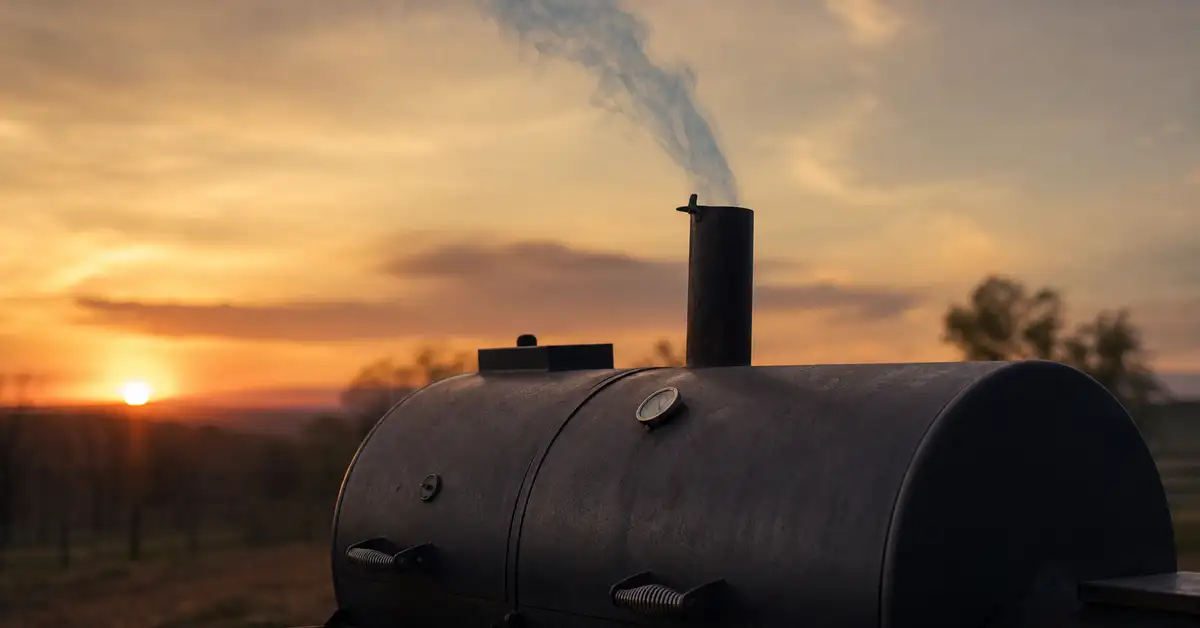
How to control temperature on a smoker, step by step
1. Know which kind of fire you’re actually managing
An offset’s fire lives in a separate firebox and pulls heat sideways; a charcoal bullet or kettle buffers a charcoal bed with a water pan; a pellet grill’s controller drives an auger and fan for you; an electric or propane cabinet just needs a dial set correctly. The rest of this guide applies to all four, but read your type’s row above before you touch a vent.
2. Stabilize before you load any food
Get the empty smoker holding your target — typically 225–250°F for low-and-slow, 275–300°F for hot-and-fast — for at least 15–20 minutes before food goes on. A cold mass of meat will pull the temperature down the moment it’s loaded; starting from a genuinely stable fire (not one still climbing) gives you a buffer.
3. Set the intake, and leave the exhaust open
On an offset or charcoal cooker, the intake damper (near the firebox or in the bottom vents) is your throttle — more air in means a hotter, faster-burning fire; less air means cooler. Leave the exhaust/chimney damper close to wide open on both: choking the exhaust instead of the intake starves the draft, not just the heat, and produces thick, dirty, creosote-heavy smoke rather than the thin blue smoke you want. On a pellet grill, this step is just setting the controller’s target temperature. On electric/propane, set the thermostat dial or burner valve to your target.
4. Make one small move, then wait 10–15 minutes
This is the single habit that fixes most beginner temperature problems: after any vent, damper or dial adjustment, the fire and the steel around it take roughly 10–15 minutes to fully respond and settle at the new temperature — longer on a heavy, cold pit or in wind. Adjust in small increments (a quarter-turn, a finger’s width), then walk away and let it answer before you touch it again. “Chasing” the temperature with rapid, back-and-forth vent changes is the most common cause of wild swings.
5. Load the food and monitor with a dual-probe thermometer
Once it’s stable, load the food and monitor with a leave-in probe at grate level near the meat, plus a second probe in the food itself — not the built-in lid or dome gauge. A dome thermometer measures air high above the cooking surface, and commonly reads 25–50°F hotter than grate level (sometimes more) simply because heat rises and pools near the lid. If you’re only watching the dome, you can think you’re running 250°F when the food is actually seeing 200°F or less.
6. Correct slowly — don’t overcorrect
If the grate-level probe drifts a little high or low, make one small vent or dial correction and wait out the 10–15 minute response lag again before deciding whether it worked. A small, patient correction beats a big, panicked one every time — large swings in vent position are what cause large swings in temperature.
7. Recovering from an overshoot (running too hot)
Close the intake most of the way (don’t slam it shut) and leave the exhaust open so the fire can still breathe cleanly as it calms. Do not dump water on coals or crack the lid repeatedly to “let heat out” — opening the lid on a charcoal or offset cooker dumps trapped heat instantly, but the rush of fresh oxygen that follows can spike the fire even hotter once you close it again. Wait the full 10–15 minutes after closing the intake before judging whether it’s settled.
8. Recovering from a stall-out (running too cold)
A dying fire needs oxygen and fresh fuel, not just an open vent. Open the intake fully, and add a small amount of already-lit or preheated fuel (a few hot coals from a chimney starter, a small dry split) rather than dumping cold fuel straight onto a weak fire, which can smother it further and create dirty smoke. Never add lighter fluid to hot or lit coals to revive a fire — it’s a serious flare-up and burn risk.
9. Manage wind and cold ambient temperature
Wind across an intake can force extra oxygen in and spike the fire, or blow across an exhaust and disrupt draft; a simple windbreak (position the smoker so a wall or fence blocks the prevailing wind) does more good than constant vent-chasing. In cold weather, budget for more fuel, slower stabilization, and a bigger fire on offsets and charcoal cookers — and expect a pellet grill or electric smoker to cycle harder to hold its setpoint. None of this changes the core rule: small adjustment, then wait.
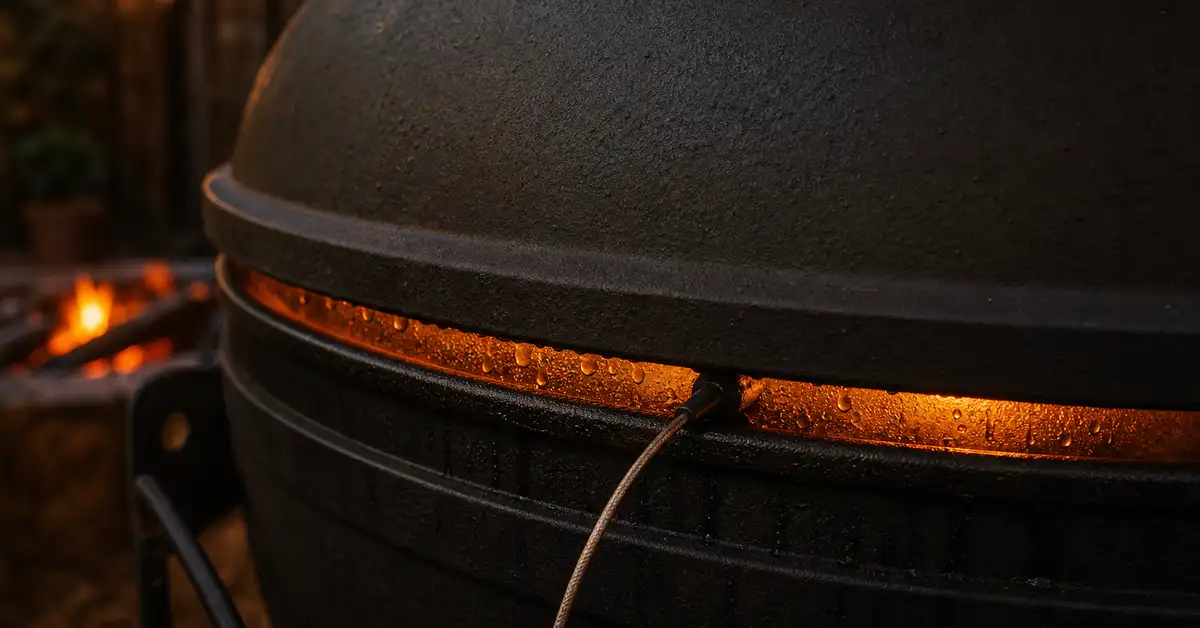
Troubleshooting: the problems behind the searches
Running too hot
Usually too much air reaching the fire — check the intake is actually where you think it is (vent flaps shift), and check for gaps or gasket failures on offsets and charcoal cookers that let in unmetered air. On a pellet grill, a stuck-open auger or a firmware/controller fault can run hot; on electric/propane, check the thermostat or valve itself.
Running too cold
Usually starved oxygen, a dying fuel bed, or wind stealing heat. Check the intake isn’t accidentally closed, check fuel level (charcoal, wood, pellets, propane), and check for a closed or blocked exhaust path, which can smother a fire as effectively as a closed intake.
Wild swings
The classic cause is chasing the temperature — making a vent change, not waiting the 10–15 minutes, seeing no result, and making another change on top of it. The fix is patience, not more input.
Temperature spikes on lid-open
Opening the lid dumps trapped convective heat instantly (the temperature you read right after closing it again is often briefly inflated), and on charcoal and offset fires the fresh oxygen rush can genuinely spike combustion for a few minutes. Keep lid-opens short and infrequent, and don’t judge stability in the first few minutes after closing it.
Dirty, thick, or bitter smoke
This is almost always an airflow problem, not a wood problem — a starved, smoldering fire (too little oxygen) produces thick white/gray smoke and can turn food bitter with creosote. The fix is more air at the intake and a fully open exhaust, not more wood.
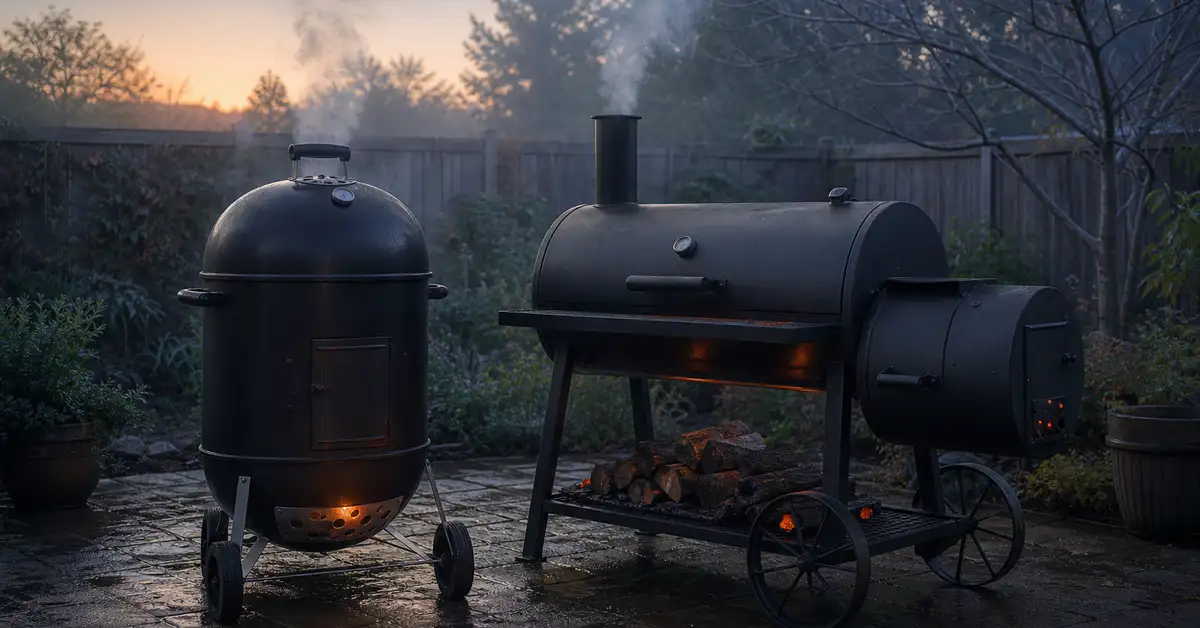
Is it safe? The safety rules that matter more on this page than almost anywhere else
Carbon monoxide — outdoors only, always. Every fuel-burning smoker (charcoal, gas, pellet, wood) produces carbon monoxide while it runs. Per the U.S. Consumer Product Safety Commission and NFPA-aligned fire-safety guidance: never run a smoker in a garage (even with the door open), a tent, camper, enclosed porch, breezeway, or any covered or screened-in space — CO can build to lethal levels within minutes, and it’s colorless and odorless. This matters more on a temperature-control page than most, because cold-weather temperature-chasing is exactly what tempts people to move a smoker under cover or closer to the house. Keep it fully outdoors and away from doors, windows and vents.
Fire and fuel handling. Light charcoal with a chimney starter, not lighter fluid, and never add fluid to hot or already-lit coals. Keep a lid on grease buildup in any smoker — pooled grease is a flare-up risk. Ash and used coals can stay dangerously hot for days; dispose of them in a metal container, never a plastic bin or paper bag.
Food safety — the stall isn’t a safety event, but a cold smoker can be. The USDA danger zone for meat is 40–140°F, and the standard guidance is no more than about 2 hours (4 cumulative hours at the outside) in that range before food should be discarded. A big cut’s “stall” around 150–165°F is normal and happens well above 140°F, so it isn’t a food-safety problem — it’s a cooking-speed one. But if your smoker genuinely dies or runs cold overnight and a large cut sits below 140°F for several hours, that is a real risk, not just a ruined cook; USDA-consistent guidance says to discard rather than “send it.” Cook to internal temperature, not the clock — see our instant-read meat thermometer guide for safe internal temperatures by protein.
Transparency first: This guide contains affiliate links. If we’re enrolled in an affiliate program, we may earn a commission at no extra cost to you — it never affects how we research or rank. Read our full affiliate disclosure policy.
Check dual-probe smoker thermometers on Amazon →
Related guides
New to smoking altogether? Start with our best smokers for beginners guide. Running an offset? See our best offset smokers picks. On a charcoal or propane cabinet? See our best vertical & propane smokers guide. Running a vertical pellet cabinet instead? See our best vertical pellet smokers guide. Cooking on a pellet grill? See how to use a pellet grill for your first cook. Stocking fuel? See our best wood pellets and best wood chips & chunks guides. Ready for a long cook? See how long to smoke a brisket, how to smoke a pork butt and how long to smoke ribs. Adding flavor and moisture into a big cut from the inside? See our best meat injectors guide. And a clean smoker holds temperature better — see how to clean a grill. Once the cook is done, see how long smoked meat lasts for safe fridge and freezer storage times.
Frequently asked questions
Should I control temperature with the intake or the exhaust vent?
The intake, on almost every smoker. It directly meters how much oxygen reaches the fire, which sets the burn rate. The exhaust should stay mostly or fully open to maintain clean draft — choking it instead of the intake starves airflow generally and produces dirty, creosote-heavy smoke rather than controlled heat.
Why does my dome or lid thermometer read differently than the grate?
A dome thermometer measures the air high above the food, not at the cooking surface, and heat rises and pools near the lid. It’s common for the dome to read 25–50°F hotter than grate level (sometimes more on some cookers), so a separate probe at grate level is what you should actually trust.
How long should I wait after adjusting a vent?
About 10–15 minutes for a typical adjustment, longer on a heavy pit, in cold weather, or with a large cold food load. That lag comes from the thermal mass of the fire, fuel bed and smoker body. Adjusting again before that time is up is the most common cause of wild temperature swings.
What temperature should I run for low-and-slow vs hot-and-fast?
Most low-and-slow smoking runs 225–250°F; hot-and-fast runs roughly 275–300°F. Whichever you choose, stability matters more than hitting an exact number — a steady 235°F beats a smoker swinging between 200°F and 275°F.
Why does my smoker keep running too hot or too cold?
Running hot is almost always too much air reaching the fire — an intake open further than you think, a gasket leak, or a fault on a pellet controller or thermostat. Running cold is usually starved oxygen, low fuel, or wind stealing heat. Check the intake and fuel level first on any charcoal or offset cooker.
Is it safe to run a smoker in a garage or under a covered porch in cold weather?
No — never, regardless of temperature outside. Every fuel-burning smoker produces carbon monoxide, which can build to lethal levels within minutes in a garage (even with the door open), a tent, an enclosed porch, or any covered or screened space. Run smokers fully outdoors, away from doors, windows and vents, every time.
My smoker stalled out overnight and ran cold — is the food still safe?
It depends on how long and how cold. The USDA danger zone is 40–140°F, and food shouldn’t sit in that range for more than about 2 hours (4 cumulative hours at the outside). If a large cut genuinely sat below 140°F for several hours because the fire died, USDA-consistent guidance is to discard it rather than continue cooking it. The normal mid-cook “stall” around 150–165°F is a different, safe phenomenon — it happens well above 140°F.
Do pellet grills and electric smokers need the same vent management?
No. A pellet grill’s controller manages the auger and fan for you — your job is setting the target and managing ambient conditions like wind and cold, not working vents. Electric and propane cabinets use a thermostat dial or manual gas valve rather than intake/exhaust dampers. The 10–15 minute patience rule and the “trust a grate-level probe” rule still apply to both.
Sources
Fire and vent management verified against AmazingRibs — Using the Vents to Control Temperature on Charcoal and Wood Smokers and AmazingRibs — Offset and Barrel Smoker Setup. Dome-vs-grate temperature offset verified against ThermoWorks — Dome Temperature vs Grill Temperature. Carbon monoxide and outdoor-only guidance from the U.S. Consumer Product Safety Commission — Carbon Monoxide Fact Sheet and NFPA-aligned grilling safety guidance. Food-safety guidance (danger zone, discard thresholds) from USDA — Simple Food Safety Steps and FoodSafety.gov — Safe Minimum Internal Temperatures. The stall explained via AmazingRibs — What Causes The BBQ Stall.