Short answer: after most cooks, run the grill hot for 10–15 minutes to burn off residue, then brush or scrape the grates — that’s the two-minute routine. Every 3–5 cooks, empty the grease tray, and once or twice a season do a deep clean: pull the grates to soak, scrape the interior, clean the burners, and wipe it down. A clean grill tastes better, flares up less, and lasts longer.
Here’s the full routine — the quick after-cook version, the seasonal deep clean, and the one safety step most people skip.
How often should you clean a grill?
Three simple tiers keep things manageable:
| When | What to do |
|---|---|
| Every cook | Burn off, then brush/scrape the grates |
| Every 3–5 cooks | Empty the grease tray and catch cup |
| 1–2× per season (deep clean) | Soak grates, scrape interior, clean burners, wipe exterior |
How to clean a grill, step by step
1. Burn off the grates
With the lid closed, run the grill on high for 10–15 minutes to carbonize stuck-on food and grease. On a charcoal grill, do this while the coals are still hot. This turns residue to ash that’s far easier to remove.
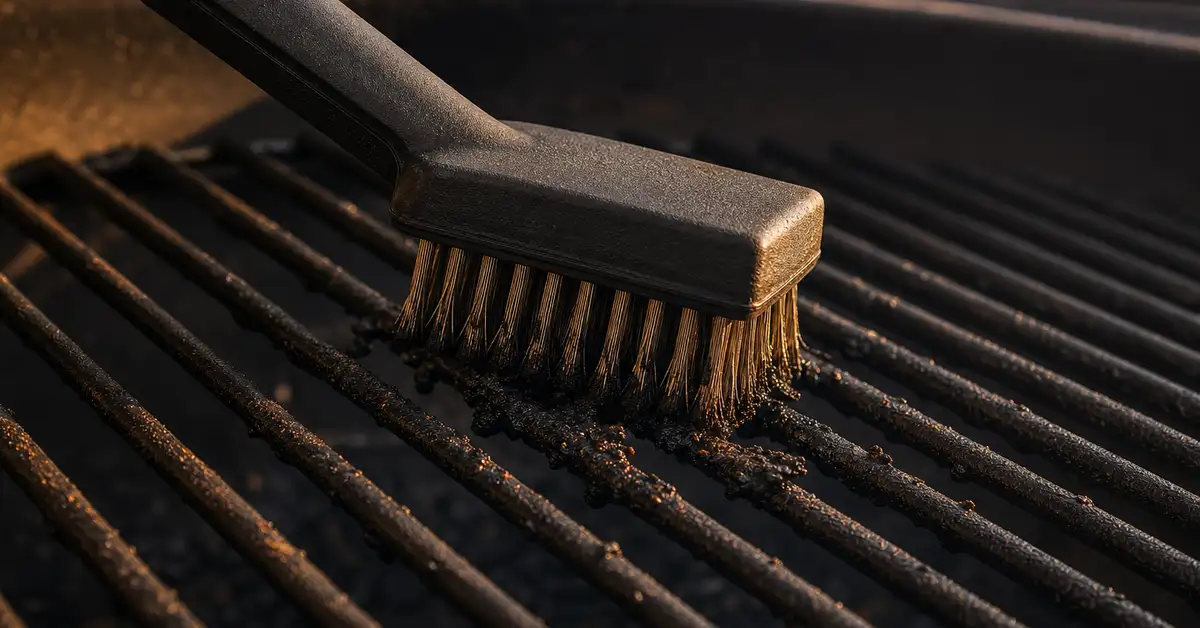
2. Brush or scrape the grates
While the grates are still warm, clean them with a bristle-free grill brush, a coil brush or a grill scraper. Work along the bars, then flip and do the underside. Warm grates release debris far more easily than cold ones.
3. Remove and soak the grates (deep clean)
For a deep clean, lift the cooled grates out and soak them in hot water with dish soap for 20–30 minutes, then scrub. Avoid harsh oven cleaners on porcelain or cast-iron grates, which can strip the finish.
4. Scrape the interior and clean the burners
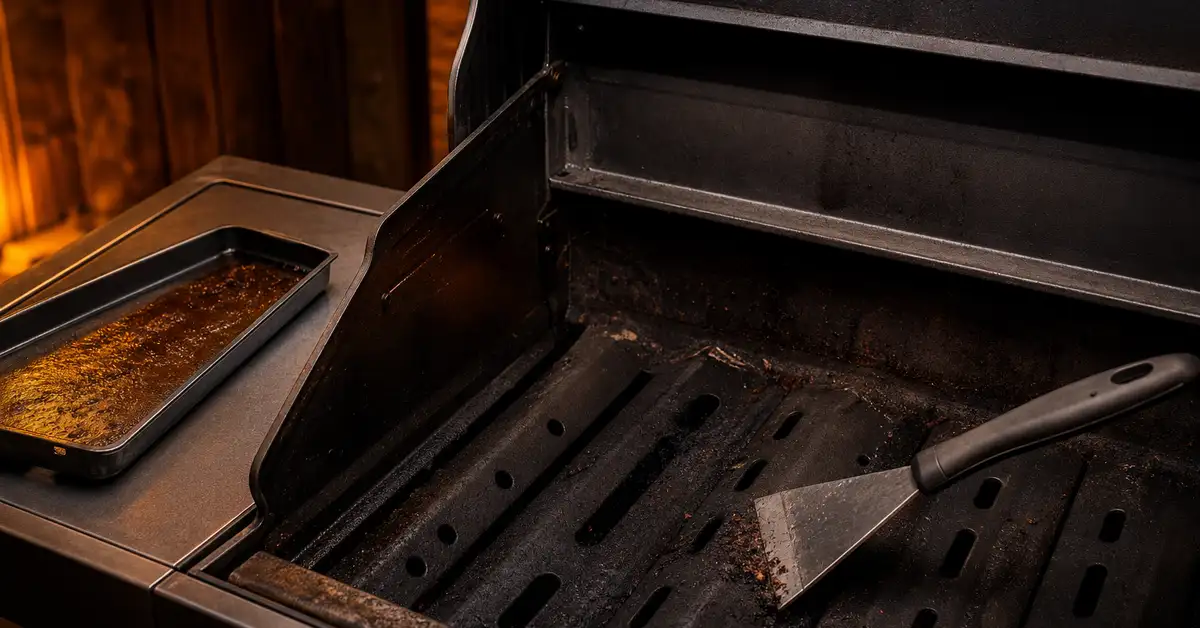
Scrape charred buildup off the inside of the lid and the cook-box walls with a plastic scraper, letting it fall to the bottom tray. On a gas grill, gently brush the burner tubes side-to-side (never up and down) to keep the gas ports clear. On a charcoal grill, empty all the old ash.
5. Empty the grease tray and catch cup
Pull out the grease tray and catch cup, bin the debris, and wipe both clean. This is the most important safety step — built-up grease is the leading cause of flare-ups and grill fires, and it attracts pests.
6. Wipe down the exterior
Wipe the lid and body with warm soapy water or a stainless cleaner, and clean the control knobs and side tables. Check that the gas hose and connections look sound while you’re there.
7. Dry, re-oil the grates and reassemble
Dry everything fully to prevent rust, then wipe the grates with a light coat of high-smoke-point oil. Reassemble, and you’re ready for the next cook — with better flavor and fewer flare-ups. If your grates are new or bare cast iron, see our how to season a grill guide for the full oiling routine — porcelain-enameled and stainless grates can skip straight past it.
Safety: grease fires and wire bristles
Two things matter most. First, grease: a full grease tray or a grease-caked cook box is the leading cause of dangerous flare-ups and grill fires — empty the tray every few cooks and keep the interior scraped. Second, brush bristles: traditional wire brushes can shed tiny metal bristles that stick to grates and end up in food, a genuine health hazard. Many barbecue safety advocates now recommend bristle-free brushes, coil/spring brushes, or a grill scraper instead, and inspecting the grates before you cook.
The one tool worth buying
A good bristle-free grill brush or scraper makes the after-cook routine quick and avoids the metal-bristle risk entirely.
Transparency first: This guide contains affiliate links. If we’re enrolled in an affiliate program, we may earn a commission at no extra cost to you — it never affects how we research or rank. Read our full affiliate disclosure policy.
Check bristle-free grill brushes on Amazon →
A clean cooker is the easy win before the fun part. New to all this? See our best smokers for beginners guide, or if propane’s more your thing, our best small & portable gas grills guide. Considering a kamado instead? See our best kamado grills guide. New to charcoal specifically? Our how to start a charcoal grill guide covers chimney starters, safe lighting and the two-zone setup. Keep an eye on doneness with a wireless meat thermometer, and when it’s time to cook low and slow, try how to smoke a pork butt or how long to smoke a brisket.
Frequently asked questions
How often should I clean my grill?
Brush the grates after every cook, empty the grease tray every 3–5 cooks, and do a full deep clean once or twice a season (more if you grill often). Regular quick cleans make the deep clean far easier and keep flavors from turning bitter.
Should I clean the grates hot or cold?
Hot, for the routine clean. Burn the grill off for 10–15 minutes, then brush or scrape while the grates are still warm — residue releases much more easily. For a deep clean you soak the grates once they’ve cooled.
Are wire grill brushes safe?
They work, but traditional wire brushes can shed metal bristles that stick to grates and end up in food — a real health hazard. Many safety advocates now recommend bristle-free brushes, coil/spring brushes or a grill scraper, and always inspecting the grates before cooking.
How do I clean grill grates without a brush?
Burn off the grates, then use a grill scraper, a wooden scraper, or a ball of crumpled foil held with tongs. For stuck-on grime, remove the grates and soak them in hot soapy water before scrubbing with a non-metal pad.
Does cleaning a grill prevent flare-ups?
Yes — a lot of them. Flare-ups are usually grease igniting, so keeping the grease tray emptied and the cook box scraped removes the fuel. It also prevents the pest problems and off-flavors that come with built-up grease.
Is cleaning a gas grill different from a charcoal grill?
The grate and exterior steps are the same. On a gas grill you also clean the burner tubes (brush the ports side-to-side) and the grease management system. On a charcoal grill you empty the ash after every cook — leftover ash holds moisture and speeds up rust.
Sources
Cleaning steps and safety guidance verified against America’s Test Kitchen, Family Handyman and The Barbecue Lab, including the widely-reported wire-brush bristle hazard and the grease-fire risk from a neglected grease tray.