An offset smoker — also called a “stick burner” or horizontal offset — burns wood or charcoal in a separate side firebox and draws that heat and smoke sideways through the main chamber before it exits a chimney. It’s the most hands-on way to cook barbecue, and for a lot of people that ritual is the whole point: real wood fire, clean blue smoke, and total control over flavor.
It’s also the steepest learning curve among backyard smokers, and the category where cheap steel bites you hardest. We’re a research-led site, not a testing lab, so this guide pulls together manufacturer specifications, reputable BBQ editorial and aggregated owner feedback to rank 13 offset smokers for 2026 across every price band — from thin-steel starter barrels to quarter-inch welded pits — and to be honest about what each one does and doesn’t do for the money. Here’s how we choose.
Our top picks at a glance
- Best overall: Oklahoma Joe’s Highland Offset
- Best welded value: Old Country BBQ Pits Pecos
- Best for big cooks: Oklahoma Joe’s Longhorn
- Best heavy-duty value: Char-Griller Grand Champ Offset Smoker (model 8250)
- Best build for the money: Old Country BBQ Pits Brazos
- Best premium (USA-made): Yoder Loaded Wichita
- Best compact premium: Yoder Cheyenne
- Best reverse-flow: Lang BBQ Smokers
- Best compact welded: Old Country BBQ Pits Wrangler
- Best heavy-gauge barrel on a budget: Dyna-Glo Signature Series
- Best big budget barrel: Char-Broil American Gourmet Deluxe
- Best ultra-budget starter: Royal Gourmet CC1830F
- Best grill-smoker combo: Char-Griller Smokin’ Champ
What matters when you’re choosing an offset
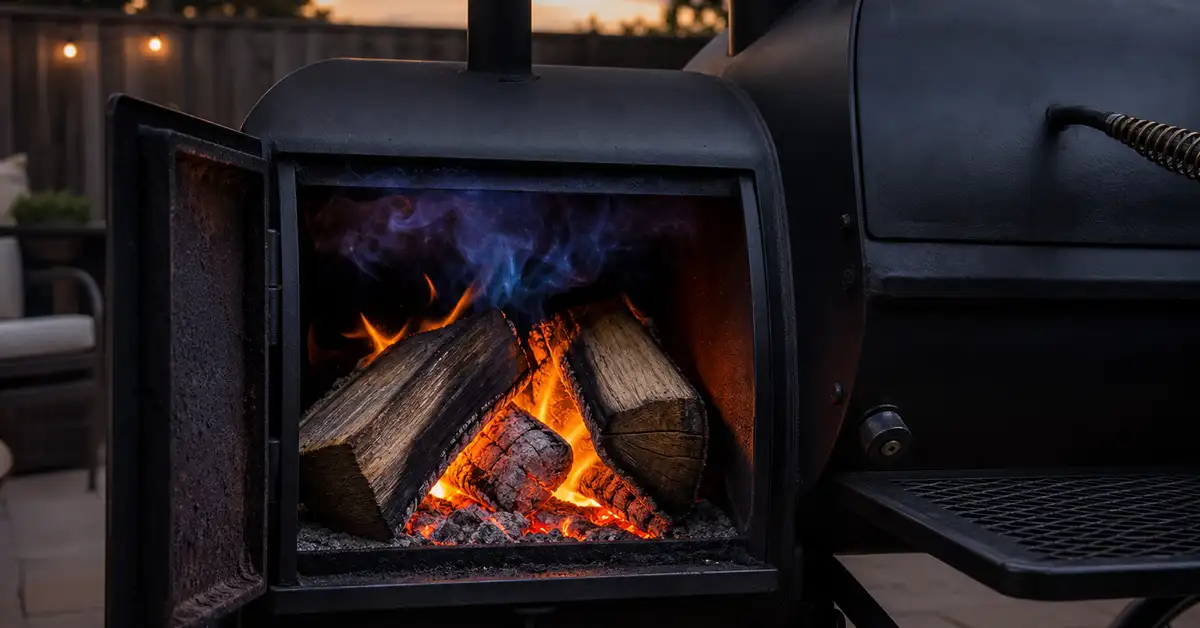
Steel thickness. This is the single biggest divide. Thin-gauge barrels (roughly 16–20 gauge) heat up fast but leak heat and smoke, swing in temperature and rust sooner. Heavier 12-gauge and welded 1/4-inch (0.25″) pits hold a rock-steady fire for hours — that thermal mass is what you’re really paying for.
Traditional vs reverse-flow. A traditional offset runs hotter near the firebox. A reverse-flow design routes smoke under a baffle plate to the far end and back, evening out the temperature (at the cost of a little flavor purism and easy firebox access). Several models below offer both layouts.
Cooking area & capacity. Look past the headline square inches to the main-chamber grate: 600–900 sq in suits most families; 1,000+ sq in handles multiple briskets. Firebox and warming grates pad the total but aren’t prime low-and-slow real estate.
Seals, dampers & fire management. Tight lids, quality dampers and a firebox that breathes well make temperature control far easier. Budget offsets often need cheap “mods” (gasket seals, a baffle, a better thermometer) to cook their best — factor that in.
Price vs commitment. An offset rewards attention. If you want set-and-forget, a pellet or electric cabinet is a better fit; if you want to tend a fire, buy the heaviest steel your budget allows.
The 13 best offset smokers for 2026
Ranked for a typical US backyard cook who wants real wood-fired barbecue, but each entry names who it’s for — jump to the build quality and budget that suit you.
Transparency first: This guide contains affiliate links. If we’re enrolled in an affiliate program, we may earn a commission at no extra cost to you — it never affects how we research or rank. Read our full affiliate disclosure policy.
1. Oklahoma Joe’s Highland Offset
What it is: the classic mid-tier stick burner that most cooks are pointed toward as their first serious offset — heavy porcelain-coated steel at a still-reachable price.
Best for: the buyer who wants genuine offset barbecue and a smoker that will last, without stepping up to a welded pit.
Why we rate it: around 900 sq in of cooking area (roughly 619 primary + 281 firebox), 12-gauge construction, adjustable dampers and a huge aftermarket for seals and mods. A reverse-flow version (about 1,093 sq in, with removable baffles and an optional traditional layout) is worth the small premium for easier temperature control.
Watch-outs: like all offsets in this class it benefits from a gasket seal and a good leave-in thermometer; the firebox paint needs seasoning and care.
The specs: ~900 sq in (reverse-flow ~1,093) · 12-gauge steel · traditional or reverse-flow · charcoal/wood · $$
2. Old Country BBQ Pits Pecos
What it is: a fully-welded Texas-built offset that punches far above its price, sold through Academy and specialist dealers.
Best for: cooks who want welded-seam quality and honest steel without four-figure spend.
Why we rate it: 14-gauge steel body with 11-gauge lids and fully welded seams (no leaky bolt-together joints), roughly 902 sq in of cooking space, and a firebox that breathes well. It cooks like a much more expensive pit with minimal modding.
Watch-outs: heavy; availability is regional (Academy/Texas dealers); fit-and-finish can vary unit to unit, so inspect before buying.
The specs: ~902 sq in · 14-ga body / 11-ga lids · fully welded, traditional · charcoal/wood · $$
3. Oklahoma Joe’s Longhorn
What it is: the Highland’s larger sibling — the same build in a bigger body for feeding a crowd.
Best for: entertainers who routinely run multiple racks or more than one brisket.
Why we rate it: about 1,060 sq in total (roughly 751 primary + 309 secondary), heavy-gauge steel, and the same well-supported platform as the Highland. A reverse-flow variant is available for more even heat.
Watch-outs: big and heavy to move; the extra chamber takes more fuel and fire management to hold temperature end-to-end.
The specs: ~1,060 sq in · heavy-gauge steel · traditional or reverse-flow · charcoal/wood · $$
4. Char-Griller Grand Champ Offset Smoker (model 8250)
What it is: a big, heavy barrel-style offset with what Char-Griller calls a Side Fire Box attachment for Texas-style offset smoking.
Best for: value hunters who want mass and capacity and are willing to manage a traditional (hotter-near-the-firebox) layout.
Why we rate it: Char-Griller lists 1,200 sq in in total (780 primary), heavy-duty steel construction, an insulated grill body and dual damper controls, with a heat range up to 400°F and a grill weight of 254 lb.
Watch-outs: heavy to position; as a traditional offset it runs a temperature gradient, so rotate food and consider a baffle.
The specs: 1,200 sq in (780 primary) · heavy-duty steel, insulated body · traditional · up to 400°F · 254 lb · charcoal · $$
5. Old Country BBQ Pits Brazos
What it is: a heavier, all-welded 1/4-inch pit that brings near-custom build quality to a mid-four-figure price.
Best for: serious hobbyists who want competition-style steel without a custom-pit wait list.
Why we rate it: all-welded 1/4-inch (0.25″) plate construction, over 1,000 sq in of cooking space, and the thermal stability to hold clean smoke through a long brisket cook. It’s a frequent “first real pit” recommendation from BBQ specialists.
Watch-outs: very heavy; regional availability (Academy/Texas); confirm the current model and dimensions before buying.
The specs: 1,000+ sq in · 1/4″ welded plate · traditional · charcoal/wood · $$$
6. Yoder Loaded Wichita
What it is: a made-in-USA welded offset that’s a genuine lifetime pit at a (relatively) attainable premium price.
Best for: the cook who wants to buy once and cry once — heavy steel, precise control, decades of service.
Why we rate it: 1/4-inch steel construction, about 1,610 sq in of cooking surface, 304 stainless grates, and a removable heat-management plate that lets you run it as a reverse-flow-style even cooker or pull the plate for higher-heat, traditional airflow.
Watch-outs: sold direct and through specialist dealers rather than big-box; very heavy; the price is a serious commitment.
The specs: ~1,610 sq in · 1/4″ steel · 304 stainless grates · removable heat-management plate · $$$$
7. Yoder Cheyenne
What it is: Yoder’s smaller welded offset — the same USA build in a patio-friendly footprint.
Best for: cooks who want premium steel and control but don’t need to feed a crowd (or lack the space for a Wichita).
Why we rate it: heavy 3/16-inch pipe-and-plate construction, dual-damper through-draft control and a door thermometer — a compact pit that still holds a steady fire far better than any thin-steel barrel.
Watch-outs: smaller capacity; sold direct/specialist; confirm the current model and exact dimensions with Yoder before buying.
The specs: heavy 3/16″ pipe/plate · offset firebox · dual-damper draft · charcoal/wood · $$$$
8. Lang BBQ Smokers
What it is: the maker that popularized the reverse-flow offset — heavy welded pits built to order in the USA.
Best for: cooks who specifically want a reverse-flow pit with a proven even-heat reputation and are buying for the long haul.
Why we rate it: Lang’s signature reverse-flow design routes smoke under a baffle to deliver notably even temperatures across the chamber, and the welded heavy-steel builds are known for durability. A frequent reference point whenever reverse-flow comes up.
Watch-outs: sold direct from the maker; heavy and premium-priced; models and cooking areas vary widely, so confirm current specs with Lang before ordering.
The specs: heavy welded steel · reverse-flow · direct from maker · charcoal/wood · $$$$ (confirm current models/specs with the manufacturer)
9. Old Country BBQ Pits Wrangler
What it is: Old Country’s smaller welded offset — an affordable way into welded-seam quality.
Best for: smaller patios and cooks who want welded steel over a bolt-together barrel but don’t need Pecos/Brazos capacity.
Why we rate it: about 920 sq in of cooking area, welded steel construction, and heavy-duty shelves and wagon wheels for moving it — genuine pit quality in a compact, lower-cost package. Sold at Academy.
Watch-outs: thinner steel than the Pecos/Brazos; regional availability; still benefits from a seal and good thermometer.
The specs: ~920 sq in · welded steel · traditional · charcoal/wood · $$
10. Dyna-Glo Signature Series Barrel Offset
What it is: a heavy-gauge barrel offset that offers more steel than most budget starters, widely stocked at Lowe’s and Home Depot.
Best for: first-time offset buyers who want better build than a bargain barrel without a big jump in price.
Why we rate it: the Signature Series barrel offset carries roughly 962 sq in of cooking area with a heavy-gauge steel body, porcelain-enameled grates and an offset firebox that doubles as a small grill. Good bones for modding.
Watch-outs: traditional layout with the usual heat gradient; assembly quality and seals vary; confirm the exact model (barrel vs vertical) before buying.
The specs: ~962 sq in · heavy-gauge steel · traditional · charcoal/wood · $
11. Char-Broil American Gourmet Deluxe Offset
What it is: a large, inexpensive barrel offset-and-grill combo that maximizes cooking area per dollar.
Best for: budget buyers who want lots of grate space and are happy to add a few mods.
Why we rate it: the 1280 model offers about 1,280 sq in total (roughly 925 primary + 355 firebox), three porcelain-coated grates and a lift-off firebox lid for direct grilling — a lot of versatility cheaply. (A smaller 700-series runs ~670 + 355 sq in.)
Watch-outs: thin steel means heat loss, temperature swings and rust if left uncovered; plan on a gasket seal and a good thermometer to get the best from it.
The specs: ~1,280 sq in (925 + 355) · thin-gauge steel · traditional + grill · charcoal/wood · $
12. Royal Gourmet CC1830F
What it is: a 28-inch barrel charcoal grill with an offset smoker box — one of the cheapest ways to try stick-burning.
Best for: the curious first-timer testing whether offset cooking is for them before committing more money.
Why we rate it: around 811–824 sq in total (roughly 475 sq in primary grate + 151 warming rack + 197 offset box), a two-level adjustable charcoal pan, and shelves and wheels — a genuine offset experience for very little.
Watch-outs: thin steel, loose seals and a swingy temperature — expect to babysit the fire and add basic mods; it’s a starter, not a lifetime pit.
The specs: ~811–824 sq in · thin-gauge steel · traditional + grill · charcoal/wood · $
13. Char-Griller Smokin’ Champ
What it is: a barrel grill with a side firebox that works as both a charcoal grill and an offset smoker.
Best for: buyers who want one affordable unit that grills day-to-day and smokes on the weekend.
Why we rate it: roughly 580 sq in of primary cooking area (more counting the firebox grate), a sturdy barrel body, cast-iron grates and a side firebox with dampers — flexible and inexpensive.
Watch-outs: as a traditional offset it runs a heat gradient, and the mid-gauge steel benefits from seals; it’s a jack-of-all-trades rather than a dedicated pit.
The specs: ~580 sq in primary · mid-gauge steel · traditional + grill · charcoal/wood · $
New to smoking? Start with our best smokers for beginners guide, or compare set-and-forget options in our best electric smokers roundup. Whatever you burn, our guides to the best wood pellets and best wood chips & chunks, and a good wireless meat thermometer, will help — and once your fire’s running, our guide to controlling temperature on a smoker covers the intake-vs-exhaust basics every offset needs. When you’re ready to cook, see how long to smoke a brisket and rub it down with one of our best BBQ rubs and seasonings. And since a pit like this lives outdoors year-round, a properly fitted grill cover is cheap insurance against rust. Shopping around Black Friday? See our Black Friday grill & smoker deals guide.
Offset smokers compared
| Model | Best for | Cook area | Steel | Layout | Price |
|---|---|---|---|---|---|
| Oklahoma Joe’s Highland | Overall | ~900 sq in | 12-ga | Trad./reverse | $$ |
| Old Country Pecos | Welded value | ~902 sq in | 14-ga / 11-ga lids | Traditional | $$ |
| Oklahoma Joe’s Longhorn | Big cooks | ~1,060 sq in | Heavy-gauge | Trad./reverse | $$ |
| Char-Griller Grand Champ Offset Smoker (8250) | Heavy-duty value | 1,200 sq in | Heavy-duty steel | Traditional | $$ |
| Old Country Brazos | Build for money | 1,000+ sq in | 1/4″ welded | Traditional | $$$ |
| Yoder Loaded Wichita | Premium (USA) | ~1,610 sq in | 1/4″ | Trad./baffle | $$$$ |
| Yoder Cheyenne | Compact premium | Compact | 3/16″ | Traditional | $$$$ |
| Lang BBQ Smokers | Reverse-flow | Varies | Heavy welded | Reverse-flow | $$$$ |
| Old Country Wrangler | Compact welded | ~920 sq in | Welded steel | Traditional | $$ |
| Dyna-Glo Signature | Heavy-gauge budget | ~962 sq in | Heavy-gauge | Traditional | $ |
| Char-Broil American Gourmet Deluxe | Big budget barrel | ~1,280 sq in | Thin-gauge | Traditional | $ |
| Royal Gourmet CC1830F | Ultra-budget | ~811–824 sq in | Thin-gauge | Traditional | $ |
| Char-Griller Smokin’ Champ | Grill-smoker combo | ~580 sq in | Mid-gauge | Traditional | $ |
Specs are drawn from manufacturer materials and reputable reviews; confirm current details with the manufacturer before buying.
Frequently asked questions
Are cheap offset smokers worth it?
They can be, as a way to learn — but go in with clear eyes. Thin-steel barrels under a few hundred dollars leak heat and smoke, swing in temperature and often need modifications (a gasket seal, a baffle plate, a better thermometer) to cook well. If you want to try offset cooking cheaply, a Royal Gourmet or Char-Broil barrel does the job; if you already know you love it, heavier steel saves frustration.
What is a reverse-flow offset smoker?
In a reverse-flow design, smoke is routed under a steel baffle plate to the far end of the chamber and then drawn back over the food to the chimney above the firebox. That extra pass evens out the temperature across the cooking grate, which makes it more forgiving than a traditional offset — at the cost of a little firebox-side access and some flavor purism. Lang popularized it, and Oklahoma Joe’s offers reverse-flow versions of the Highland and Longhorn.
How thick should the steel be?
Thicker steel holds a steadier fire. Budget barrels are typically 16–20 gauge (thin); step-up models like the Oklahoma Joe’s Highland use around 12 gauge; and serious welded pits (Old Country Brazos, Yoder) use 3/16-inch to 1/4-inch plate. The heavier the steel, the less your temperature swings and the less babysitting the fire needs — that thermal mass is the main thing you pay for as prices climb.
Do I need to modify a budget offset?
Often, yes. Common, inexpensive “mods” for thin-steel offsets include high-heat gasket seals on the lid and firebox, a baffle or tuning plates to even out heat, and a reliable leave-in thermometer because the factory dial is usually inaccurate. Heavier welded pits generally need little or nothing out of the box.
Should I burn charcoal or wood in an offset?
Most backyard cooks run a hybrid fire — a bed of lump charcoal for steady heat, with splits of seasoned hardwood added for smoke. Pure wood (stick-burning) gives the classic flavor but demands more skill to keep clean and hot. Whichever you choose, aim for thin blue smoke rather than thick white smoke, which can turn food bitter.
What’s the best offset smoker for a beginner?
The Oklahoma Joe’s Highland is the usual recommendation — enough steel to cook well, a huge support community and easy access to seals and mods. If budget is tight, a Dyna-Glo Signature barrel or Royal Gourmet CC1830F lets you learn the fire cheaply. A reverse-flow model is a little more forgiving on temperature if you’d rather ease in. For a fuller beginner-specific buying framework — including whether offset is the right first smoker at all — see our best offset smokers for beginners guide.
How we choose
We don’t run a testing lab, and we never fake “as tested.” For this guide we combined manufacturer specifications, reputable BBQ editorial and aggregated owner-review patterns, and we screened every model against the CPSC recall database (no offset smokers here are subject to a current recall). We use qualitative price bands rather than prices that go stale. Read more on the How We Choose page.
Sources
Manufacturer and retailer product pages: Oklahoma Joe’s (Highland, Longhorn, reverse-flow), Char-Griller (Grand Champ Offset Smoker 8250, Smokin’ Champ), Old Country BBQ Pits (Pecos, Brazos, Wrangler — via Academy/Tractor Supply/dealers), Yoder Smokers (Loaded Wichita, Cheyenne), Lang BBQ Smokers, Dyna-Glo (Signature Series), Char-Broil (American Gourmet Deluxe), Royal Gourmet (CC1830F). Editorial and owner-review coverage: AmazingRibs.com, Smoked BBQ Source, The Barbecue Lab, Hey Grill Hey, Food & Wine, The Spruce Eats, Popular Mechanics. Safety: U.S. Consumer Product Safety Commission (CPSC). Details were current at the time of research (2026); confirm specifications and availability with the manufacturer before buying.