Short answer: the fastest, most reliable way to start a charcoal grill is a chimney starter — load it, light one sheet of newspaper or a paraffin cube underneath, and wait 15–20 minutes until the coals on top are gray with ash. Then dump them, arrange a two-zone fire (coals banked to one side, empty space on the other), let the grate preheat, and cook. Lighter fluid works too, but the one rule that matters is: never add fluid to lit or hot coals.
Charcoal rewards a little technique. Get the lighting method and the ash-over timing right, and everything downstream — even heat, good sear, fewer flare-ups — gets easier. Here’s the honest walkthrough: the method fork (chimney vs. fire starters vs. fluid), the numbered steps, and the safety habits that matter with live fire.
How to start a charcoal grill, at a glance
Planning figures for a standard kettle grill. Conditions (wind, humidity, altitude) can push these times longer.
| Method | Time to ready | Typical charcoal load |
|---|---|---|
| Chimney starter | 15–20 minutes to ash over | Half chimney (~50–60 briquettes) for moderate/direct grilling; full chimney (~100 briquettes / ~4 lb) for high-heat or larger cooks |
| Fire starters / paraffin cubes (no chimney) | 20–30 minutes | Same load, piled in a pyramid over 2–3 starters |
| Lighter fluid | 15–20 minutes once lit | Pyramid, fluid on unlit charcoal only, then light immediately |
Chimney, fire starters or lighter fluid? The honest method fork
All four routes below get charcoal lit. They differ in speed, mess and how much they intrude on flavor.
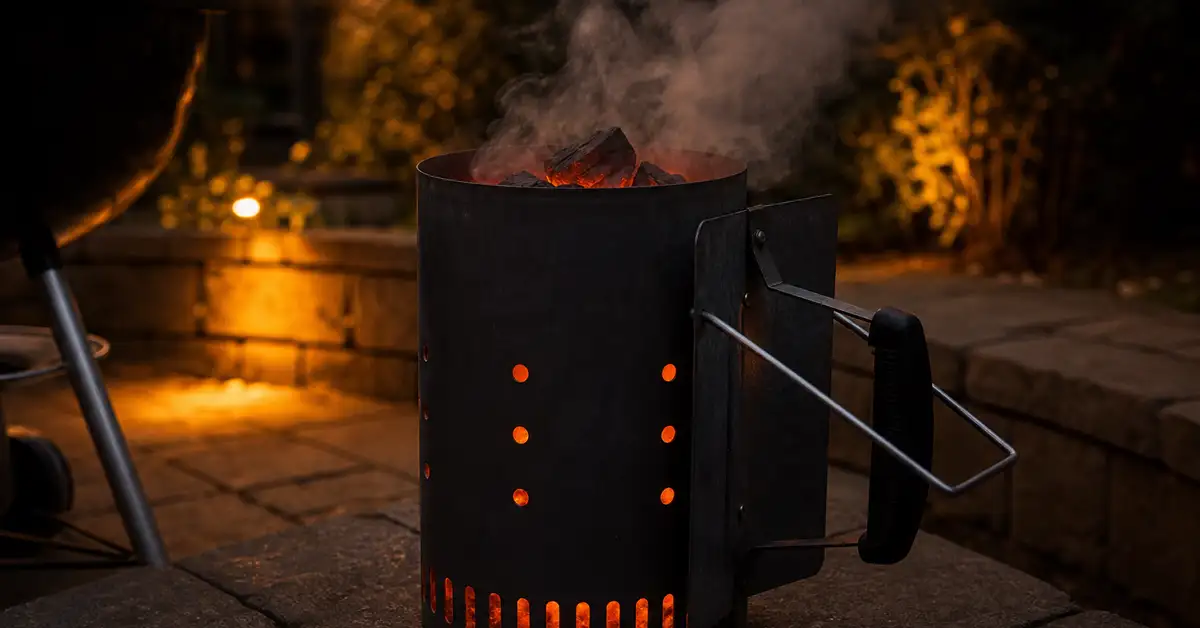
Chimney starter — the default recommendation. It’s the fastest, most consistent method, it leaves no fuel taste in the food, and it’s the cheapest per use once you own one. Newspaper or a firelighter cube underneath does the lighting; the chimney’s draft does the rest. This is what we’d tell a first-time charcoal owner to buy — see our best charcoal chimney starters guide for picks across capacity and price.
Fire starters, paraffin cubes or an electric looped starter — the no-chimney options. Pile the charcoal in a pyramid, tuck 2–3 paraffin cubes or firelighters underneath (or use an electric charcoal starter, a looped heating element you nestle into the pile), and light. Slower than a chimney — typically 20–30 minutes — but no extra equipment needed beyond the starters themselves.
Lighter fluid — we won’t pretend it doesn’t exist. It works, and plenty of people use it. The honest trade-offs: it can leave a faint chemical taste if you rush the cook before the fluid has fully burned off (wait until the coals are solidly gray, not just lit), and fire departments and grill manufacturers alike flag it as the riskiest lighting method. The one rule that matters: never add fluid to lit or hot coals. Fire-safety agencies and Weber are unanimous on this — flames can travel back up the stream of fluid into the bottle in your hand, and pouring fluid onto hot coals can cause a dangerous flare-up. If you use fluid, only apply it to unlit charcoal, cap the bottle and set it well away from the grill, then light immediately.
Briquettes vs. lump charcoal. Briquettes are compressed, uniform, and burn cooler but longer and more predictably — a good fit for anyone learning temperature control. Lump charcoal is pure carbonized wood: it lights a little faster, runs hotter (well above what most briquettes reach), and leaves noticeably less ash, but its irregular chunk sizes mean a less even burn. Neither is “better” outright — briquettes suit longer, steadier cooks; lump suits high-heat searing and shorter sessions where you don’t mind tending the fire a bit more.
How to start a charcoal grill, step by step
1. Open the vents
Open the bottom (intake) vent fully and the lid’s top (exhaust) vent fully before you light anything. Charcoal needs airflow to catch and to burn cleanly — a closed vent is the single most common reason a new charcoal fire struggles.
2. Load the chimney (or pile) for the cook ahead
For quick, high-heat direct grilling (burgers, steaks, veg), fill the chimney all the way — roughly 100 briquettes, about 4 lb. For a moderate, mixed direct/indirect cook, load it half full — roughly 50–60 briquettes. For a longer, lower-heat cook, a third of a chimney is often enough, since you’ll likely add unlit charcoal later to extend the burn.
3. Light it
Chimney: crumple one or two sheets of newspaper, or set 1–2 paraffin cubes, underneath the charcoal grate and light through the bottom vents. Fluid: douse an unlit pyramid, wait about a minute for it to soak in, then light — and never add more once it’s burning.
4. Wait for the ash-over signal — 15–20 minutes
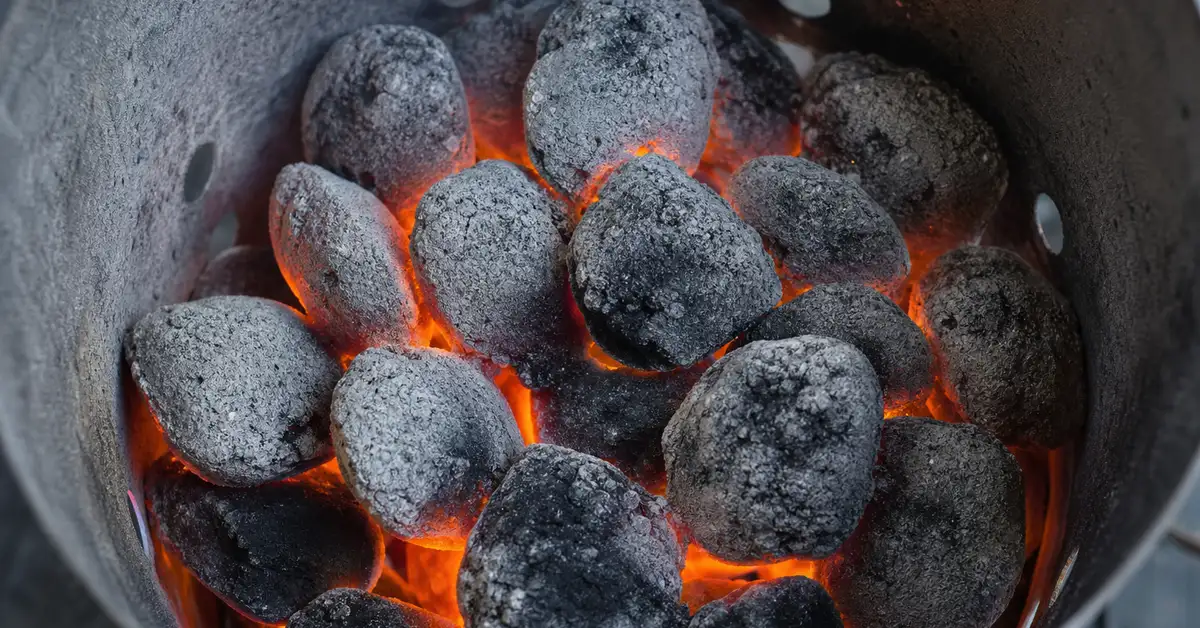
You’ll see flames lick over the top of the chimney within a few minutes; that’s normal, not “ready.” The charcoal is ready to dump once the coals on top have turned gray with ash — typically 15–20 minutes for briquettes in a chimney, sometimes a touch faster for lump. Judge by the ash, not the clock; cold, damp or windy conditions can add several minutes.
5. Dump and arrange the coals
Wearing heat-resistant gloves, pour the ashed-over coals onto the charcoal grate. Work quickly — the chimney and coals are close to 500°F.
6. Set up a two-zone fire
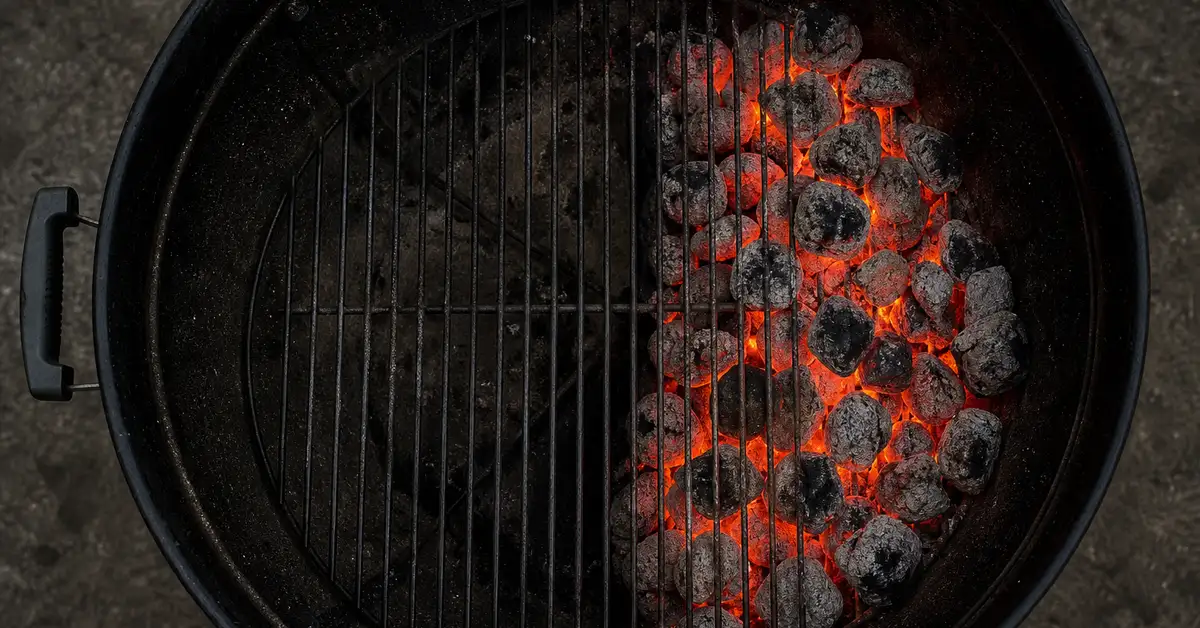
Bank the coals to one side of the grate, leaving the other side empty — this is the single technique that fixes most charcoal cooking problems. The hot (direct) side sears; the cooler (indirect) side finishes thicker cuts gently and gives food somewhere to go if it’s browning too fast. For an even cook all over instead, spread the coals in a single even layer rather than banking them.
7. Preheat the grate
Put the cooking grate on, close the lid, and let the grill preheat for 5–10 minutes before food goes on. This burns off any residue and gets the grate hot enough to sear rather than stick.
8. Cook, using both zones
Sear or char over the direct (hot) side, then move food to the indirect (cooler) side to finish without burning the outside before the inside catches up. Check doneness with an instant-read meat thermometer rather than judging by time or color alone.
9. Control temperature with the vents
More open vents (both intake and exhaust) mean more airflow and a hotter fire; closing them down cools it. The intake vent is your main throttle; the exhaust vent should generally stay mostly open to keep smoke moving. For the full troubleshooting version of this, see our guide to controlling temperature on a smoker, which applies to a charcoal grill running low and slow just as much as a dedicated smoker.
10. Extinguish and dispose of ash safely
When you’re done, close both vents to starve the fire of oxygen, or let the coals burn down naturally. Never leave a lit or smoldering grill unattended, and never rush the ash — see the safety section below before you empty anything.
Troubleshooting
Coals won’t light. Usually airflow or damp charcoal. Check both vents are open, make sure newspaper or starters are actually under the chimney (not beside it), and store charcoal somewhere dry — damp briquettes light reluctantly and burn unevenly.
Coals die out mid-cook. A closed-down intake vent, a lid left open too long, or simply running out of fuel on a longer cook. Add a handful of unlit charcoal to an already-hot fire (charcoal added to burning coals lights within a few minutes, no fluid needed) and open the intake vent to rebuild heat.
Fire’s too hot. Close the intake vent partway — not all the way, or you’ll smother it — and move food to the indirect side while it settles.
Food’s burnt outside, raw inside. The classic sign you were cooking entirely over direct heat. This is exactly what the two-zone setup fixes: sear over the hot side, then move to the cooler side to finish through without the outside overcooking.
How long does a load actually last? A full chimney of lump charcoal gives roughly 1–3 hours of usable heat before it needs topping up; briquettes run longer and steadier, typically 3–7 hours depending on the grill and how open the vents are. For genuinely long, low-and-slow cooks, briquettes with the vents mostly closed down can stretch to 8+ hours.
Safety: fire, carbon monoxide and ash
Outdoor use only — this is the one that matters most. Charcoal produces carbon monoxide (CO) as it burns, and CO is colorless and odorless — you cannot see or smell the danger building up. The Consumer Product Safety Commission (CPSC) and manufacturers are explicit: never use a charcoal grill in a garage (even with the door open), a tent, a camper, an enclosed porch or any other enclosed or semi-enclosed space. CPSC data has repeatedly linked charcoal grills used indoors or in enclosed spaces to a steady toll of CO deaths and hundreds of emergency-room visits every year in the US — charcoal is genuinely one of the most dangerous CO sources in backyard cooking, precisely because people don’t expect a “cooking” appliance to be the culprit.
Chimney starter handling. A lit chimney is metal and runs close to 500°F. Use heat-resistant gloves when you dump it, set it down on a non-combustible surface (concrete, brick, bare earth — never a wooden deck or dry grass), and keep it away from anything flammable while it cools.
Lighter fluid, restated. Never add fluid to lit or hot coals — flames can travel back up the stream into the bottle. Cap the bottle immediately after use and store it well away from the grill.
Clearances and attendance. Keep the grill at least several feet from siding, railings, overhangs and anything else that can burn, watch the wind (it can carry sparks or destabilize the fire), and never leave a lit or smoldering grill unattended — not even for a few minutes.
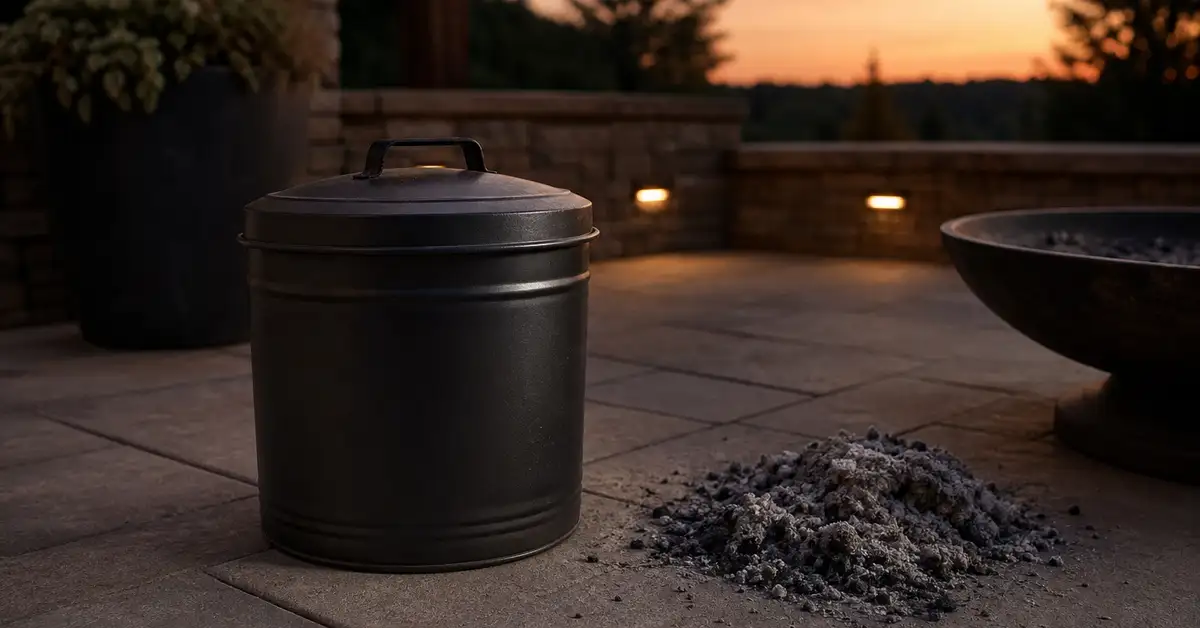
Ash disposal — the step people rush. Charcoal embers and ash can stay dangerously hot for a long time after a cook looks finished — fire-safety guidance treats them as live until they are genuinely cool to the touch, which can take many hours, especially with a large ash bed. Douse thoroughly with water if you need to leave or turn in, stir, and confirm everything is cool before you consider it safe. Once cool, move ash into a metal container with a tight-fitting lid, kept outdoors on a non-combustible surface away from anything flammable — never a plastic bin, a paper bag, or straight into household trash or yard waste, since hidden embers can reignite hours later.
Food safety. Charcoal cooking doesn’t change the internal temperatures food needs to hit to be safe — check our instant-read meat thermometer guide for the tool, and follow USDA-consistent minimum internal temperatures rather than judging by color or time. We never fabricate testing — every time, quantity and safety figure here is traced to a manufacturer, a fire-safety agency, or a reputable published source, not “as tested” on our end.
The one tool worth buying
A chimney starter is inexpensive, lasts for years, and removes almost all the guesswork above — it is the single upgrade we’d recommend before anything else. See our best charcoal chimney starters guide for picks across compact, standard and jumbo capacities.
Transparency first: This guide contains affiliate links. If we’re enrolled in an affiliate program, we may earn a commission at no extra cost to you — it never affects how we research or rank. Read our full affiliate disclosure policy.
Check charcoal chimney starters on Amazon →
Ready to actually pick a grill for a tight space? See our best charcoal grills for small spaces guide, or if you’re buying your first charcoal grill full stop, our best charcoal grills for beginners guide ranks the friendliest kettles to start on. New to charcoal entirely? See our best smokers for beginners guide, or if you’re deciding between fuel types, our best kamado grills guide covers the ceramic charcoal option. Once your grates have seen a few cooks, keep them in shape with our how to clean a grill routine, and if they’re bare cast iron or brand new, see how to season a grill (and new grates). Managing airflow for a longer, lower-heat cook? Our how to control temperature on a smoker guide covers the intake-vs-exhaust rule in depth. Smoking a rack of ribs next? See how long to smoke ribs. Stock up on wood chips and chunks, a good chimney starter, or a jar from our best BBQ rubs & seasonings guide while you’re at it. Our How We Choose page explains the research behind every recommendation on this site.
Frequently asked questions
How long does it take to start a charcoal grill?
With a chimney starter, expect 15–20 minutes from lighting to the coals being ashed over and ready to dump. Without a chimney — using fire starters or paraffin cubes in a pyramid — plan on 20–30 minutes. Lighter fluid lights in a similar 15–20 minute window once it’s burning, but wait until the coals are solidly gray before cooking so any fluid taste has burned off.
How do I light charcoal without lighter fluid?
A chimney starter is the easiest fluid-free method: put a sheet or two of crumpled newspaper (or a paraffin firelighter cube) underneath, light it through the bottom vents, and let the chimney’s draft do the rest. Without a chimney, pile the charcoal in a pyramid with 2–3 paraffin cubes or firelighters tucked underneath, or use an electric looped charcoal starter nestled into the pile.
How do I use a charcoal chimney starter?
Remove the grill’s cooking grate, place the chimney on the charcoal grate, and put newspaper or firelighter cubes underneath. Fill the chimney with charcoal — a full chimney holds roughly 100 briquettes (about 4 lb); half that for a moderate cook — then light the paper or cubes through the vents. Wait 15–20 minutes until the top coals are ashed over, then pour them onto the charcoal grate wearing heat-resistant gloves.
How much charcoal should I use?
For quick, high-heat direct grilling, a full chimney (roughly 100 briquettes, about 4 lb) is typical. For a moderate direct-and-indirect cook, half a chimney (50–60 briquettes) is usually enough. For a long, low-and-slow cook, start with a third of a chimney and add unlit charcoal as needed to extend the burn — briquettes are more predictable for this than lump.
What is a two-zone fire and why does it matter?
A two-zone fire banks the lit coals to one side of the grill, leaving the other side empty. The hot side sears and chars; the cooler side finishes thicker cuts gently without burning the outside before the inside is done. It’s the single technique that fixes the most common charcoal complaint — food that’s charred outside and raw inside.
Is it safe to add lighter fluid to coals that are already lit?
No — never add lighter fluid to lit, hot or even just-warm coals. Fire-safety agencies and grill manufacturers agree this is one of the most common ways people get burned: flames can travel back up the stream of fluid into the bottle in your hand, or cause a sudden, dangerous flare-up. Only apply fluid to unlit charcoal, then light immediately.
Why can’t I use a charcoal grill in my garage or on an enclosed porch?
Burning charcoal produces carbon monoxide, a gas you can’t see or smell, and it can build up to lethal levels in any enclosed or semi-enclosed space — including a garage with the door open, a tent, a camper or an enclosed porch. The CPSC has tied charcoal grills used indoors or in enclosed spaces to a steady annual toll of carbon monoxide deaths and hundreds of emergency-room visits. Charcoal grills are for outdoor use only, in open air.
How do I safely get rid of charcoal ash?
Let it cool completely — charcoal embers can stay dangerously hot for hours, so douse with water and confirm everything is cool to the touch before handling. Once cool, transfer the ash to a metal container with a tight-fitting lid and keep it outdoors on a non-combustible surface, away from anything flammable. Never put ash straight into a plastic bin, a paper bag or household trash — a hidden ember can reignite hours later.
Sources
Chimney starter timing and charcoal quantities verified against Weber — How to Use a Charcoal Chimney Starter and Kingsford — How to Light Charcoal (with a Chimney). Lighter fluid safety guidance from Weber — Lighter Fluid No Way! and the Fairfax County Fire & Rescue Department. Carbon monoxide and charcoal safety from the U.S. Consumer Product Safety Commission (CPSC) — Charcoal and the National Fire Protection Association (NFPA) — Grilling Safety, including NFPA’s ash-disposal guidance. Briquette vs. lump charcoal burn characteristics from Food Fire Friends. Food-safety guidance from FoodSafety.gov — Safe Minimum Internal Temperatures. Details were current at the time of research (August 2026).