Short answer: a flat-top grill’s steel plate is seasoned the same basic way as a Blackstone griddle — wash the factory coating off once, then build up several thin coats of a high-smoke-point oil, heating each one until it stops smoking — but the details differ by brand and by how the plate is made. Camp Chef’s own guidance, for example, calls for re-oiling after every use rather than treating seasoning as a one-time job, and cold-rolled steel plates in general can be more rust-prone than Blackstone’s specific surface if they’re left outdoors uncovered. This guide covers the general theory and the maintenance habits that keep any bare-steel flat-top rust-free and non-stick for years.
If you specifically own a Blackstone griddle and want the exact first-time seasoning walkthrough with Blackstone’s own coat counts and timing, see our how to season a Blackstone griddle guide instead — it covers that procedure step by step. This piece is the broader picture: what’s actually happening to the steel, how it differs by brand, and how to keep a flat-top rust-free over years of outdoor use.
Cold-rolled steel vs. Blackstone’s surface: what’s actually different
Every bare-steel flat-top — Blackstone, Camp Chef, Royal Gourmet, or the flat-top zone built into a combo grill — relies on the same underlying chemistry: a thin film of oil, heated past its smoke point, that polymerizes into a hard, semi-matte layer bonded to the metal. Manufacturer and cookware-industry guidance treats Blackstone’s plate as plain steel with no special factory non-stick coating; the “coating” you wash off before the first seasoning is mill oil and shipping residue, not a proprietary finish. Cold-rolled steel griddles from other brands work the same way and rust the same way if the seasoning layer is neglected.
Where brands genuinely differ is in their maintenance guidance, not the seasoning chemistry itself. Camp Chef’s own support documentation recommends re-seasoning after every use as the main defense against rust, rather than treating the first seasoning session as a one-and-done job. That’s a meaningfully more frequent habit than the “clean warm, thin oil coat” routine maintenance most Blackstone-specific guidance describes — both work, but Camp Chef leans toward more frequent light coats as standard practice. If your flat-top’s manual gives a specific re-seasoning cadence, follow that over any general guidance here.
| Oil | Approx. smoke point | Notes |
|---|---|---|
| Grapeseed oil | ~400–420°F | Widely recommended as a strong all-around seasoning oil — hard, slick finish |
| Avocado oil (refined) | ~480–520°F | Highest smoke point of the common choices; good margin for hot griddles |
| Canola / vegetable oil | ~400°F | Affordable, widely available, the most common default choice |
| Flaxseed oil | ~225–450°F (sources vary) | Builds a very hard, dark layer but can flake if applied too thick — use thin coats only |
| Olive oil | ~375°F | Camp Chef names it as an acceptable option in its own support docs, but its lower, less consistent smoke point makes it a weaker seasoning choice than the oils above |
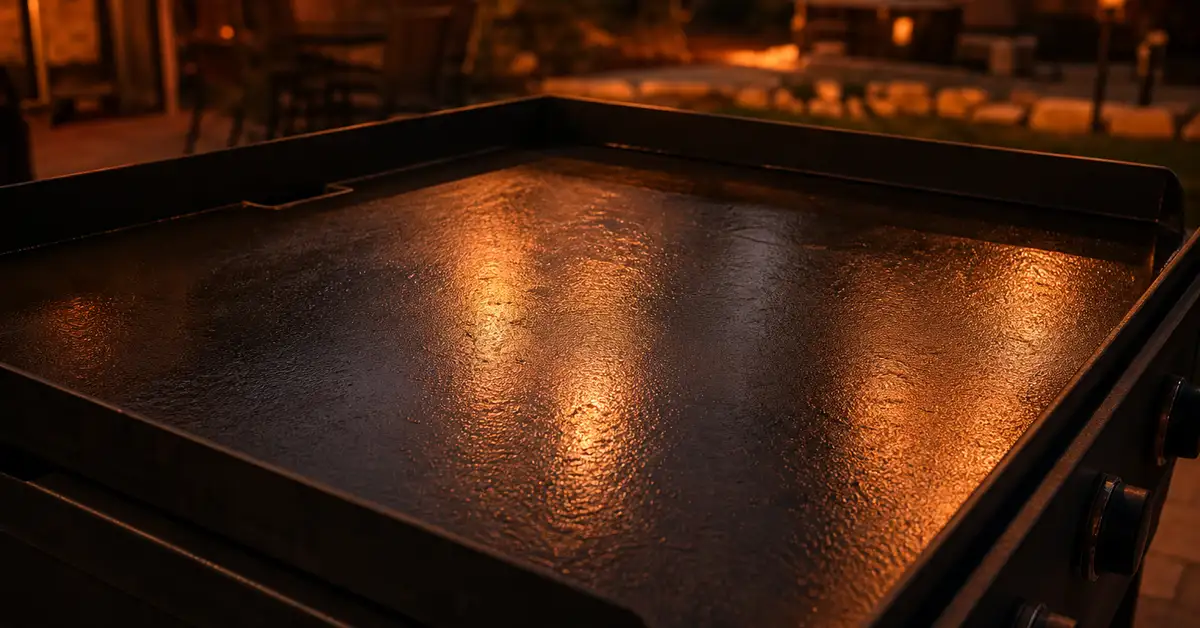
How to season a flat-top grill, step by step
1. Wash off the factory coating once, before the first season
A new flat-top ships with mill oil and shipping residue on the bare steel. Wash the cooking surface with warm water and a little dish soap, rinse thoroughly, and dry it completely. Soap belongs on this surface exactly once — after seasoning, soap breaks down the oil layer you build, so plain water is all a seasoned plate needs from here on.
2. Heat the plate until it’s bone dry and starts to darken
Turn the burners up and let the plate run until any trace of moisture is gone and the bare steel begins to darken slightly. Bare steel flash-rusts fast when it’s damp, so don’t skip straight to oiling a plate that still feels even slightly wet.
3. Apply an ultra-thin layer of a high-smoke-point oil
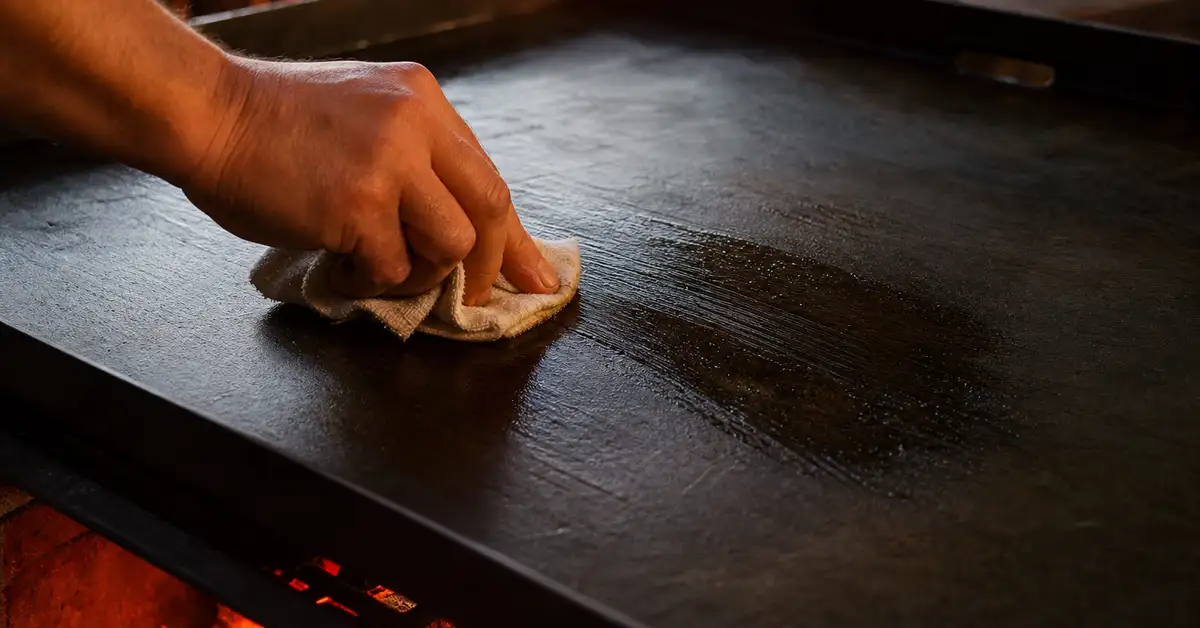
Using tongs and a folded cloth or paper towel, spread a thin film of oil across the whole surface, then wipe off what you can still see. The instinct is to apply more than this looks like it needs — resist it. A layer thin enough that it looks almost dry is the one that actually polymerizes properly.
4. Hold the heat until the smoke stops on its own
Keep the burners on and let the coat smoke for roughly 10–20 minutes, until the smoke tapers off by itself. That’s the sign the oil has finished polymerizing into a hard film rather than just cooking off. Don’t rush this by adding the next coat while the current one is still actively smoking.
5. Repeat for three to five total coats
Apply another ultra-thin coat and let it smoke off, then repeat. A brand-new flat-top typically needs three to five cycles before the surface reaches an even, dark, semi-matte finish. More thin coats consistently beat fewer thick ones.
6. Let it cool completely before handling or covering
Once the last coat has stopped smoking, shut off the heat and let the plate cool fully. A freshly seasoned flat-top holds heat for a while and is still hot to the touch well after the burners are off.
7. After every cook: scrape, wipe, and a thin re-oil
While the plate is still warm, scrape off food debris, wipe it down, and rub on a very thin coat of oil before it goes cold. This is the single habit that does the most to prevent rust between cooks — some manufacturer guidance (Camp Chef, notably) treats this as standard after every single use, not an occasional touch-up.
8. Store dry, lightly oiled, and covered from moisture
Once fully cooled, store the flat-top in a dry place with that thin protective oil coat still on. If you use a soft cover outdoors, vent or tent it rather than sealing the plate against condensation — trapped moisture under a tight cover is one of the more common causes of surface rust on flat-tops left outside.
Troubleshooting: sticky coating, rust spots and uneven seasoning
Sticky or tacky coating instead of smooth and matte: almost always too much oil per coat. A heavy layer can’t fully polymerize during the smoke-off and stays gummy instead of hardening. Scrape it back with a metal scraper, wipe the surface down, and redo that coat with noticeably less oil next time.
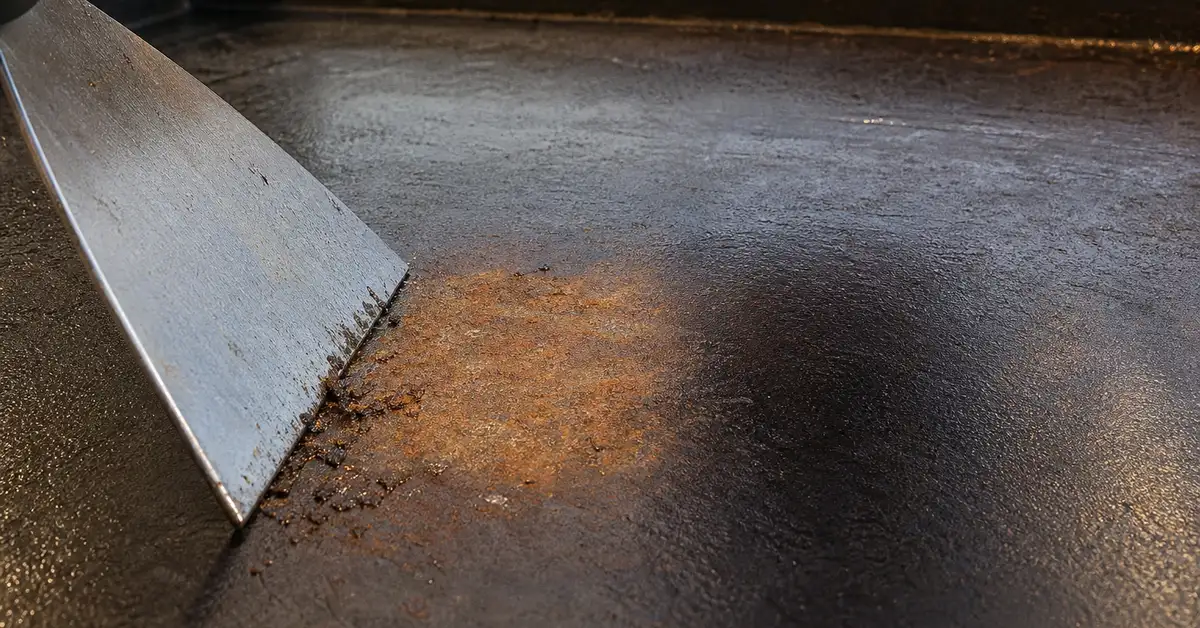
Small rust spots: light surface rust on an otherwise seasoned flat-top is common, especially after damp storage, and it’s fixable without stripping the whole plate. Heat the area, scrape or lightly scrub the rust spot with a griddle stone or fine steel wool and a little oil, wipe away the debris, then re-oil and heat that section (or the whole plate) as you would a normal maintenance coat. Widespread or deep rust calls for a full strip-back and re-season from bare metal rather than a spot fix.
Uneven or patchy seasoning: usually traces back to inconsistent oil thickness across the plate — corners and edges get missed, or one section gets a heavier hand than the rest. Brown or lightly discolored patches that aren’t rust are often just seasoning wearing thin in a high-use area, not damage; a couple of normal maintenance coats generally even it back out. If a patch feels rough or flakes rather than looking merely lighter, scrape that section back to clean metal and rebuild it with fresh thin coats.
Grates instead of a flat plate? That’s a different job
Cast-iron grill grates are ribbed bars with gaps between them, not a single continuous steel sheet, and porcelain-enameled or stainless grates don’t get seasoned with oil at all — scouring or baking oil onto an enameled grate risks damaging the finish rather than protecting it. If it’s grates you’re working on, not a flat-top plate, see our how to season a grill (and new grates) guide for the material-by-material breakdown.
Safety: smoke, propane and oily rags
A seasoning session produces sustained smoke, so treat it like any other high-heat cook: outdoors only, never in a garage, shed or other enclosed space — a flat-top burn-off is a genuine carbon-monoxide risk indoors, the same as any other fuel-burning appliance. Give it the clearance from siding, railings and anything flammable that your manual specifies, and don’t leave a seasoning cycle unattended.
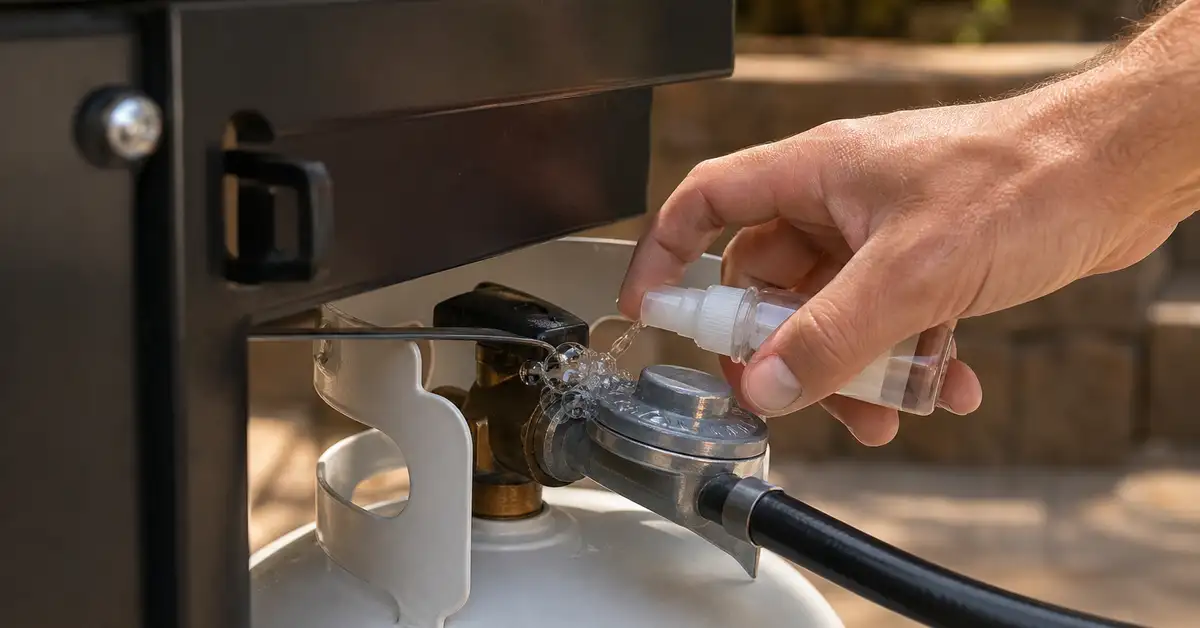
Most flat-top grills run on propane. Leak-check the tank connection with a soapy-water solution before every use and especially after changing the tank — look for bubbles, never test with an open flame. Our propane & charcoal grill safety guide covers the full leak-check routine, clearance distances and carbon-monoxide risk in more depth.
The cloths and paper towels used to apply and wipe off seasoning oil are their own fire hazard: rags soaked in a drying oil can heat up and ignite on their own if they’re balled up or piled while the oil is still curing. Lay them out flat, individually, on a non-combustible surface outdoors until fully dry and stiff, or submerge them in water inside a sealed metal container before disposal. Never ball them up and toss them straight in a trash can.
The gear that helps
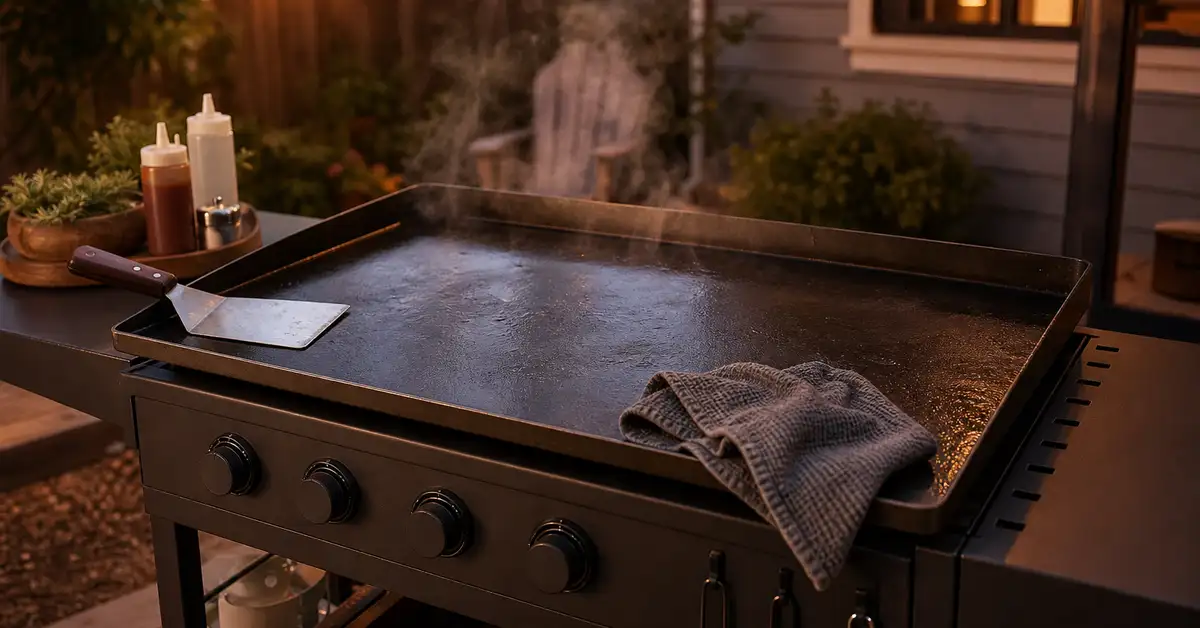
Beyond the flat-top itself, a dedicated bottle of high-smoke-point seasoning oil kept just for this job (not whatever’s open in the kitchen), a metal scraper, and a griddle stone for occasional rust spots make the whole routine easier. If you’re protecting the flat-top between cooks, our best grill covers guide covers weatherproofing for flat-top and cart-style units alike.
Transparency first: This guide contains affiliate links. If we’re enrolled in an affiliate program, we may earn a commission at no extra cost to you — it never affects how we research or rank. Read our full affiliate disclosure policy.
Check flat-top griddle seasoning oil & scrapers on Amazon →
Own a Blackstone specifically? Our how to season a Blackstone griddle guide walks through that exact first-time procedure with Blackstone’s own coat counts and timing. Seasoning grates instead of a flat plate? See how to season a grill (and new grates). Running a propane appliance generally? Our propane & charcoal grill safety guide covers leak-checks and clearance in full. Browse our Technique hub for more backyard-cooking guides, or stock up from our best BBQ rubs & seasonings guide while the plate’s still warm. Shopping for a new flat-top? See our best flat-top griddles guide for verified, currently-sold picks. Our How We Choose page explains the research behind every recommendation on this site.
Frequently asked questions
Is seasoning a flat-top grill different from seasoning a Blackstone griddle?
The underlying chemistry is identical — a thin film of oil polymerized by heat into a hard, semi-matte layer — because both are bare steel plates. What differs is manufacturer maintenance guidance: Camp Chef, for example, recommends re-oiling after every use, a more frequent habit than the “clean warm, occasional touch-up” pattern common in Blackstone-specific advice. If you own a Blackstone, our dedicated Blackstone guide covers Blackstone’s own coat counts and timing exactly.
What’s the best oil for seasoning a flat-top grill?
A high-smoke-point oil works best. Grapeseed and refined avocado oil are commonly recommended as strong all-around choices; canola and vegetable oil are affordable, widely available defaults. Flaxseed builds a very hard, dark layer but can flake if applied too thick. Standard olive oil’s lower, less consistent smoke point makes it a weaker choice than the others, even though some manufacturer guidance lists it as acceptable.
How often should you re-season a flat-top grill?
It depends on the brand and how the plate is used. Some manufacturer guidance (Camp Chef, notably) recommends a light re-oiling after every single use as standard practice. Others treat the “clean warm, thin oil coat” routine as ongoing maintenance and reserve a full multi-coat re-season for when the surface looks dull, patchy or rusty, or food starts sticking noticeably more than usual. Check your specific model’s manual for its recommended cadence.
How do I fix a small rust spot on a flat-top griddle?
Heat the area, scrape or lightly scrub the spot with a griddle stone or fine steel wool and a little oil, wipe away the debris, then re-oil and heat that section as a normal maintenance coat. That’s usually enough for light surface rust. Widespread or deep rust calls for a full strip-back and re-season from bare metal instead of a spot fix.
Why is my flat-top’s seasoning patchy or uneven?
Usually inconsistent oil thickness across the plate — corners and edges get missed, or one area gets more oil than the rest. Light discoloration that isn’t rust is often just seasoning wearing thin in a high-use spot and normally evens out with a couple of regular maintenance coats. If a patch is rough or flaking rather than just lighter in color, scrape it back to clean metal and rebuild it with fresh thin coats.
Why is my flat-top sticky after seasoning instead of smooth?
Almost always too much oil per coat. A heavy layer can’t fully polymerize during the smoke-off and stays tacky instead of hardening into a smooth, semi-matte finish. Scrape the surface back, wipe it down, and redo that coat with noticeably less oil.
Can I season a flat-top grill indoors or in a garage?
No. A seasoning cycle produces sustained smoke and carbon monoxide, the same as any other fuel-burning cook, and CO is colorless and odorless. Season outdoors only, with the same clearance from anything flammable that your manual specifies for normal cooking.
Are the oily rags from flat-top seasoning a fire risk?
Yes. Rags or paper towels soaked in a drying oil can heat up and ignite on their own if they’re balled up or piled while the oil is still curing. Lay them flat outdoors on a non-combustible surface until fully dry, or submerge them in water in a sealed metal container before disposal — never ball them up in a bin.
Sources
General flat-top and carbon-steel seasoning theory, oil-smoke-point comparisons and coat-count guidance verified against Griddles.com — How to Season a New Griddle for Commercial Kitchens and Blackstone Pro — How To Season A Blackstone Griddle (oil smoke-point table). Camp Chef’s own re-seasoning and storage guidance from Camp Chef — Frequently Asked Questions and Camp Chef — 6 Ways to Maintain Your Flat Top Grill. Rust-removal and restoration guidance cross-checked against Blackstone Help Center — How do I remove rust from my griddle top?, Blackstone Products — How to Remove Rust from Your Griddle and Grill Patrol — How to Restore a Rusty Blackstone Griddle. Oily-rag fire-safety guidance from the National Fire Protection Association — Safety with Oily Rags and the Massachusetts Department of Environmental Protection — Disposing of Oily Rags, with the underlying hazard also documented by the U.S. Consumer Product Safety Commission. Details were current at the time of research (August 2026).