Short answer: season a new Blackstone-style flat-top griddle by washing it once with soap and water (the only time soap ever touches it), heating it on high until the surface starts to discolor, then applying 3–5 thin coats of a high-smoke-point oil — letting each coat smoke off completely (roughly 15 minutes) before the next. After that, you don’t re-season from scratch after every cook: clean while warm and rub on a thin protective coat of oil, and save a full re-season for when the surface looks dull, patchy, rusty or starts sticking.
A flat-top griddle is a different surface from a cast-iron grill grate, and it gets seasoned a little differently — even though the underlying idea (polymerized oil, baked on in thin layers) is the same. If you’re seasoning grill grates instead, see our how to season a grill (and new grates) guide rather than following this one for that job. If you own a different brand of flat-top and want the general steel-seasoning theory, oil comparisons and rust-troubleshooting that goes beyond Blackstone specifically, see our how to season a flat-top grill guide.
Griddle seasoning vs. grill-grate seasoning: same idea, different surface
Cast-iron grill grates are thick, ribbed bars with gaps between them; a griddle is one continuous sheet of rolled steel. Both build a protective layer the same way — a thin film of oil, heated until it polymerizes into a hard, non-stick finish — but a griddle’s flat, unbroken surface means the coats go on more evenly and the “too much oil” mistake shows up faster as a sticky, blotchy patch rather than hiding in the gaps between grates. If you own both a grill with bare cast-iron grates and a flat-top griddle, treat them as two separate jobs: this guide is for the griddle plate specifically.
What you’ll need, at a glance
| Step | What to do | Time |
|---|---|---|
| First-time wash | Soap + water, once only — never again after this | A few minutes |
| Initial heat | High heat until the plate starts to discolor | 10–15 minutes |
| Oil per coat | A thin layer — roughly 1.5–2 tbsp for a 2–3 burner griddle, 2–3 tbsp for a 36″ / 4-burner griddle | — |
| Smoke-off per coat | Let it smoke until the smoke stops | ~15 minutes per coat |
| Total coats (new griddle) | Repeat the thin-oil-and-heat cycle | 3–5 coats |
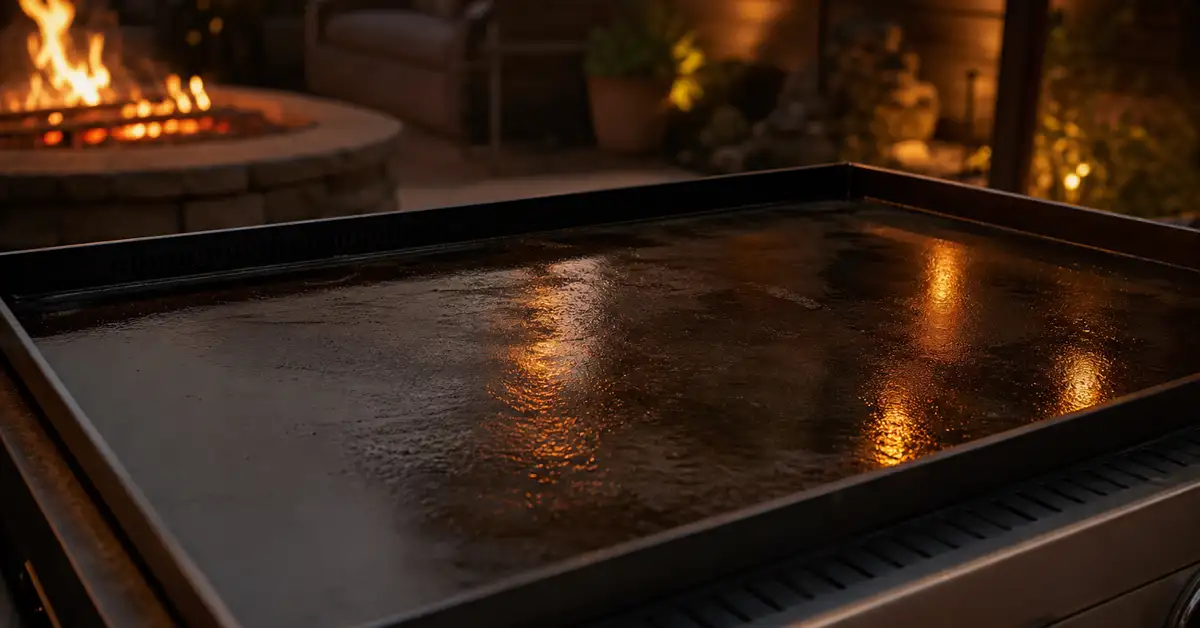
How to season a new Blackstone griddle, step by step
1. Wash it once with soap and water — the only time you ever will
A brand-new griddle ships with a factory coating (mill oil and shipping residue) on the steel. Wash the whole cooking surface with warm water and a little dish soap, rinse thoroughly, and dry completely with paper towels. This is genuinely the one and only time soap belongs on this surface — after seasoning, soap breaks down the oil layer you’re about to build.
2. Heat on high until the plate starts to discolor (10–15 minutes)
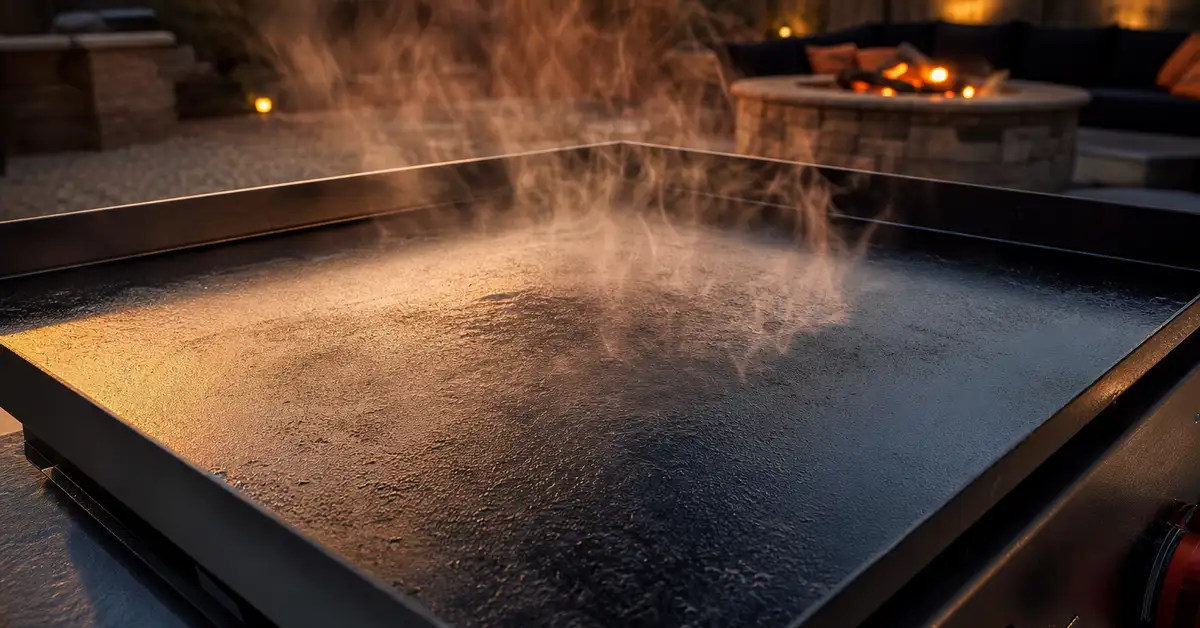
With the griddle dry, turn all burners to high and let it run until the bare steel begins to darken slightly. This opens the metal’s surface and burns off anything the wash missed.
3. Apply a thin coat of high-smoke-point oil
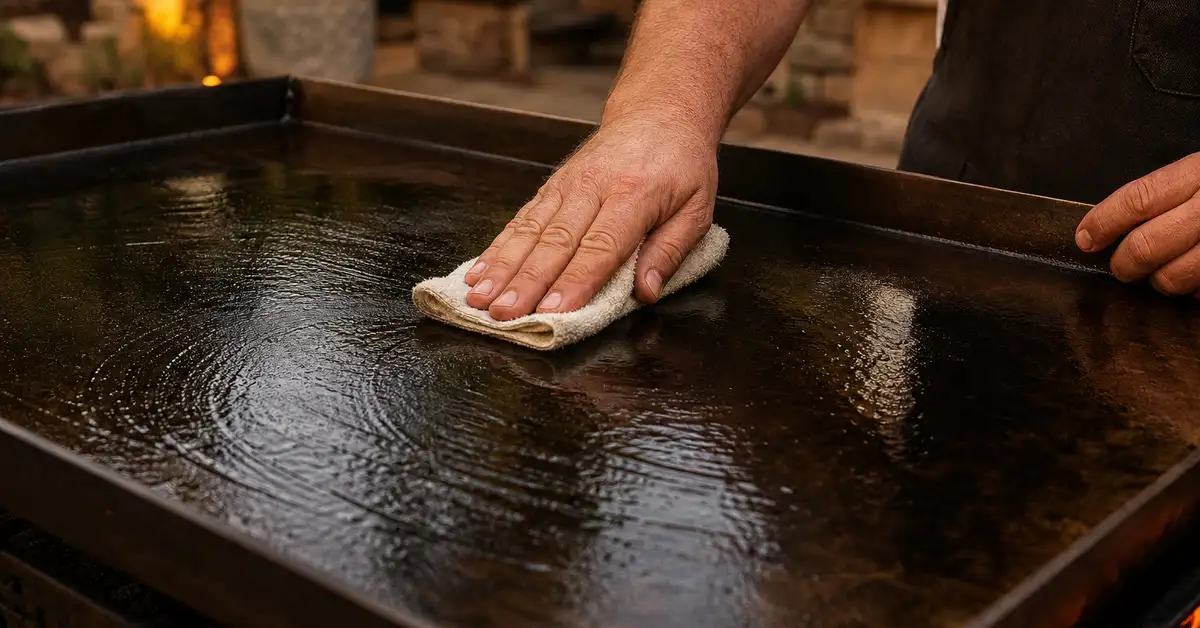
Using tongs and a folded paper towel or cloth, spread a thin layer of oil across the entire surface, including the edges — roughly 1.5–2 tablespoons for a smaller 2–3 burner griddle, 2–3 tablespoons for a 36-inch / 4-burner model. Canola, vegetable, peanut and refined avocado oil all work; Blackstone’s help center notes it previously recommended flax oil specifically for the first seasoning session because its lower smoke point burns off faster and builds an especially hard layer. Whichever you choose, thin is the goal — you should barely see it.
4. Let the coat smoke off completely (~15 minutes)
Leave the heat on high and let the oil smoke until the smoke stops on its own — that’s the signal the layer has polymerized rather than just cooked off. Don’t add the next coat while the current one is still smoking.
5. Repeat for 3–5 total coats
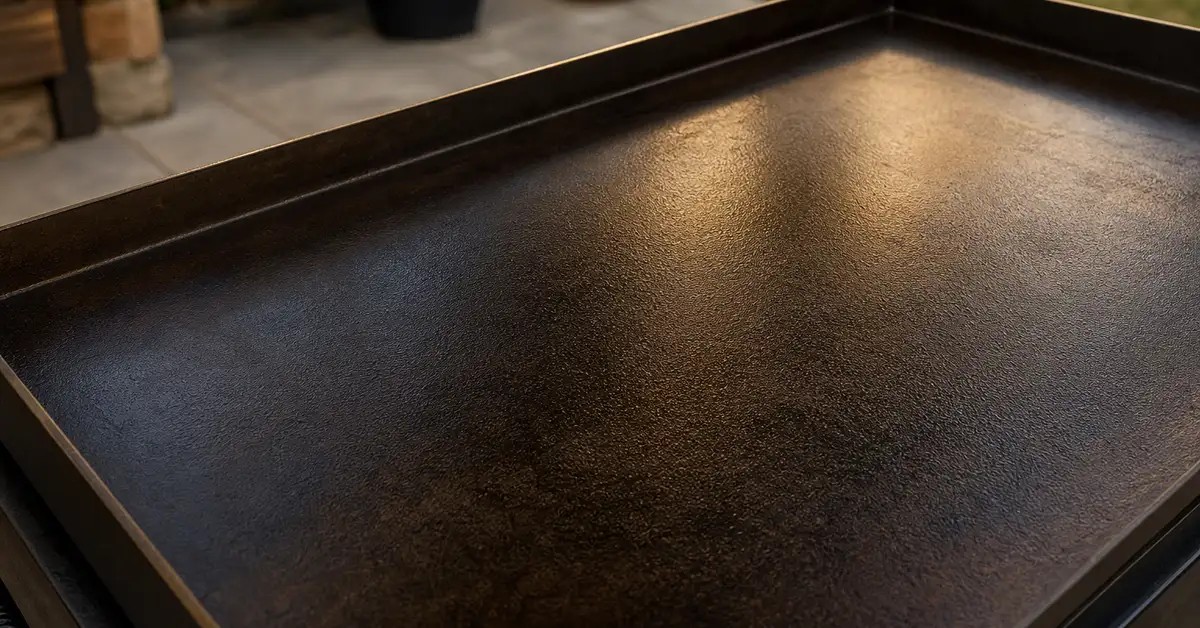
Apply another thin coat the same way and let it smoke off, then repeat. A new griddle typically needs three to five cycles before the surface has an even, dark, semi-matte finish. More thin coats beat fewer thick ones every time.
6. Turn off the heat and let it cool fully
Once the last coat has stopped smoking, shut off the burners and let the griddle cool completely before you touch it, cover it, or put tools away. A freshly seasoned surface is still very hot.
7. Cook on it — cooking itself adds seasoning
Your first few cooks continue building the seasoning layer. A little extra oil and a slightly lower confidence in stick-release for the first cook or two is normal; it improves quickly.
8. After every cook from here on: clean warm, then a thin oil coat — not a full re-season
While the griddle is still warm, scrape off food debris, wipe it down, and rub on a very thin layer of oil before it goes cold. That’s routine maintenance, not seasoning from scratch, and it’s what actually keeps the surface protected between cooks. See the FAQ below for when a full re-season is actually warranted.
The most common mistake: too much oil, not too little
A heavy, glossy coat looks more thorough, but it can’t fully polymerize during the smoke-off cycle — it stays tacky and gummy instead, and on a griddle’s flat unbroken surface that shows up immediately as a sticky patch that grabs food instead of releasing it. If a coat comes out sticky rather than smooth and semi-matte, you used too much oil: scrape it back with a metal scraper, wipe it down, and redo that coat thinner.
Safety: smoke, propane and oily rags
A seasoning session produces real smoke for a sustained stretch, so treat it like any other high-heat cook: outdoors only, never in a garage, shed or other enclosed space — a griddle burn-off is a genuine carbon-monoxide risk indoors, same as any other fuel-burning appliance. Give it the clearance from siding, railings and anything flammable that your manual specifies, and don’t leave a seasoning cycle unattended.
Most Blackstone-style griddles run on propane. Leak-check the tank connection with a soapy-water solution before every use and especially after changing the tank — look for bubbles, never test with an open flame. Our propane & charcoal grill safety guide covers the full leak-check routine, clearance distances and carbon-monoxide risk in more depth if you want it.
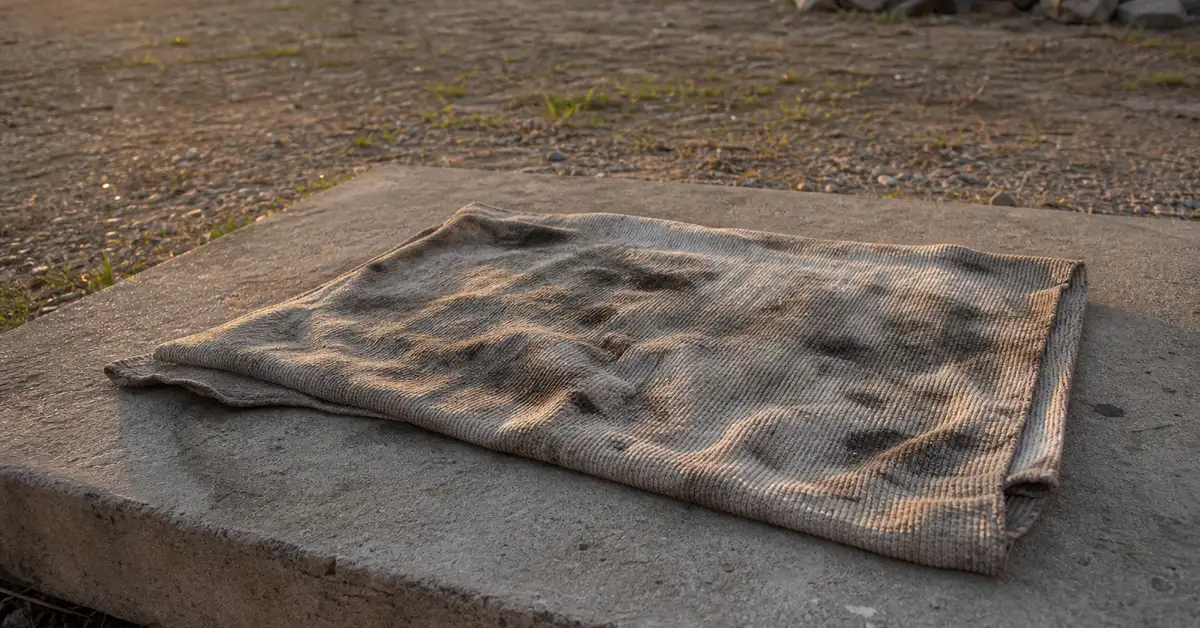
The cloths and paper towels you use to apply and wipe off seasoning oil are their own fire hazard: rags soaked in a drying oil can heat up and ignite on their own if they’re balled up or piled while the oil is still curing. Fire-safety guidance is consistent — lay them out flat, individually, on a non-combustible surface outdoors until fully dry and stiff, or submerge them in water inside a sealed metal container before disposal. Never ball them up and toss them straight in a trash can.
The gear that helps
Beyond the griddle itself, a dedicated bottle of high-smoke-point seasoning oil (kept just for this job, not whatever’s open in the kitchen) and a proper metal scraper make the whole routine easier. If you’re also protecting the griddle between cooks, our best grill covers guide covers weatherproofing for flat-top and cart-style units alike.
Transparency first: This guide contains affiliate links. If we’re enrolled in an affiliate program, we may earn a commission at no extra cost to you — it never affects how we research or rank. Read our full affiliate disclosure policy.
Check flat-top griddle seasoning oil & conditioner on Amazon →
New grates instead of a griddle plate? See how to season a grill (and new grates) for the cast-iron version of this job. Own a different flat-top brand and want the general steel-seasoning theory and rust troubleshooting? See our how to season a flat-top grill guide. Running a gas or propane appliance generally? Our propane & charcoal grill safety guide covers leak-checks and clearance in full. Looking for more backyard-cooking technique? Browse our Technique hub, or stock up on a jar from our best BBQ rubs & seasonings guide while the griddle’s still warm. Shopping for the griddle itself? See our best flat-top griddles guide for verified, currently-sold picks. Our How We Choose page explains the research behind every recommendation on this site.
Frequently asked questions
How many coats does a new Blackstone griddle need?
Plan on three to five thin coats of oil, each heated on high until the smoke stops completely (roughly 15 minutes per coat) before the next goes on. More thin coats build a better surface than fewer thick ones.
What oil should I use to season a griddle?
Any high-smoke-point oil works: canola, vegetable, peanut or refined avocado oil are common current choices. Blackstone’s own help center notes it previously recommended flax oil specifically for the very first seasoning session, since its lower smoke point burns off faster and builds an especially hard initial layer. Whatever you use, apply it thin.
How often should I re-season a Blackstone griddle?
Not after every cook. The routine maintenance habit — scrape and wipe while warm, then a thin coat of oil — is what keeps a griddle protected day to day. Save a full re-season (multiple oil-and-heat cycles from scratch) for when the surface looks dull, patchy or rusty, food starts sticking noticeably more than usual, or after you’ve had to scrub off rust. For most home cooks that works out to every few months, not every few cooks.
Do I really need to wash a new griddle with soap first?
Yes — a brand-new griddle ships with a factory coating that needs to come off before seasoning, and soap and water is the recommended way to do it. It’s the one and only time soap should touch the surface; after that, soap breaks down the seasoning layer you’ve built, so plain water (or nothing at all) is all a seasoned griddle needs.
Is griddle seasoning the same as seasoning grill grates?
The underlying principle is the same — a thin film of oil polymerized by heat into a hard, non-stick layer — but the surface is different. Grill grates are ribbed cast iron with gaps; a griddle is one flat, continuous steel plate, so coats go on more evenly and over-oiling shows up faster as a sticky patch. See our how to season a grill (and new grates) guide if it’s grates you’re working on.
Why is my griddle sticky after seasoning instead of smooth?
Almost always too much oil per coat. A heavy layer can’t fully polymerize during the smoke-off and stays tacky instead of hardening into a smooth, semi-matte finish. Scrape the surface back, wipe it down, and redo that coat with noticeably less oil.
Can I season a griddle indoors or in a garage?
No. A seasoning cycle produces sustained smoke and carbon monoxide, the same as any other fuel-burning cook, and CO is colorless and odorless. Season outdoors only, with the same clearance from anything flammable that your manual specifies for normal cooking.
Are the oily rags from griddle seasoning a fire risk?
Yes. Rags or paper towels soaked in a drying oil can heat up and ignite on their own if they’re balled up or piled while the oil is still curing. Lay them flat outdoors on a non-combustible surface until fully dry, or submerge them in water in a sealed metal container before disposal — never ball them up in a bin.
Sources
Seasoning steps, coat count and oil guidance verified against Blackstone Help Center — How do I Season my New Griddle? and Blackstone Help Center — What oil is best to use?. First-time factory-coating wash instructions from the Blackstone Griddle Care & Seasoning Guide (manufacturer PDF via Home Depot), which states plainly that the first-use soap wash is “the only time you should use soap on the griddle.” Routine after-cook maintenance versus full re-seasoning guidance from Blackstone Help Center — How do I prevent rust? and Blackstone Products — How often does a griddle need to be seasoned?. Oily-rag fire-safety guidance from the National Fire Protection Association — Safety with Oily Rags and the Massachusetts Department of Environmental Protection — Disposing of Oily Rags, with the underlying hazard also documented by the U.S. Consumer Product Safety Commission. Details were current at the time of research (August 2026).