There isn’t one best grill for every beginner. The easiest one to learn is the one whose fuel matches how hands-on you want to be: gas and pellet ask the least of you day to day, and charcoal asks the most but is a good way to learn fire control. Pick the fuel first, then the model.
How to judge a first grill: what you actually have to learn
This is the job of this page: not to rank grills, but to show what a first-time griller has to manage with each fuel — lighting, heat control, cleanup and fuel logistics — so you can choose the one you’ll actually enjoy using. For the fire-code and balcony angle see our grills for small spaces guide, and for the price-versus-value angle see how to actually judge value.
Gas (propane)
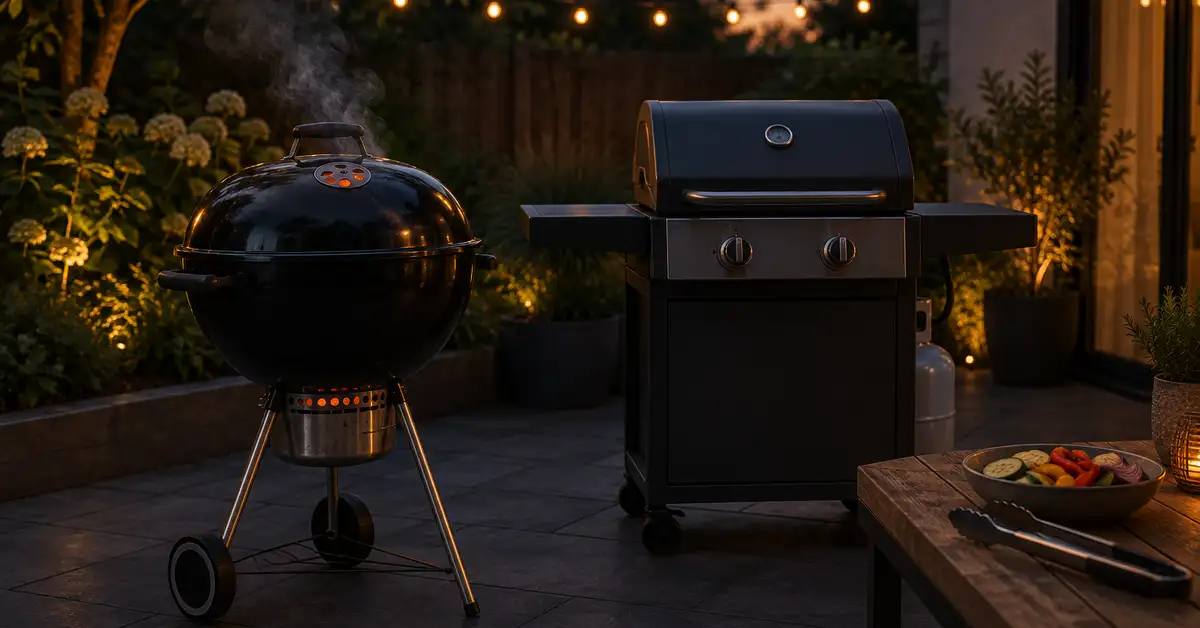
Gas has the shortest learning curve. Serious Eats’ charcoal-versus-gas guide says plainly that gas grills are easier to use than charcoal ones: attach a propane tank, turn the grill on, and give it about 10 minutes to heat up. Weber’s owner’s guides give a similar 10 to 15 minutes with the lid closed and the burners on high. Two or more burners with their own knobs give you separate heat zones, so you can run one side hot and the other lower.
What a beginner actually has to learn is the propane itself: connecting a cylinder correctly, leak-checking the connections each time a cylinder is refilled and reinstalled (Weber’s manuals say so), and having a spare or a refill plan. We don’t walk through that here — your grill’s manual comes first, and our propane & charcoal grill safety guide covers the basics.
Charcoal
Charcoal asks more of you, mostly before and after the cook. Lighting is the first new skill: Kingsford’s chimney-starter guide gives about 15 to 20 minutes until the top coals are ashed over and ready. Then you manage temperature with vents instead of a knob. AmazingRibs explains the two vents: the intake brings oxygen to the fire, and the exhaust lets gases out and pulls air through. Ash is the third job. In its Weber grills roundup, Serious Eats also notes that charcoal grills generally have fewer parts and are simpler to put together than gas models.
What you get for the effort is, usually, the lowest cost to buy into (our grills-for-the-money guide covers that) and a hands-on way to learn fire control. Our how to start a charcoal grill guide walks through the first light-up, and lump charcoal vs. briquettes helps with the fuel choice.
Pellet
Pellet grills automate the fire. Serious Eats describes them as thermostatically controlled, with a fan moving heat around the cooking chamber, and calls pellet smokers intuitive and simple to use. In practice that means a digital controller, an auger that feeds pellets from the hopper to the firepot (Traeger’s support pages describe the parts, including the hot-rod igniter and the fan), and a plug-in power requirement, so you need an outdoor outlet within reach.
What a beginner learns is mostly housekeeping: keep pellets dry (AmazingRibs puts it bluntly — water is the enemy of pellet grills and smokers), keep the hopper filled on long cooks, and clean ash out of the firepot and grease off the tray from time to time. If high-heat searing matters most to you, check the maker’s listed maximum temperature before you buy. Our how to use a pellet grill guide covers a first cook.
Electric and kamado, in one paragraph
Two more formats come up. A kamado is a heavier, egg-shaped charcoal cooker; if you’re curious, our best kamado grills guide covers it. Electric grills suit buildings that allow only electric, which our small-spaces guide explains, but we haven’t researched specific electric grills for this site, so we don’t recommend one here.
Whichever fuel you pick, use the grill outdoors only and follow the maker’s manual; our propane & charcoal grill safety guide covers fire, gas leaks and carbon monoxide.
What actually makes a grill beginner-friendly
Skip the feature list and check these six things. They tell you more about how a first grill will feel to use than the headline numbers do.
- Ignition. On gas, Consumer Reports says an electronic igniter is usually easier to use and more reliable than a rotary or push-button one. On charcoal you’ll light with a chimney starter, and on pellet the controller lights the fire for you.
- How temperature is controlled. Knobs on gas, vents on charcoal, a digital controller on pellet. Choose the one you’ll be happy to spend a few cooks learning.
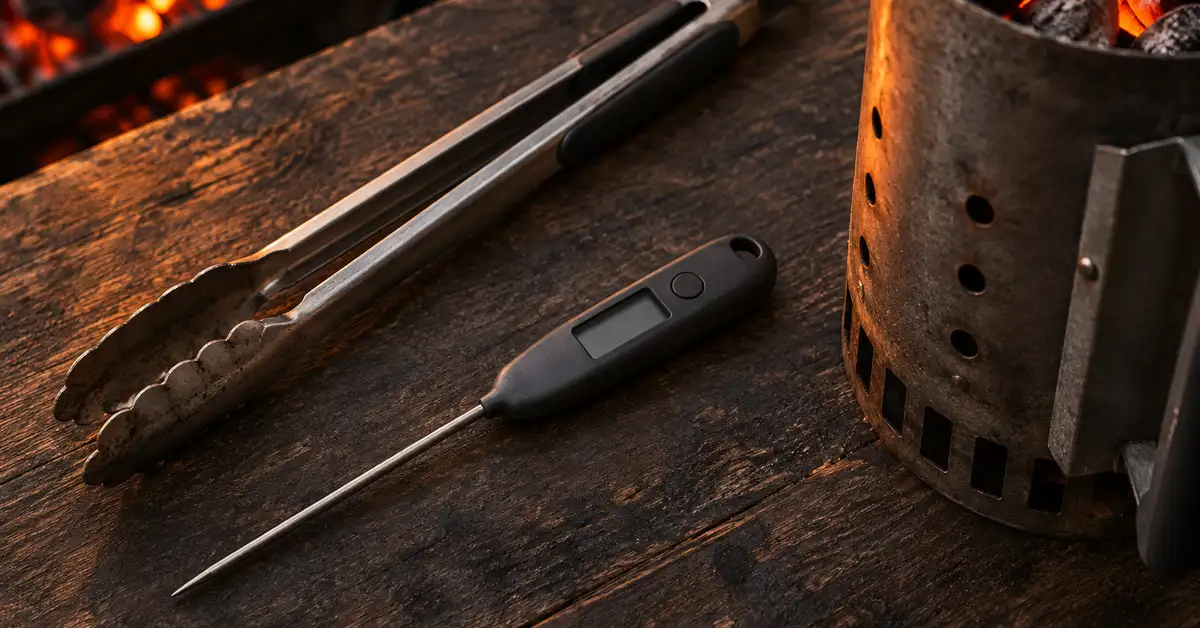
- The lid thermometer versus a separate probe. AmazingRibs’ buying guide says the dial on most grills is worthless and a good digital probe thermometer is the better tool, so budget for one. Our instant-read meat thermometer guide covers the options.
- Cleanup design. A removable ash catcher on charcoal; an easy-to-reach grease tray on gas and pellet. A grill you dread cleaning is a grill you stop using.
- Assembly and build. Fewer parts and clear instructions help.
- Warranty, parts and support. AmazingRibs recommends checking coverage part by part, since burners and the body can carry different terms, and checking that the maker publishes manuals and sells replacement parts. Our value guide covers warranty as a signal.
Which guide to read next
Once you know your fuel, here’s where to go for specific models.
Going charcoal
Our best charcoal grills for beginners guide picks forgiving charcoal grills for first-time owners, ranked on vent simplicity, ash-catcher design and price forgiveness.
Going pellet
Our best pellet grills for beginners guide picks forgiving pellet grills for first-time owners, ranked on controller stability, cleanup ease and warranty support.
Going gas
We don’t have a gas-grill guide written specifically for beginners, and we won’t pretend our value list is one. Our best gas grills for the money guide is a value-focused list of full-size cart grills, and for a small household or a balcony see best small & portable gas grills.
Smoking-curious?
If low-and-slow smoking is the real draw, start with our best smokers for beginners guide, which covers forgiving electric, pellet, charcoal and propane smokers.
Frequently asked questions
Is gas or charcoal easier for a beginner?
Gas. Serious Eats says plainly that gas grills are easier to use than charcoal ones: attach a propane tank, turn it on and give it about 10 minutes to heat up. Charcoal asks you to light a chimney, wait for the coals to ash over, manage vents and deal with ash. That extra work is the price of charcoal’s lower cost of entry, and plenty of first-time grillers happily learn on a kettle.
Are pellet grills good for beginners?
They can be. Serious Eats calls pellet smokers intuitive and simple to use, because a controller holds the temperature for you. The trade-offs are that you need a power outlet, dry pellets and some regular cleanup of the firepot and grease tray. See our best pellet grills for beginners guide.
Do I need a meat thermometer?
Yes. USDA says to use a food thermometer to check that meat has reached a safe minimum internal temperature, and it publishes the figures in its safe minimum internal temperature chart. Our instant-read thermometer guide covers the options.
What size grill should a beginner get?
Buy the smallest grill that holds your normal meal plus a cooler zone for food you don’t want to scorch. Compare primary cooking area rather than the larger “total” figure; our value guide explains why.
What should I buy with my first grill?
Long-handled tongs, an instant-read thermometer and the right fuel are the basics in AmazingRibs’ and Serious Eats’ starter lists. Add a chimney starter if you’re going charcoal, and a fitted cover if the grill will live outdoors. Gloves and drip pans are optional extras. Skip the wire-bristle brush; our grill grate cleaning guide covers other ways to clean.
Is the built-in lid thermometer good enough?
Treat it as a rough guide. AmazingRibs’ buying guide says the dial on most grills is worthless and recommends a good digital probe thermometer instead, so it’s worth budgeting for one alongside the grill.
Is charcoal too hard for a first grill?
It asks more of you, but it isn’t out of reach. The new skills are lighting with a chimney starter and steering the fire with the vents. Our how to start a charcoal grill guide covers the first light-up.
Should I buy a smoker as my first grill?
Only if low-and-slow smoking is what you want to cook. A smoker is a separate decision from a first everyday grill, so start with our beginner smoker guide if that’s the draw.
How we choose
We don’t run a testing lab, and we never fake “as tested.” For this guide, we checked the ease-of-learning points above against manufacturer owner’s guides and named buying guides, rather than asserting them from general knowledge. This page doesn’t rank or recommend individual grills; for that, see the fuel-specific guides linked above, each built to our usual standard of manufacturer spec-verification and a CPSC recall screen on every pick. Read more on our How We Choose page.
Sources
Gas, charcoal and pellet learning-curve guidance: Serious Eats (charcoal-versus-gas guide; How to Get Started Grilling; The 15 Best Weber Grills; pellet grill and smoker buying guides), AmazingRibs (How To Buy A Grill; Using the Vents to Control Temperature; Cleaning and Maintaining Your Grill or Smoker; Charcoal Grillin’ Starter Kit), Consumer Reports (How to Choose a Grill), Weber (owner’s guides and manuals), Kingsford (How to Light Charcoal with a Chimney Starter) and Traeger Support (Augers & Auger Motors; Hopper Burner Assemblies). Safe-temperature guidance: USDA FSIS (Safe Minimum Internal Temperature Chart) and FoodSafety.gov (Cook to a Safe Minimum Internal Temperature). Carbon monoxide safety: CPSC (charcoal grill safety guide). Details were current at the time of research (2026); always confirm specifics with your grill’s manual and the manufacturer before buying.