There’s no single “better” charcoal — lump charcoal lights faster, burns hotter, and leaves less ash behind, while briquettes burn longer and steadier for a given size and usually cost less per pound. Which one you should actually buy depends on what you’re cooking: lump is the better call for a quick, hot sear, and briquettes are usually the easier choice for a long, steady low-and-slow cook. Most backyard cooks end up keeping bags of both on hand rather than picking a side forever.
What lump charcoal and briquettes actually are
The difference starts at manufacturing, not marketing. Lump charcoal is hardwood — oak, hickory, maple and similar species are common in the US market — that’s been charred (pyrolyzed) in a low-oxygen kiln until it’s mostly carbon, then broken, screened and bagged with essentially nothing added. What you’re buying is close to pure carbonized wood, in irregular chunks that vary piece to piece.
Briquettes are a manufactured fuel unit, not a raw material. Charcoal fines and dust — leftover material from making lump — get mixed with a binder (modern mainstream US briquettes typically use a starch binder, the same category of ingredient as corn starch, rather than only the coal-dust-and-borax formulations sometimes described from decades past) and pressed into uniform pillow shapes. Some conventional briquette formulations still include a mineral filler (commonly limestone) to moderate burn temperature and even out ash color, and borax is still used by some manufacturers as a release agent to keep pressed briquettes from sticking to the machinery — not as something added for flavor or heat. “All-natural” or “no-filler” briquette lines exist specifically to skip the mineral filler and any ignition aids, using just wood char and a starch binder instead — read the bag, because “natural” isn’t a regulated term in this category and formulations vary by brand and can change without notice.
Neither fuel is inherently “pure” in every bag: lump charcoal quality varies a lot by producer, and enthusiast communities regularly report finding bark, uncharred wood, or the occasional bit of debris in cheaper bags. Briquettes are more industrially consistent by design, precisely because the binder-and-press process exists to standardize shape and burn behavior.
Burn temperature, duration and ash: how they actually behave in the grill
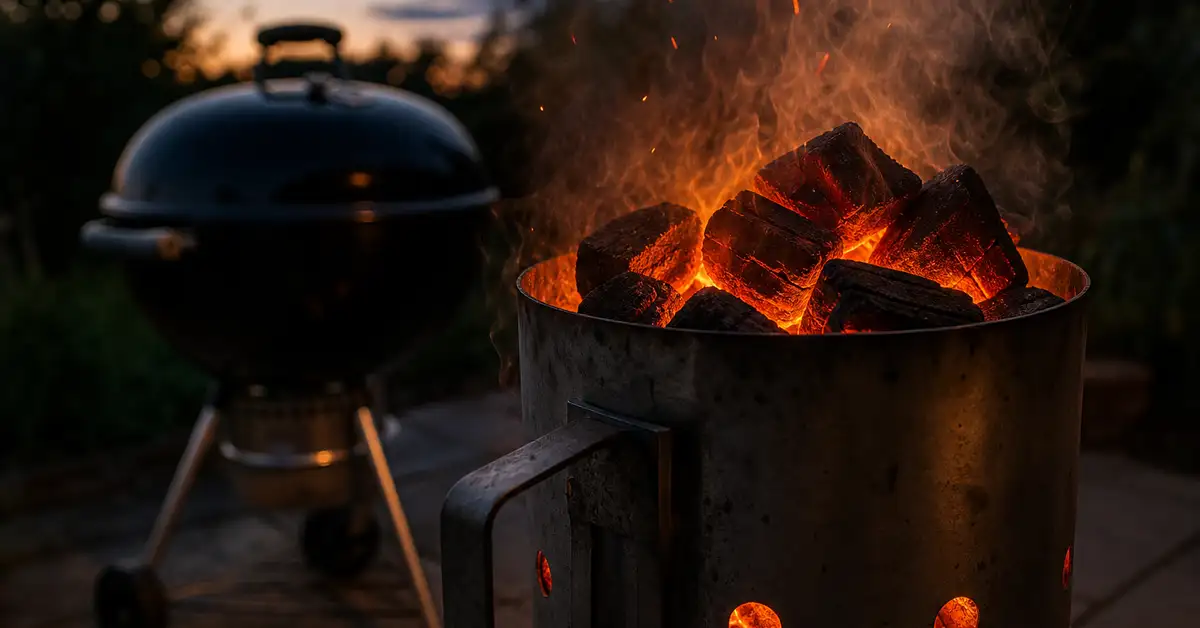
Lump charcoal typically burns hotter and faster than briquettes when airflow is unrestricted, because it’s mostly fixed carbon with very little non-combustible material slowing it down. That makes it well suited to high-heat searing, where you want maximum heat fast. Its lower mineral content also means less ash, which keeps vents clearer for longer — useful in any grill where ash buildup can choke airflow.
The tradeoff is consistency. Lump’s irregular piece sizes create a genuinely patchy fire — hot spots where bigger chunks cluster, cooler pockets where the pieces are smaller. That’s an asset for a natural two-zone setup, but it makes lump a bit more hands-on to manage for a long, stable cook.
Briquettes are the opposite trade: engineered for a uniform, predictable burn. Their consistent shape and density produce an even coal bed and a steadier, more moderate temperature — which is exactly why methods like the minion or snake method (lighting one end of a long line of briquettes so it burns through gradually) work so well for holding a smoker at 225–275°F for hours. The cost of that steadiness is more ash, which needs clearing more often to keep air flowing.
For grills where ash management around the vents really matters — kamados and other ceramic cookers in particular — many owners and manufacturers lean toward lump specifically because it produces less ash and keeps lower vents clearer for longer. That’s a genuine airflow consideration, not a claim that briquettes damage ceramic cookware — we couldn’t verify that specific claim against any real mechanism, so we’re not making it.
Does the charcoal itself change the flavor?
Less than the marketing on either side suggests. Most of the flavor in a charcoal cook comes from fat and juices dripping onto the hot coals and vaporizing, plus whatever wood chips or chunks you add deliberately for smoke — not from the charcoal fuel itself. Once charcoal is fully lit and ashed over, the smoke it produces is relatively clean and mild regardless of whether it started as lump or a briquette.
Where a real difference shows up is at startup, not during the cook. Briquettes with ignition aids built in (“match light” or “easy light” products) can produce more noticeable smoke and odor before they’re fully ashed over, which is exactly why food should never go on the grill until they are. Lump can carry a faint background aroma from the specific hardwood it was made from, especially early in a burn. Beyond that startup window, we couldn’t find credible, controlled evidence that fully-lit lump and fully-lit briquettes taste meaningfully different — the “pure wood flavor” and “chemical taste” claims made about each are mostly marketing, not measured fact.
Cost per cook, not just cost per bag
Briquettes are usually the cheaper fuel per pound, especially bought in the large bags sold at warehouse clubs. But price per pound isn’t the same as cost per cook. Lump is more energy-dense — less non-combustible filler means more of every pound is actually burnable fuel — so a shorter, hotter searing session can use less lump by weight than the briquette equivalent would need. Its irregular shape cuts the other way, though: air gaps between chunks and unusably small fragments at the bottom of the bag mean you often need more volume of lump to fill a chimney than the same coverage in briquettes takes.
The practical upshot: for frequent long cooks in a kettle or bullet smoker, a good briquette is usually the better value per hour of steady heat. For occasional high-heat searing or mixed grilling, a bag of lump can go further per cook than it looks like it should on the shelf-price tag. Think about how you actually cook before assuming one fuel is “cheaper” overall.
Which fuel for which cook
| What you’re cooking | Usually the better fit | Why |
|---|---|---|
| Quick high-heat sear (steaks, burgers, chops) | Lump | Reaches higher heat faster, responds quickly to vent changes |
| Long low-and-slow (ribs, pork shoulder, brisket) | Briquettes | Steadier, more predictable burn over many hours |
| Kamado / ceramic grill, either style of cook | Lump | Lower ash keeps lower vents clear for longer |
| Everyday mixed grilling, cost-conscious | Briquettes | Cheaper per pound, predictable coverage per chimney |
Some premium long-burn briquette lines now claim burn windows long enough to compete directly with lump even for extended cooks — check a specific bag’s own stated burn time rather than assuming all briquettes are alike. For specific bag recommendations by use case, see our guide to the best charcoal for grilling. And if you’re still shopping for the grill itself rather than the fuel, our guides to the best charcoal grills for beginners and the best charcoal grills under $200 cover the appliance side of the decision.
Safety and lighting practices
The safest way to light either fuel is a chimney starter: a few sheets of newspaper or a paraffin cube underneath a column of charcoal, no lighter fluid required. If you do use lighter fluid, let it burn off completely before food goes anywhere near the grill — never place food over actively burning fluid.
“Match light” or “easy light” briquettes have an ignition aid built in so they catch with a single match. That’s a real convenience, but it’s also a real, distinct hazard if you skip the wait: these briquettes need to be fully ashed over before food goes on the grill, both to avoid off-flavors and because the embedded accelerant is still burning off in that early phase. They’re never appropriate for indoor use.
That last point applies to any charcoal, not just self-lighting briquettes: charcoal grills produce carbon monoxide, which is colorless and odorless, and should only ever be used outdoors in a well-ventilated space — never in a garage, tent, or enclosed patio, even in cold weather. Ash that looks cold can still hold live embers underneath; let it cool fully in a metal container before disposal, never a plastic bin or cardboard box. We checked the CPSC recall database directly and didn’t find any recalls specific to charcoal bags, briquettes, lump charcoal or chimney starters as of 2026 — if you ever notice a chimney starter or a bag of charcoal behaving unpredictably (self-igniting in storage, for instance), that’s worth reporting to CPSC via SaferProducts.gov regardless.
Sustainability, briefly
Both fuels can be produced responsibly or not. Look for lump charcoal made from sustainably managed hardwood forests — a Forest Stewardship Council (FSC) certification on the bag is the clearest signal, though plenty of legitimately well-sourced lump isn’t certified simply because certification is optional and regional. Briquettes made mainly from sawdust and wood waste can be a genuinely efficient use of a sawmill byproduct, though their fillers and binders add their own lifecycle footprint. Treat “natural” and “eco-friendly” claims on packaging as marketing language rather than a certification, since neither term is standardized for charcoal.
Frequently asked questions
Is lump charcoal better than briquettes?
Not universally — it depends on the cook. Lump lights faster, burns hotter and leaves less ash, which makes it the better choice for a quick, hot sear or for a kamado grill. Briquettes burn longer and steadier for a given size, which usually makes them the easier choice for a multi-hour low-and-slow cook. Neither is objectively “better” across every use case.
Does lump charcoal burn hotter than briquettes?
Generally yes, when airflow is unrestricted. Lump has a higher fixed-carbon content and minimal mineral filler, so it tends to reach higher peak temperatures faster than a similar amount of briquettes. Briquettes are engineered for a steadier, more moderate burn rather than maximum peak heat.
Can you mix lump and briquettes in the same cook?
Yes — plenty of grillers do, for example lighting a base layer of briquettes for steady heat and adding a few chunks of lump on top for a hotter finish. There’s no safety or equipment issue with mixing the two; it just means your temperature behavior lands somewhere between the two fuels’ usual patterns.
Which lasts longer, lump or briquettes?
Briquettes, in most side-by-side setups, because they’re built for a slower, more consistent burn. A kettle arranged for indirect cooking can often hold a stable temperature for a couple of hours on a partial chimney of briquettes, and considerably longer using a snake or minion arrangement in a smoker. Lump can sustain a long burn too if you deliberately select and stack larger, denser pieces, but it’s less predictable without that extra attention.
Is lump charcoal healthier or cleaner-burning than briquettes?
Lump charcoal is closer to pure carbonized wood with nothing added, while briquettes always contain some non-carbon binder and, in conventional (non-“all-natural”) formulations, sometimes a mineral filler or ignition aid. Once either fuel is fully lit and ashed over, though, the smoke produced is relatively clean regardless of fuel type — the more meaningful safety practices are proper ventilation and letting any fuel fully ash over before cooking, not the lump-versus-briquette choice itself.
What’s the best charcoal for searing?
Lump charcoal is the usual answer — it reaches higher heat faster than briquettes and responds quickly to vent adjustments, both useful for a hard sear. Piling a concentrated bed of lump in one section of the grill, or using it exclusively in a chimney starter, is a common way to build a dedicated hot zone for finishing a steak. See our guide to the best charcoal for grilling for specific bag recommendations.
What certifications should I look for if sustainability matters to me?
Forest Stewardship Council (FSC) certification is the most widely recognized signal for sustainably sourced wood, including lump charcoal. It’s not the only legitimate option, though — certification is optional and regional, so plenty of responsibly produced charcoal isn’t certified. For briquettes, look for manufacturer statements about wood-waste sourcing and plant-based binders rather than relying on the word “natural” alone, since it isn’t a regulated term in this category.
How should I store charcoal so it doesn’t go bad?
Keep it dry, off the ground, and away from temperature extremes — that’s the main rule for both fuels. Lump charcoal holds up well for years in dry conditions, though repeated wetting and drying can make it crumble. Briquettes are more moisture-sensitive because their binders and fillers absorb water; a bag left in a damp garage can swell, crumble, or fail to light properly. Store both away from open flames and anything that could spark.
How we choose
We don’t run a testing lab, and we never fake “as tested.” For this guide, we checked the combustion, composition and safety claims above against manufacturing and materials references rather than repeating marketing language from either side of the lump-vs-briquette debate — including confirming that we could not find credible, controlled evidence for a meaningful flavor difference between fully-lit lump and briquettes. We also checked the CPSC recall database directly for charcoal-specific recalls rather than assuming none exist. Read more on our How We Choose page.
Sources
Charcoal manufacturing and composition: general reference material on briquette manufacturing (binders, fillers and pressing aids), cross-checked for currency rather than taken as historical. Flavor and cooking-heat guidance: mainstream culinary and grilling commentary on what actually drives grill flavor. Safety guidance: U.S. Consumer Product Safety Commission (CPSC.gov and SaferProducts.gov) for recall-checking practice and general appliance-safety reporting guidance; no charcoal-specific recalls were found as of 2026. Details were current at the time of research (2026); manufacturer formulations can change without notice, so always check a specific bag’s own packaging for its actual ingredients.