A vertical pellet smoker trades the wide, shallow cook surface of a barrel-format pellet grill for a tall, insulated cabinet stacked with several racks — built first for smoking capacity, not for searing steaks. The auger and firepot sit near the base, feeding heat and smoke up through the cabinet, so you can load ribs, a couple of pork butts and a tray of jerky on separate racks and let the smoker run the whole cook unattended.
We’re a research-led site, not a testing lab, so this guide combines manufacturer specifications with reputable outdoor-cooking editorial (Smoked BBQ Source, and manufacturer-direct data from Pit Boss, Grilla Grills, Camp Chef, Lone Star Grillz and Smoke Daddy) to rank 8 genuinely distinct vertical pellet smokers for 2026 — every one individually verified as currently sold, spec-checked against the manufacturer, and screened against active CPSC safety recalls. A quick note on how we price these picks: rather than static prices that go stale, we use qualitative price bands (under $50 · $50–150 · $150–300 · $300–700 · $700–1,500 · $1,500+) — think of them as the shopping bucket a pick sits in, not a live price quote. Here’s how we choose.
Our top picks at a glance
- Best overall: Grilla Grills Mammoth Vertical Pellet Smoker
- Best for beginners: Pit Boss Navigator 3-Series Vertical Pellet Smoker
- Best budget: Pit Boss Copperhead 3-Series Wood Pellet Vertical Smoker
- Best value: Pit Boss Copperhead 5-Series Vertical Pellet Smoker
- Best for large groups & entertaining: Pit Boss Sportsman 7-Series Wood Pellet Vertical Smoker
- Best WiFi & app control: Camp Chef XXL Pro WiFi Vertical Smoker
- Best made-in-USA & multi-fuel: Lone Star Grillz Cabinet Pellet Smoker
- Best double-wall insulated: Smoke Daddy Pellet Pro 2300 Vertical Cabinet Smoker
Vertical vs. horizontal: what actually changes
Every pellet grill on the market shares the same basic engine — a hopper, an auger, a firepot and a fan-driven controller — but the cabinet built around that engine changes what the appliance is actually good at. A horizontal, barrel-format pellet grill (the kind we cover in best pellet grills for beginners, best small & portable pellet grills and best pellet grills under $500 & $1,000) puts one wide grate directly over the firepot, so it can grill, sear and smoke on the same shallow surface — genuinely the better choice if you want one appliance that replaces a gas grill and occasionally smokes.
A vertical pellet smoker stacks that same heat source under a tall cabinet with several racks, trading direct-flame grilling and searing for smoking capacity in a relatively small footprint. You can load multiple racks of ribs, several pork butts or a full tray of jerky at once, on a cabinet that’s often narrower and deeper than a barrel grill is wide. If you already own a gas or charcoal grill and want a dedicated, largely hands-off smoker for high-volume cooks, that’s exactly the gap a vertical fills. It isn’t a ceramic kamado either — see best kamado grills if you want a single cooker that sears, bakes and smokes on charcoal. And a vertical pellet smoker is appliance selection, not technique: once you own one, our how to control temperature on a smoker guide covers the vent and fire-management skills that apply across fuel types.
Is a vertical pellet smoker right for your patio?
Vertical cabinets genuinely take up less floor space than a wide barrel grill for the amount of cooking capacity they offer — several of the smokers below deliver 1,500–2,000+ sq in of rack space from a footprint around 28″ x 28″. That’s a real advantage for a small patio or deck. But we should be honest about a gap in this category: we did not find a genuinely compact, sub-800 sq in vertical pellet smoker currently sold by a mainstream brand in the US — nearly every vertical pellet smoker on the market starts around 700–900 sq in and climbs from there, because the format’s whole appeal is stacked capacity. If your patio can fit a roughly 2 ft by 2.5 ft footprint and you want serious smoking volume, a vertical pellet smoker fits well. If you’re working with a genuinely tiny balcony, a portable tabletop pellet grill or a compact electric smoker will crowd less floor space — this guide is about the vertical pellet format specifically, not the smallest smoker we could find.
Pellet vs. propane vs. electric vs. charcoal vertical smokers: which fuel fits you?
Everything above is about vertical pellet smokers specifically — but “vertical smoker” as a search term covers four genuinely different fuel types, and it’s worth being upfront about where pellet fits before you commit. All four share the same basic vertical-cabinet shape (multiple racks stacked above a heat source), but the heat source itself changes the cook completely:
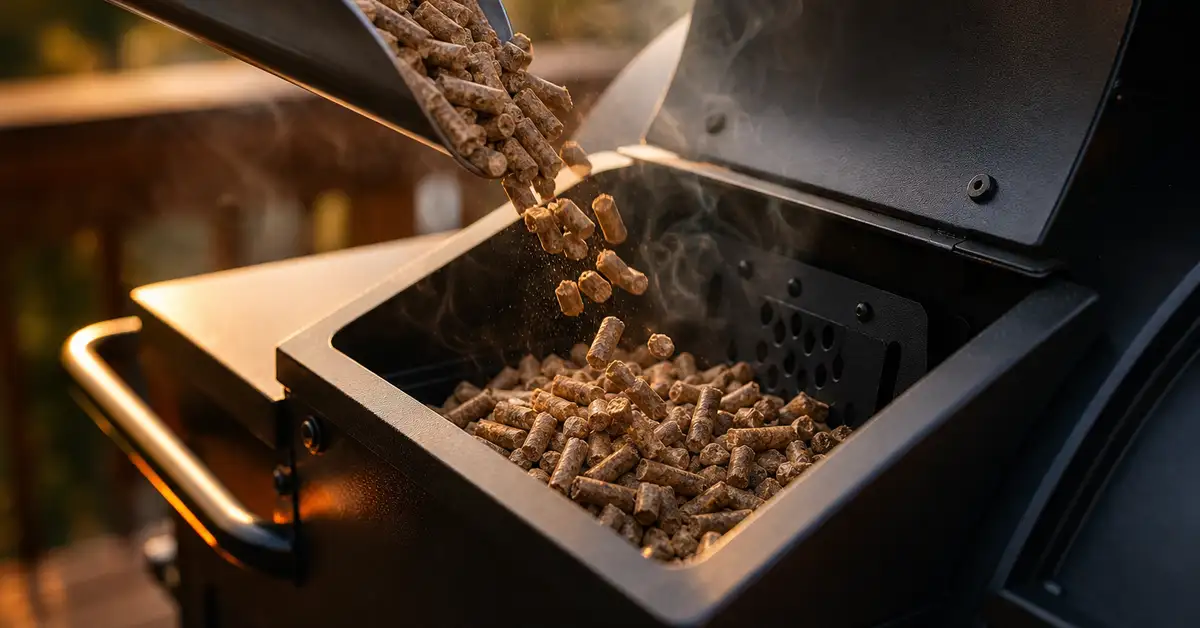
- Pellet (this guide): an auger feeds hardwood pellets into a firepot, so both heat and smoke come from the same fuel. Digital control holds temperature automatically for the whole cook — the most hands-off option that still burns real wood, with genuine wood-smoke flavor rather than an added-chip flavor. Generally sits toward the middle-to-upper end of vertical-smoker pricing.
- Propane: a gas burner supplies the heat, with wood chips or chunks in a separate tray above the flame to make smoke. Lights instantly, reaches temperature in minutes, and needs only occasional chip-tray refills — genuinely convenient, and usually the most affordable route into vertical smoking. Smoke flavor is real but generally lighter than a pellet or charcoal cook, since the flame itself isn’t wood.
- Electric: a heating element replaces the flame entirely, again paired with a wood-chip tray for smoke. This is the most completely set-and-forget option of the four — plug in, set a target temperature, and walk away — which also makes it the gentlest learning curve for a first-ever smoker. Flavor is typically the mildest of the four, since there’s no live fire at all.
- Charcoal: charcoal is the primary fuel, with wood chunks added for smoke — the format used by cookers like the Weber Smokey Mountain and Pit Barrel Cooker. This delivers the most traditional, deepest smoke flavor of the four, but it’s also the least hands-off: you’re lighting charcoal and managing air vents by hand for the whole cook, which is a real learning curve for a beginner.
If you already know you want a dedicated, mostly hands-off cabinet smoker and don’t mind pellet being the priciest fuel to keep stocked, the 8 picks below are built exactly for you. If you’re still deciding between fuel types rather than models within one — especially if propane, electric or charcoal genuinely suits your budget or your appetite for hands-on fire management better — our best smokers for beginners guide covers all four fuel types side by side, including dedicated propane, electric and charcoal picks we haven’t duplicated here.
The 8 best vertical pellet smokers for 2026
Ranked by who each smoker genuinely suits — not by price alone. We didn’t pad this list to hit a round number; every pick below earns a distinct segment.
Transparency first: This guide contains affiliate links. If we’re enrolled in an affiliate program, we may earn a commission at no extra cost to you — it never affects how we research or rank. Read our full affiliate disclosure policy.
1. Grilla Grills Mammoth Vertical Pellet Smoker
What it is: Grilla’s first vertical pellet smoker — a double-wall insulated, 304 stainless-steel cabinet built around Grilla’s newest WiFi controller, in a notably compact 28″ x 28″ footprint for the capacity it offers.
Best for: the cook who wants the most genuine smoking capacity per square foot of patio, without stepping up to a made-to-order premium cabinet.
Why we rate it: 1,660 sq in of main cooking space, expandable to roughly 3,300 sq in with additional grates, from a footprint no bigger than most mid-size barrel grills. The Alpha Connect 2.0 WiFi controller adds PID and “Pro Smoke” modes plus TempTamer technology to reduce the temperature drop when you open the door, and a full hopper can hold 250°F for 48+ hours. It’s also the most editorially validated pick here — Smoked BBQ Source names it their top vertical smoker for 2026.
Watch-outs: at around 130 lb it’s not a light lift for a two-person build, and double-wall insulated cabinets like this one run at the upper end of this list’s pricing.
Vertical cabinet · double-wall 304 stainless steel · 1,660 sq in (up to ~3,300 sq in with added racks) · 40 lb hopper · 180–450°F · WiFi (Alpha Connect 2.0) · $700–1,500
3. Pit Boss Copperhead 3-Series Wood Pellet Vertical Smoker
What it is: Pit Boss’s smallest current vertical pellet cabinet — 4 racks, a dial-in digital controller and a hammertone-copper finish, at the lowest price point in this guide.
Best for: the cook who wants to try vertical smoking without a big up-front commitment, or who’s smoking for two rather than a crowd.
Why we rate it: a genuinely useful 720 sq in across 4 racks, a 40 lb hopper rated for up to 18 hours of unattended smoke time, and a straightforward dial-in digital control board — all at this list’s lowest price.
Watch-outs: 720 sq in is the smallest cooking area on this list — comfortable for a family cook, tight if you’re regularly smoking for a crowd.
Vertical cabinet · steel · 720 sq in · 4 racks · 40 lb hopper · 150–420°F · dial-in digital control · $300–700
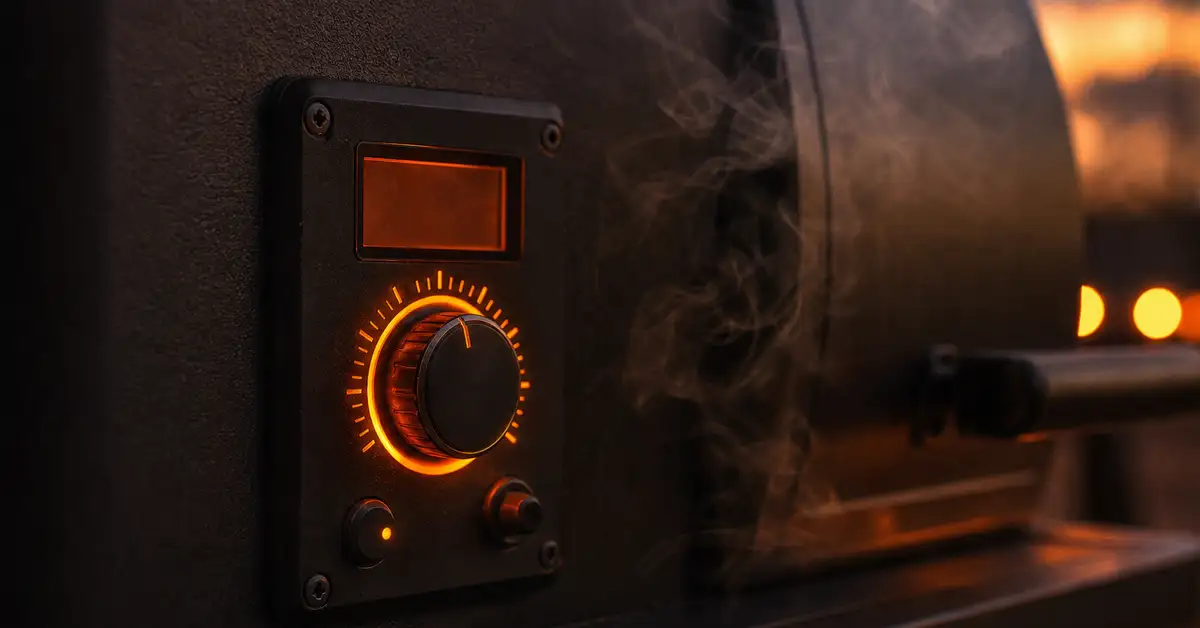
4. Pit Boss Copperhead 5-Series Vertical Pellet Smoker
What it is: a mid-size step up from the 3-Series, with a digital PID controller and more than double the cooking area, widely stocked across US retailers rather than sold through a single exclusive channel.
Best for: buyers who want large-capacity vertical smoking without paying for double-wall insulation or a premium WiFi ecosystem.
Why we rate it: 1,513 sq in and a 60 lb hopper meaningfully out-capacity the entry-level 3-Series for a modest price step, the digital PID controller holds temperature more precisely than a basic dial, and it’s sold widely (Tractor Supply, Walmart, Ace Hardware) rather than locked to one retailer.
Watch-outs: Pit Boss also sells a Walmart-exclusive “Copper” variant of the 5-Series (model PBV5PW1) — a different SKU from the more widely available Copperhead 5-Series covered here, so check which one you’re looking at before buying.
Vertical cabinet · steel · 1,513 sq in · 60 lb hopper · 150–420°F · digital PID control · $300–700
5. Pit Boss Sportsman 7-Series Wood Pellet Vertical Smoker
What it is: Pit Boss’s flagship mainstream vertical pellet smoker — 6 racks plus 6 meat hooks, a 60 lb hopper and WiFi/Bluetooth control, backed by the brand’s best-in-class 5-year warranty.
Best for: hosting, hunters and anglers processing game or fish, or anyone who regularly smokes in volume and doesn’t want to refill the hopper mid-cook.
Why we rate it: 2,015 sq in across 6 racks plus dedicated meat hooks is genuinely large-format capacity, the 60 lb hopper is rated for up to 35 hours of smoke time with a viewing window to check fuel level, and the WiFi/Bluetooth digital controller plus 5-year warranty make it a durable, monitor-from-indoors option.
Watch-outs: capacity and features this size come with a bigger footprint and a higher price than the 3-Series or 5-Series above — it’s built for volume, not a first smoker.
Vertical cabinet · steel · 2,015 sq in · 6 racks + 6 meat hooks · 60 lb hopper · 153–420°F · WiFi + Bluetooth, 5-yr warranty · $300–700
6. Camp Chef XXL Pro WiFi Vertical Smoker
What it is: Camp Chef’s large-capacity vertical pellet smoker, built around their own WiFi controller and Camp Chef Connect app — a genuinely different ecosystem from the Pit Boss models above.
Best for: Camp Chef owners who want a matching app experience, or anyone who wants a brand alternative to Pit Boss with equally large capacity and dedicated jerky and hanging racks.
Why we rate it: 1,806 sq in of total rack area (four standard racks plus three jerky racks) and a hanging rack with 12 sausage hooks cover almost every smoking format in one cabinet, and the WiFi controller integrates with Camp Chef’s own app for remote monitoring.
Watch-outs: Camp Chef doesn’t publish a temperature range or price directly on the XXL Pro’s spec page — expect it to sit toward the upper end of this list’s pricing, in line with other large-capacity vertical cabinets, and confirm current numbers before buying. Also make sure you’re looking at the “XXL Pro,” not the plain “XXL Vertical Smoker” — Camp Chef lists that earlier model as discontinued.
Vertical cabinet · steel · 1,806 sq in total (4 racks + 3 jerky racks + 12-hook hanging rack) · 30 lb hopper · WiFi (Camp Chef Connect app) · $700–1,500
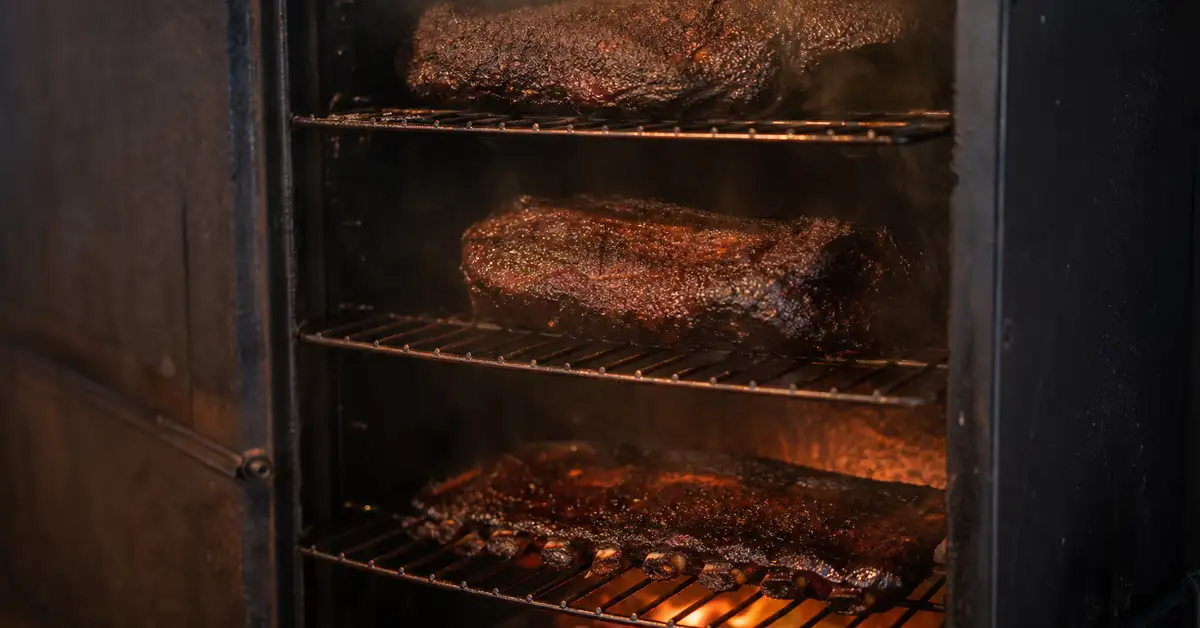
7. Lone Star Grillz Cabinet Pellet Smoker
What it is: a heavy-duty, made-to-order cabinet smoker built in the USA — including the pellet hopper — with a genuinely unusual feature for this category: it runs as a pellet smoker or switches to charcoal grilling in the same cabinet.
Best for: serious enthusiasts and semi-professional cooks who want the largest capacity on this list, domestic fabrication, and the flexibility of two fuel types in one heavy-steel unit.
Why we rate it: 3,648 sq in across 4 large slide-out racks is by far the biggest capacity here, the 40 lb hopper includes a “pellet dump” feature for swapping wood flavors quickly, and the pellet-or-charcoal flexibility is genuinely unusual among vertical pellet smokers.
Watch-outs: this is a premium, made-to-order product — expect a price well above every other pick on this list, and confirm current pricing directly with Lone Star Grillz before buying, since it isn’t listed on major third-party marketplaces the way the other picks are.
Vertical cabinet · heavy-duty steel, made in USA · 3,648 sq in · 4 racks · 40 lb hopper · 160–400°F · WiFi + Bluetooth · pellet or charcoal fuel · $1,500+
8. Smoke Daddy Pellet Pro 2300 Vertical Double Wall Cabinet Smoker
What it is: a double-wall insulated cabinet smoker from Smoke Daddy’s dedicated Pellet Pro line, built around a convection fan for airflow and shipped with a free cover included.
Best for: cold-climate cooks and set-and-forget smokers who want the fuel efficiency and temperature stability double-wall insulation provides, plus flexible rack configuration.
Why we rate it: the double-wall cabinet and dedicated convection fan target genuinely more even heat distribution and better cold-weather performance than a single-wall steel body, and 3 stainless racks plus a 7-section rib rack across 7 available shelf levels give real flexibility in how you load a cook. A cover is included at no extra cost.
Watch-outs: Smoke Daddy publishes cooking volume in cubic feet (about 10 cu ft) rather than a straight square-inch rack figure, so it’s not directly comparable to the sq-in numbers above — and like the Lone Star Grillz pick, this is a specialist-retailer product rather than a mass-market one. We also couldn’t independently confirm a current, product-specific price for this exact model from a manufacturer or major retailer listing — treat any price band as unconfirmed and check directly with Smoke Daddy before buying.
Vertical cabinet · double-wall insulated steel · ~10 cu ft (3 racks + 7-section rib rack, 7 shelf levels) · 35 lb hopper · digital control + convection fan · Price not independently confirmed — check directly with Smoke Daddy
Vertical pellet smokers compared
Prices move constantly, so we show qualitative price bands (under $50 · $50–150 · $150–300 · $300–700 · $700–1,500 · $1,500+) rather than figures that go stale — tap through to check the current price yourself.
| Model | Best for | Cooking area | Hopper | Price |
|---|---|---|---|---|
| Grilla Grills Mammoth | Overall | 1,660 sq in (up to ~3,300) | 40 lb | $700–1,500 |
| Pit Boss Navigator 3-Series | Beginners | 1,118 sq in | 40 lb | $300–700 |
| Pit Boss Copperhead 3-Series | Budget | 720 sq in | 40 lb | $300–700 |
| Pit Boss Copperhead 5-Series | Value | 1,513 sq in | 60 lb | $300–700 |
| Pit Boss Sportsman 7-Series | Large groups | 2,015 sq in | 60 lb | $300–700 |
| Camp Chef XXL Pro | WiFi / app control | 1,806 sq in | 30 lb | $700–1,500 |
| Lone Star Grillz Cabinet | Made-in-USA / multi-fuel | 3,648 sq in | 40 lb | $1,500+ |
| Smoke Daddy Pellet Pro 2300 | Double-wall insulated | ~10 cu ft | 35 lb | Not confirmed |
Specs are drawn from manufacturer materials and reputable editorial sources; always confirm current details and price with the manufacturer or retailer before buying.
Vertical pellet smoker safety: burn-back, clearance and carbon monoxide
A pellet smoker’s auger and firepot are largely self-managing, which is exactly why it’s worth understanding the failure mode that’s unique to this fuel type: burn-back. Pit Boss’s own support documentation describes it plainly — “burn backs occur when the flame/heat source reaches the auger shaft, and the pellets smolder/ignite inside the auger, and possibly work their way back into the hopper,” usually caused by poor airflow or too many pellets in the firebox. Traeger’s support guidance draws the same distinction we think matters most: mild back-burn (smoke, no active flame) is handled by running the controller down to its lowest smoke setting to burn the hot pellets out through the firepot, then completing a normal shutdown — both Pit Boss and Traeger are explicit that you should not cut power immediately in this case. Active back-burn (real fire in the hopper) is different and more serious: unplug the unit and keep the hopper lid and cabinet door closed to starve the fire of oxygen, rather than opening it up.
Two habits prevent most burn-back and auger-jam problems before they start: always run the controller’s full shutdown cycle rather than pulling the plug mid-cook (Traeger’s manuals note this specifically reduces back-burn risk), and keep pellets dry in a sealed container — damp, swollen pellets are the leading cause of auger jams, which can then contribute to the airflow problems behind burn-back.
Clearance and enclosed-space rules are no different for a pellet smoker than for any other fuel-burning grill: NFPA’s general consumer guidance calls for at least a 3-foot clear zone around any grill on a single-family deck or backyard, away from siding, railings and overhanging branches, with a stricter 10-foot standard applying to balconies and multi-family buildings under NFPA 1 (the Fire Code) — see our grill safety guide for the full clearance breakdown. And every fuel-burning cooker, pellet smokers included, produces carbon monoxide: CPSC is direct that charcoal and other fuel-burning appliances should never be used “inside enclosed areas such as tents, campers, vans, cars, trucks, homes, garages, or mobile homes because the carbon monoxide can kill you.” A vertical cabinet’s tall, mostly-sealed body doesn’t change that — run it outdoors, in the open air, every time.
Are there any recalls to know about?
We screened every pick on this page against the CPSC recall database at the time of research and found no active recall on the Grilla Grills Mammoth, Pit Boss Navigator 3-Series, Pit Boss Copperhead 3-Series, Pit Boss Copperhead 5-Series, Pit Boss Sportsman 7-Series, Camp Chef XXL Pro, Lone Star Grillz Cabinet Pellet Smoker, or Smoke Daddy Pellet Pro 2300. For context: a February 2024 CPSC recall covers Char-Broil digital electric smokers for an electric-shock hazard — a different fuel type and brand from every pick here, and not applicable to any of them. Always confirm current recall status with the manufacturer and CPSC before buying, especially secondhand.
Frequently asked questions
What’s the difference between a vertical and a horizontal pellet smoker?
A horizontal, barrel-format pellet grill puts one wide grate directly over the firepot, so it can grill, sear and smoke on the same surface — a genuine all-purpose cooker. A vertical pellet smoker stacks several racks in a tall cabinet above the firepot, trading direct-flame grilling for much greater smoking capacity in a smaller footprint. If you want one appliance to replace a gas grill and occasionally smoke, go horizontal; if you want a dedicated, high-capacity smoker alongside a grill you already own, go vertical.
Are vertical pellet smokers good for beginners?
Yes — a digital-controller vertical pellet smoker is genuinely one of the easier ways to start smoking, since you set a target temperature and the auger and fan manage the fire automatically, with none of the vent-and-fuel management a charcoal smoker requires. You’ll still want to learn the basics of pellet quality, auger priming and proper shutdown, which we cover in the safety section above.
How much does a vertical pellet smoker cost?
Our entry-level and mid-capacity picks — the Pit Boss Navigator 3-Series, Copperhead 3-Series, Copperhead 5-Series and Sportsman 7-Series — all sit in the $300–700 band. The Grilla Grills Mammoth and Camp Chef XXL Pro, both larger-capacity with WiFi control, land in the $700–1,500 band. The made-to-order, heavy-duty Lone Star Grillz Cabinet sits at $1,500+. We couldn’t independently confirm a current price for the Smoke Daddy Pellet Pro 2300, so treat that one as unconfirmed pending direct manufacturer or retailer confirmation.
Can I use a vertical pellet smoker on a small patio or balcony?
Most vertical pellet smokers have a smaller footprint than an equivalent-capacity barrel grill, so they suit a small patio better than you might expect — but we didn’t find a genuinely compact, sub-800 sq in vertical pellet smoker currently sold by a mainstream US brand, so budget roughly a 2 ft by 2.5 ft clear space at minimum. If you’re on a genuinely small balcony, also check your building’s fire code before buying — many restrict any fuel-burning appliance regardless of size.
Is it safe to use a pellet smoker in a garage or enclosed space?
No. Every fuel-burning smoker, including pellet models, produces carbon monoxide as it runs. CPSC guidance is explicit that fuel-burning cooking appliances should never be used inside enclosed spaces such as garages, tents, campers or homes, even with a door open — run a vertical pellet smoker outdoors, in the open air, every time.
What is “burn-back” and is it dangerous?
Burn-back is when the fire in the firepot travels backward up the auger toward the hopper, usually caused by poor airflow or too many pellets loaded at once. Mild back-burn (smoke, no visible flame) is normal to manage by running the controller down to its lowest setting to burn the pellets out, per Pit Boss and Traeger’s own guidance. Active back-burn with real fire is more serious — unplug the unit and keep the hopper and door closed to starve it of oxygen, rather than opening it up. Regular shutdown-cycle discipline and dry pellet storage prevent most cases.
Vertical pellet smoker vs. propane or electric vertical smoker: which is better?
Pellet smokers generally deliver a more pronounced wood-smoke flavor than propane or electric vertical smokers, since they burn hardwood pellets continuously rather than using a gas flame or electric element with added wood chips for smoke. Propane and electric verticals are usually cheaper and simpler to run, which can suit a beginner who wants to try smoking before investing in a pellet system. If smoke flavor and “set-and-forget” digital control matter most to you, pellet is the better fit.
Have any vertical pellet smokers been recalled?
As of our 2026 research, we found no active CPSC recall on any of the 8 smokers on this page. A February 2024 CPSC recall covers Char-Broil digital electric smokers for an electric-shock hazard — a different fuel type and brand, and not applicable to any pick here. Always check the CPSC recall database again before buying, especially secondhand.
What’s the difference between a “vertical smoker” and a “vertical pellet smoker”?
“Vertical smoker” is the broad shape category — any smoker that stacks cooking racks in a tall cabinet, regardless of fuel. That includes propane and electric cabinets, charcoal cookers like the Weber Smokey Mountain, and vertical pellet smokers alike. “Vertical pellet smoker” narrows that down to one specific fuel type: an auger-fed pellet system built inside that same vertical shape. Every model on this page is a vertical pellet smoker specifically; if you’re comparing across fuel types rather than pellet models only, see our best smokers for beginners guide, which covers propane, electric, charcoal and pellet options side by side.
Can I run a vertical pellet smoker like a charcoal smoker?
Not directly, in most cases. Vertical pellet smokers are built around a sealed hopper-and-auger system designed specifically for wood pellets, and none of the mainstream models on this page are designed to run on loose charcoal instead. One pick here is a genuine exception: the Lone Star Grillz Cabinet Pellet Smoker is purpose-built to switch between running as a pellet smoker or a charcoal grill in the same cabinet. Outside that model, if charcoal flexibility matters to you, look at a dedicated charcoal vertical cabinet — like a Weber Smokey Mountain — rather than trying to convert a pellet unit.
Related guides
Want an all-purpose pellet grill that can sear and grill as well as smoke instead? See best pellet grills for beginners, best small & portable pellet grills, or best pellet grills under $500 & $1,000. Prefer charcoal-fired versatility instead? Our best kamado grills guide covers ceramic and steel egg-style cookers. Already own a smoker and want to nail the fire management? Read how to control temperature on a smoker. Planning your first big cook, our how long to smoke a turkey and how long to smoke ribs guides cover times and temperatures by weight and cut. Stock the pantry with wood chips and chunks for smoking, and browse the rest of our smoker guides.
How we choose
We don’t run a testing lab, and we never fake “as tested.” For this guide we combined manufacturer specifications with reputable outdoor-cooking editorial (Smoked BBQ Source) and independently re-verified every pick’s current availability, specs and pricing directly against the manufacturer — correcting an older, non-US model number (PBV3P1) that no longer matches Pit Boss’s current US listing, and confirming that Camp Chef’s plain “XXL Vertical Smoker” is discontinued in favor of the current “XXL Pro” we cover here. We screened every pick against the U.S. Consumer Product Safety Commission’s recall database before publishing, and where a manufacturer didn’t publish a precise cooking-area or price figure, we said so rather than estimating one. We use qualitative price bands rather than prices that go stale. Read more on our How We Choose page.
Sources
Manufacturer product pages: Pit Boss (Navigator 3-Series/PBV3M, Copperhead 3-Series, Copperhead 5-Series/PBV5P1, Sportsman 7-Series/PBV7P2, plus support articles on burn-back and auger jams), Grilla Grills (Mammoth Vertical Pellet Smoker product page and FAQ), Camp Chef (XXL Pro WiFi Vertical Smoker and Pellet Smokers overview page), Lone Star Grillz (Cabinet Pellet Smoker product page), Smoke Daddy Inc. (Pellet Pro 2300 Vertical Double Wall Cabinet Smoker product page). Retailer listings: Tractor Supply, Walmart, Academy Sports, Ace Hardware, BBQGuys, Lowe’s (Pit Boss vertical smoker pricing and availability cross-checks). Editorial validation: Smoked BBQ Source (“7 Best Vertical Smokers for 2026” and “The 5 Best Pellet Grills & Smokers of 2026”). Safety and shutdown guidance: Pit Boss and Traeger manufacturer support documentation on burn-back and shutdown cycles; U.S. Consumer Product Safety Commission (CPSC) carbon monoxide and recall guidance; National Fire Protection Association (NFPA) grilling clearance guidance. Fuel-type comparison guidance: Smoked BBQ Source and Barbecue Bible articles on propane and electric vertical smokers; Weber product documentation on the Smokey Mountain charcoal smoker. Details were current at the time of research (2026) and should be reconfirmed with the manufacturer or retailer before purchase.