A pellet grill and smoker combo is a single outdoor cooker that burns compressed hardwood pellets in a thermostatically controlled firepot, using a digital controller and fan to hold steady heat for both low-and-slow smoking (around 165–250°F) and hotter grilling or searing (450°F and up). It replaces manual fire-tending with set-and-forget wood-fired cooking on one machine.
That versatility is exactly why “best pellet grill and smoker” is one of the most-searched questions in outdoor cooking — and why the market is now crowded with everything from budget backyard cookers to insulated, app-controlled pits. We’re a research-led site, not a testing lab, so this guide pulls together manufacturer specifications and published editorial reviews (SmokedBBQSource and AmazingRibs) to rank 9 genuinely different grill-smokers for 2026 — then tells you honestly what each one is (and isn’t) good at. Here’s how we choose.
Our top picks at a glance
- Best overall: Weber Searwood 600
- Best for beginners: Traeger Woodridge Pro
- Best premium build: Recteq Flagship 1600
- Best upgrade from gas: Z Grills 700D4E
- Best for searing: Pit Boss Sportsman 850
- Best all-in-one: Traeger Timberline
- Best compact high-heat: Recteq Bullseye RT-B380
- Best charcoal alternative: Char-Griller Gravity 980
- Best portable: Traeger Ranger
Quick decision guide: which combo actually fits you?
Before you read all 9, here’s the short version — match your situation to a pick:
- Mostly low-and-slow (brisket, pork butt, ribs), rarely need a hard sear → Traeger Woodridge Pro. Set-and-forget cooking and generous cook area, without paying extra for a sear feature you won’t use.
- Want a genuine steakhouse sear as well as smoke → Pit Boss Sportsman 850 (Flame Broiler to ~1,000°F) or Weber Searwood 600 (the best all-round balance of the two jobs).
- Tight on patio or balcony space → Recteq Bullseye RT-B380 (compact but still sears hot) or Traeger Ranger (fully portable, tabletop-size).
- Cooking for a crowd, regularly → Recteq Flagship 1600 — the cook area and hopper capacity to handle long, high-volume cooks without babysitting refills.
- Want smoke plus fast weeknight grilling without tending two fuel systems → think carefully about whether you need a true pellet-and-gas combo, or whether one well-chosen pellet grill’s sear mode already covers both jobs.
- Moving up from a gas grill and want wireless PID control with a 28 lb hopper → Z Grills 700D4E.
What actually matters when you’re choosing
Before the list, the handful of things worth weighing — because the “best” combo really depends on how you cook.
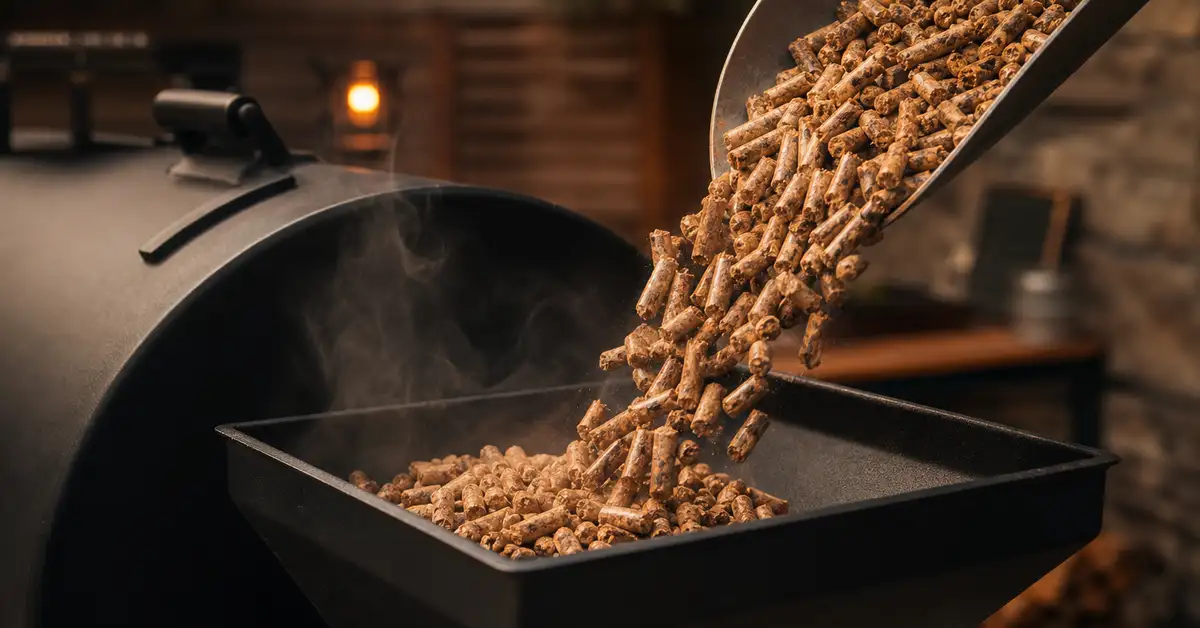
Cooking area & layout. Mid-size grills run roughly 550–800 sq in — enough for a few pork shoulders or several rib racks. Big pits push past 1,000 sq in. But raw area isn’t everything: lid height and rack spacing decide whether you can fit a tall turkey or upright chickens.
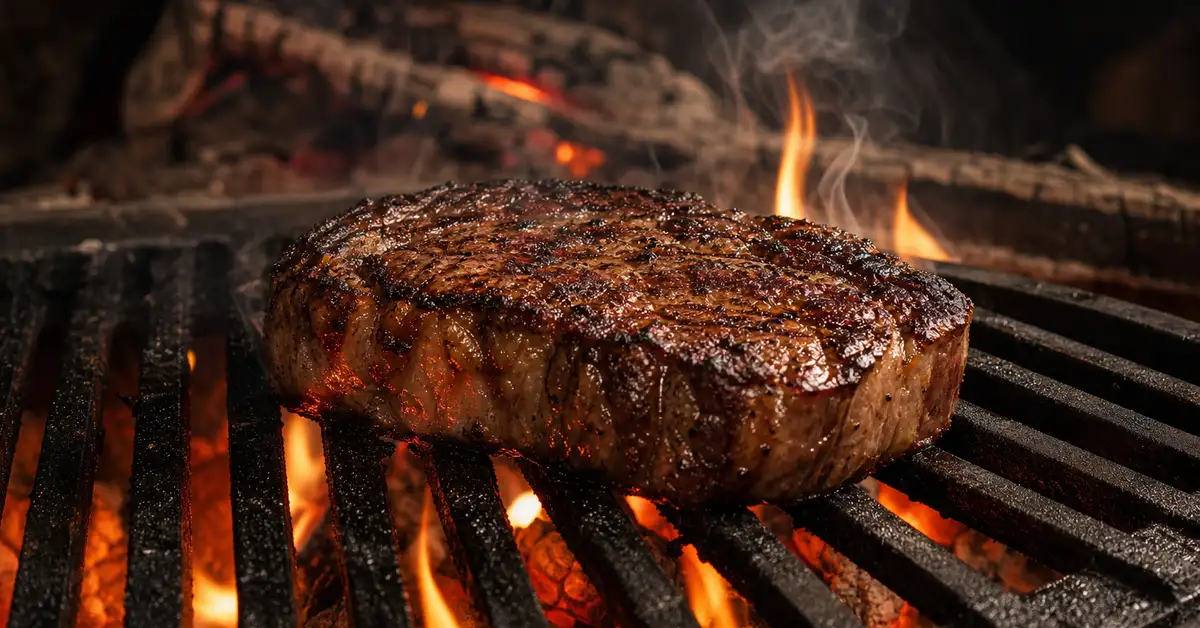
Temperature range & searing. Almost every pellet grill smokes beautifully; the real difference is the top end. Standard units cap around 450–500°F (good grilling, gentler sear). If steakhouse crust matters, look for a direct-flame design (Pit Boss rates its Flame Broiler for a direct-flame sear up to 1,000°F; recteq lists a 749°F top for the RT-B380 Bullseye) or a separate cooking surface, such as the Traeger Timberline’s induction cooktop, which Traeger says lets you “sear, simmer, and sauté on the side.”
Hopper capacity & controller. A 20–40 lb hopper and a modern PID controller mean longer, steadier cooks with fewer refills. Wi-Fi/app control is genuinely useful for overnight briskets — just know it adds a little complexity (and the occasional firmware quirk).
Build, warranty & support. Thicker steel and insulation hold temperature better in wind and cold and stretch pellet efficiency. Established brands (Traeger, Weber, Camp Chef, Pit Boss, Recteq) also have the widest parts-and-service networks — which matters years down the line.
Who a combo isn’t for
Part of being an honest specialist site is saying no to some buyers. A pellet grill and smoker combo is a genuinely good all-rounder, but it isn’t the best tool for every job:
- You want the deepest possible smoke ring and true stick-burner bark. A dedicated offset smoker, run on wood and/or charcoal, will out-produce any pellet combo on smoke character and bark — that’s the trade a pellet controller makes for convenience. See our best offset smokers guide if that’s the priority.
- Pizza is genuinely your main event. Even a combo’s best sear mode tops out well below the 700–950°F a dedicated pizza oven reaches for a proper Neapolitan-style cook in 90 seconds. See our best outdoor pizza ovens guide instead.
- You just want the cheapest, simplest way to grill on weeknights. A basic single-fuel gas or charcoal grill costs less up front, needs less cleaning, and has no controller or auger to maintain. See our best small & portable gas grills or best charcoal grills under $200 guides.
If none of those describe you, a pellet grill and smoker combo is very likely the right call — read on.
The 8 best pellet grill and smoker combos for 2026, plus a charcoal alternative
Ranked in the order we’d recommend them for a typical US backyard cook — but every entry names exactly who it’s best for, so skip to the one that fits your space, budget and cooking style.
Transparency first: This guide contains affiliate links. If we’re enrolled in an affiliate program, we may earn a commission at no extra cost to you — it never affects how we research or rank. Read our full affiliate disclosure policy.
Weber Searwood 600
What it is: Weber’s searing-forward pellet grill, built around a full-grate sear zone and backed by Weber’s decades of grilling pedigree.
Best for: the buyer who wants one cooker that genuinely sears steaks and runs clean low-and-slow, with a polished app.
Why we rate it: in SmokedBBQSource’s 2026 hands-on testing it landed at the top for temperature control, build quality and standout searing for a pellet cooker. The 180–600°F range is wider than most rivals, and Weber Connect (Wi-Fi + Bluetooth) is one of the better apps out there.
Watch-outs: it sits in the mid-to-premium price band, and — like all pellet grills — its smoke is cleaner and lighter than a traditional stick-burner.
The specs: 648 sq in (420 primary) · 180–600°F · 20 lb hopper · Weber Connect Wi-Fi/Bluetooth · full-grate sear zone · Price band: $700–1,500
Traeger Woodridge Pro
What it is: Traeger’s current mid-range Wi-Fi pellet grill, launched in 2024 to take over the “first real Traeger” slot from the now-discontinued Pro Series.
Best for: first-time pellet owners who want set-and-forget cooking, a mature app, and the reassurance of Traeger’s longest warranty.
Why we rate it: the WiFIRE controller, Super Smoke Mode and a digital pellet-level sensor make it genuinely forgiving, and 970 sq in handles most family cooks with room to spare. Traeger backs it with a 10-year limited warranty — unusually long for the category — plus the widest dealer and support network around.
Watch-outs: AmazingRibs’ lab testing found its real-world ceiling closer to ~480°F than the quoted 500°F, so searing stays moderate with no direct flame; it’s also priced a step above the Pro Series it replaced.
The specs: 970 sq in · 180–500°F · 24 lb hopper · WiFIRE app · 10-yr warranty · Price band: $700–1,500
Recteq Flagship 1600
What it is: recteq’s current flagship — the brand’s own description calls it “the latest version of its original RT-700,” now bigger and hotter. Heavy 304 stainless steel throughout and a big 40 lb hopper.
Best for: enthusiasts who prize durability and capacity, and want long overnight smokes without refilling.
Why we rate it: rock-steady PID control, a hopper recteq says runs up to ~40 hours at moderate temps, a 700°F ceiling for real searing, HotFlash ceramic ignition rated past 100,000 cycles, and a genuinely strong 6-year warranty. Owner communities consistently praise the customer service.
Watch-outs: at 1,667 sq in it’s noticeably larger (and pricier) than the RT-700 it replaces — more grill than a small household needs.
The specs: 1,667 sq in · 180–700°F · 40 lb hopper · Wi-Fi PID · 304 stainless · 6-yr warranty · Price band: $1,500+
Z Grills 700D4E
What it is: Z Grills’ Wi-Fi pellet grill with an enclosed cabinet: 697 sq in of cooking space and a Z-Ultra PID 3.1 controller you can monitor and control wirelessly.
Best for: buyers moving up from a gas grill who want a big cook area and Wi-Fi PID control.
Why we rate it: 697 sq in, the Z-Ultra PID 3.1 controller (holds within ~5°F) with Wi-Fi app control, double-wall insulation, two meat probes and a handy hopper clean-out. A full hopper is rated for roughly 28 hours of cooking.
Watch-outs: it tops out at 500°F, the maker’s rated maximum; Weber lists 600°F for the Searwood 600, and recteq lists 700°F for the Flagship 1600 and 749°F for the Bullseye RT-B380.
The specs: 697 sq in (504 + 193) · Z-Ultra PID 3.1 · 28 lb hopper · Wi-Fi · dual-wall · 2 probes · Price band: $700–1,500
Pit Boss Sportsman 850
What it is: an 8-in-1 pellet grill with a Flame Broiler lever that opens the cook surface to direct flame.
Best for: cooks who want real sear marks without buying a separate grill.
Why we rate it: Pit Boss rates its Flame Broiler lever for a direct-flame sear up to 1,000°F, and the grill gives you 849 sq in of total cooking space, Wi-Fi + Bluetooth and (per Pit Boss) a 5-year warranty.
Watch-outs: Pit Boss lists the grill’s temperature range as 180–500°F; the 1,000°F figure is for the direct-flame sear through the Flame Broiler lever.
The specs: 849 sq in · 180–500°F (Flame Broiler to ~1,000°F) · 21 lb hopper · Wi-Fi/Bluetooth · Price band: $700–1,500
Traeger Timberline
What it is: Traeger’s premium, fully insulated flagship — with a built-in induction cooktop on the side.
Best for: enthusiasts and entertainers who want a smoking, searing and sauteing station in one footprint.
Why we rate it: 880 sq in across three racks, dual-wall insulation for steady temps when it’s cold, and the induction cooktop finally gives a Traeger real high-heat searing and pan work. WiFIRE and MEATER round out the tech.
Watch-outs: it sits at the top of the market on price, and it’s more grill (and more technology) than a casual weekend cook needs.
The specs: 880 sq in (3 racks) · 165–500°F · 22 lb hopper · induction cooktop · insulated · Price band: $1,500+
Recteq Bullseye RT-B380
What it is: recteq’s direct-flame, kettle-style pellet grill with a 22-inch stainless-steel dome.
Best for: small spaces and weeknight cooks — and anyone who wants a pellet grill that sears like a charcoal kettle.
Why we rate it: recteq lists a 200–749°F range, 380 sq in of grill space (it cites 50 wings or 20 burgers at a time), a stainless-steel cooking chamber, PID control and a 15 lb hopper it rates for 15 hours of continuous cooking.
Watch-outs: the base model has no Wi-Fi (the RT-B380X Deluxe adds it), and capacity is limited for big entertaining. Want more portability than this small-patio grill offers? See our best small & portable pellet grills guide for tabletop and travel-ready picks.
The specs: 380 sq in · 200–749°F · 15 lb hopper · PID (no Wi-Fi) · Price band: $300–700
Char-Griller Gravity 980
What it is: not a pellet grill — a gravity-fed charcoal grill: a vertical hopper feeds the fire, and Char-Griller says you set your temperature on the digital control panel and a precision fan maintains it.
Best for: charcoal cooks who want a digital controller and fan to hold the temperature they set.
Why we rate it: Char-Griller lists 945 sq in of total cooking space (660 primary), a 225–700°F heat range, an insulated grill body, a digital LCD controller with a precision control fan, and a vertical hopper that holds up to 16 lb of briquette charcoal. Its product page doesn’t list Wi-Fi or app control.
Watch-outs: it burns charcoal, not pellets, so you load a charcoal hopper and empty an ash pan (Char-Griller fits an EasyDump ash pan) instead of topping up pellets — we’ve included it as the cross-shop for buyers who want charcoal.
The specs: 945 sq in (660 primary) · 225–700°F · digital controller + fan · charcoal (up to 16 lb briquettes) · Price band: $700–1,500
Traeger Ranger
What it is: a compact, tabletop-style portable pellet grill.
Best for: tailgating, camping, RVs and tiny balconies where a full-size pit won’t fit.
Why we rate it: real wood-fired flavor in 176 sq in, a cast-iron griddle for searing, a Keep Warm mode, and simple 120V operation — a lot of capability in 60 lb you can move.
Watch-outs: the small cook area and 8 lb hopper aren’t built for big overnight smokes, and it tops out at 450°F. Weighing up other tabletop and travel options? See our full best small & portable pellet grills guide.
The specs: 176 sq in · up to 450°F · 8 lb hopper · 120V · Price band: $300–700
Pellet grill & smoker combos compared
A side-by-side of the headline numbers. Prices move constantly, so we show qualitative price bands (under $50 · $50–150 · $150–300 · $300–700 · $700–1,500 · $1,500+) rather than figures that go stale — tap through to check the current price yourself.
| Model | Best for | Cook area | Temp range | Hopper | Price |
|---|---|---|---|---|---|
| Weber Searwood 600 | Overall | 648 sq in | 180–600°F | 20 lb | $700–1,500 |
| Traeger Woodridge Pro | Beginners | 970 sq in | 180–500°F | 24 lb | $700–1,500 |
| Recteq Flagship 1600 | Premium build | 1,667 sq in | 180–700°F | 40 lb | $1,500+ |
| Z Grills 700D4E | Gas-grill upgrade | 697 sq in | 160–500°F | 28 lb | $700–1,500 |
| Pit Boss Sportsman 850 | Searing | 849 sq in | 180–500°F* | 21 lb | $700–1,500 |
| Traeger Timberline | All-in-one | 880 sq in | 165–500°F | 22 lb | $1,500+ |
| Recteq Bullseye RT-B380 | Compact sear | 380 sq in | 200–749°F | 15 lb | $300–700 |
| Char-Griller Gravity 980 | Charcoal alt. | 945 sq in | 225–700°F | Charcoal | $700–1,500 |
| Traeger Ranger | Portable | 176 sq in | Smoke–450°F | 8 lb | $300–700 |
*Direct-flame searing (Pit Boss Flame Broiler) reaches roughly 1,000°F above the standard pellet range. Specs are drawn from manufacturer materials and reputable editorial reviews; always confirm current details with the manufacturer before buying.
Frequently asked questions
Can a pellet grill really sear like a gas or charcoal grill?
It depends on the design. Standard pellet grills top out around 450–500°F, which browns well but won’t match the hard crust of charcoal or gas at 600°F+. Some models are built for it: Pit Boss rates its Flame Broiler for a direct-flame sear up to 1,000°F, recteq lists a 749°F top for the RT-B380 Bullseye, and the Traeger Timberline adds a separate induction cooktop.
Do pellet grills need electricity?
Yes. Pellet grills use electricity to run the auger, fan and controller — they can’t operate on pellets alone. Most full-size units plug into a standard outlet; some portables (like several Green Mountain Grills models) run on 12 volts from a vehicle or battery. If the power drops mid-cook, the fire will stall, so plan for backup power on long, remote cooks.
How long does a full hopper of pellets last?
Roughly speaking, pellet use runs about half a pound per hour on a low “smoke” setting and around 2–2.5 lb per hour at high heat. So a 20 lb hopper can stretch to ~40 hours of low-and-slow or under 10 hours of hot grilling, and a 40 lb hopper (Recteq Flagship 1600) roughly doubles that. Cold, windy weather increases consumption.
Are pellet grills good for beginners?
Very. A pellet grill’s controller and fan hold a set temperature much like an oven, so you can focus on the food instead of tending a fire. Models like the Traeger Woodridge Pro and mid-range Pit Boss and Weber units are widely recommended first smokers. You’ll still want to learn basic fire and food-safety habits — but the learning curve is far gentler than a traditional offset.
Pellet grill vs charcoal smoker — which has better flavor?
It’s a matter of taste, and we don’t rank the cookers on this list on flavor. The Char-Griller Gravity 980 on this list burns charcoal, and Char-Griller says a digital control panel and precision fan hold the temperature you set.
What’s the difference between a pellet grill and a true multi-fuel combo?
On this list, the Traeger Timberline adds a separate cooking surface: pellets handle the smoking, and Traeger says its induction cooktop lets you “sear, simmer, and sauté” on the side. The Char-Griller Gravity 980 takes a different route: it isn’t a pellet grill at all, but a charcoal grill fed by gravity from a vertical hopper, with a digital controller and fan holding the temperature you set.
Are pellet grills safe? What about fire risk?
They’re safe when maintained and operated correctly, but they combine fuel, grease and electricity, so respect them. Keep the firepot clear of excess ash, don’t let grease pool, allow the full shutdown cycle to finish, and store pellets dry. Watch for “backburn” (smoke from the hopper); if you suspect it, follow your manufacturer’s guidance and keep the lid closed to starve any fire of oxygen. CPSC recalled Traeger’s Scout and Ranger portable wood pellet grills in September 2018 (recall 18-230) because grease can leak from the drip tray, posing a fire hazard; Traeger offered a free replacement grill, a free replacement drip tray, or a full refund. If you are buying a used Scout or Ranger, check it against the recall notice. Traeger’s December 2023 recall (24-061) covered its Flatrock flat-top propane grills, a different product. Always check current recall status with the manufacturer and CPSC before buying.
What internal temperatures should I cook to?
Follow USDA/FoodSafety.gov guidance: poultry to 165°F; ground meats to 160°F; whole cuts of beef, pork, veal and lamb to at least 145°F with a 3-minute rest; fish to 145°F. A pellet grill’s steady heat helps you hit these reliably, but always confirm with a good instant-read or wireless meat thermometer rather than trusting the grill’s built-in probe alone.
Pellet grill and smoker combo vs. a separate grill and smoker — which is better?
A combo does both jobs from one footprint and one fuel system — simpler, cheaper up front, and less patio space than two separate appliances. The trade-off is peak performance: a dedicated single-purpose smoker (an offset, for real stick-burner bark) or a dedicated grill (a gas or charcoal unit, for a harder sear) can out-perform a combo at its one job. For most backyard cooks who want good results at both without owning two machines, a combo is the practical choice; cooks chasing the best possible result in one specific discipline often still prefer a dedicated single-purpose cooker.
How much maintenance does a pellet grill and smoker combo need?
More than a gas grill, less than a stick-burner. Manufacturer guidance is broadly consistent across brands: empty the ash cleanout or wipe visible grease after every cook (Camp Chef says empty its Ash Cleanout after every use), vacuum firepot ash at least every 20 hours of cook time (Traeger’s figure), and clean the grease chute or grease drain roughly every 6 months, with the grease trap/bucket inspected at least twice a year. Skipping this isn’t just a cleanliness issue — built-up grease and ash are a genuine fire risk and can cause temperature swings.
Can you switch a pellet grill combo between smoking and grilling mid-cook?
Z Grills says its app lets you “adjust heat” from anywhere; for your own grill, check the manual for how the maker says to change the temperature during a cook. On the Traeger Timberline, the induction cooktop is a separate surface on the side.
What’s the real difference between a $ combo and a $$$$ combo?
Mostly build quality, insulation, hopper size, controller precision and searing capability — not how well the base unit smokes. A budget combo (Z Grills 700D4E) and a premium one (Recteq Flagship 1600) can both hold a steady 225°F for a brisket. What the premium price buys: thicker steel and insulation that holds temperature better in wind and cold and stretches pellet efficiency, a bigger hopper for longer unattended cooks, tighter PID temperature control, genuine high-heat searing (600–700°F ranges vs. a 450–500°F cap), and a stronger parts, warranty and support network.
Related guides
New to pellet grilling altogether? Our best pellet grills for beginners guide covers the learning curve and the easiest first grills, and our how to use a pellet grill guide walks through your very first cook, startup to shutdown, and our how to control temperature on a smoker guide covers troubleshooting hot, cold and swingy fires. New to smoking? Compare the best electric smokers, stock up on the best wood pellets for smoking, and don’t cook without one of the best wireless meat thermometers or the best instant-read meat thermometers. And once you’ve invested in a grill-smoker like this, a properly fitted grill cover is cheap insurance against rust. If your patio or trunk space is tight, see our guide to the best small & portable pellet grills instead. On a tight budget? See our best pellet grills under $500 & $1,000 guide for genuinely defensible picks at each price tier. Shopping around the holidays? See our guide to the best Black Friday grill & smoker deals, or specifically after a pellet grill in the sales, see our Black Friday pellet grill deals guide.
How we choose
We don’t run a testing lab, and we never fake “as tested.” For this guide we combined manufacturer specifications with published editorial reviews (SmokedBBQSource and AmazingRibs), and checked every model’s brand against the US CPSC recall database in an October 2026 search. We favor honesty over hype: qualitative price bands instead of prices that go stale, clear pros and cons, and a plain statement of who each cooker is really for. Read more about our method on the How We Choose page.
Sources
Manufacturer specifications: Weber (Searwood 600), Traeger (Woodridge Pro, Timberline, Ranger), Recteq (Flagship 1600, Bullseye RT-B380), Pit Boss (Sportsman 850), Z Grills (700D4E), Char-Griller (Gravity 980). Editorial reviews cited on this page: SmokedBBQSource, AmazingRibs. Maintenance-cadence guidance (grease trap, firepot ash, grease chute intervals) verified against Traeger Support (support.traeger.com, firepot ash and grease-chute cleaning articles) and Camp Chef (campchef.com, ash cleanout guidance). Safety and food-temperature guidance: U.S. Consumer Product Safety Commission (CPSC) recall database and FoodSafety.gov. Specifications were current at the time of research (2026) and should be reconfirmed with the manufacturer before purchase.