Smoking wood pellets are compact cylinders of compressed, food-grade hardwood made for pellet grills and smokers. They burn to give both heat and steady smoke, adding flavor from woods like hickory, oak, apple or cherry. Unlike heating-stove pellets, good BBQ pellets use clean hardwood and no chemical additives — which is what makes them safe for cooking.
The catch is that not all “best wood pellets for smoking” are created — or labeled — equally. We’re a research-led site, not a testing lab, so this guide leans on manufacturer disclosures, reputable BBQ editorial and aggregated owner feedback to rank 13 pellet lines for 2026 by flavor, burn quality, honesty of labeling and value — and to explain the one labeling quirk that trips up almost every new pellet buyer. Here’s how we choose.
The label trick: “100% hardwood” is not “100% of the wood on the bag”
This is the single most useful thing to understand before you buy. Most pellets are labeled “100% hardwood,” which only means there are no softwoods or non-wood fillers. It does not mean the bag is 100% of the flavor wood named on the front. Many “apple” or “cherry” pellets are actually built on an oak or alder base with a portion of the named wood added for flavor — a common, food-safe practice that keeps costs down and burns more consistently, but can surprise you if you expected pure apple smoke.
That’s not necessarily bad: oak and alder bases burn cleanly and stop delicate woods from over-smoking. But if you want a specific wood’s character, look for pellets that say “100% [species]” (like CookinPellets 100% Hickory or Knotty Wood 100% Almond) rather than just “100% hardwood.” CookinPellets is unusually blunt about this, stating plainly that its core lines use “no oak, no alder.” We flag which of our picks are true single-species and which are honest blends.
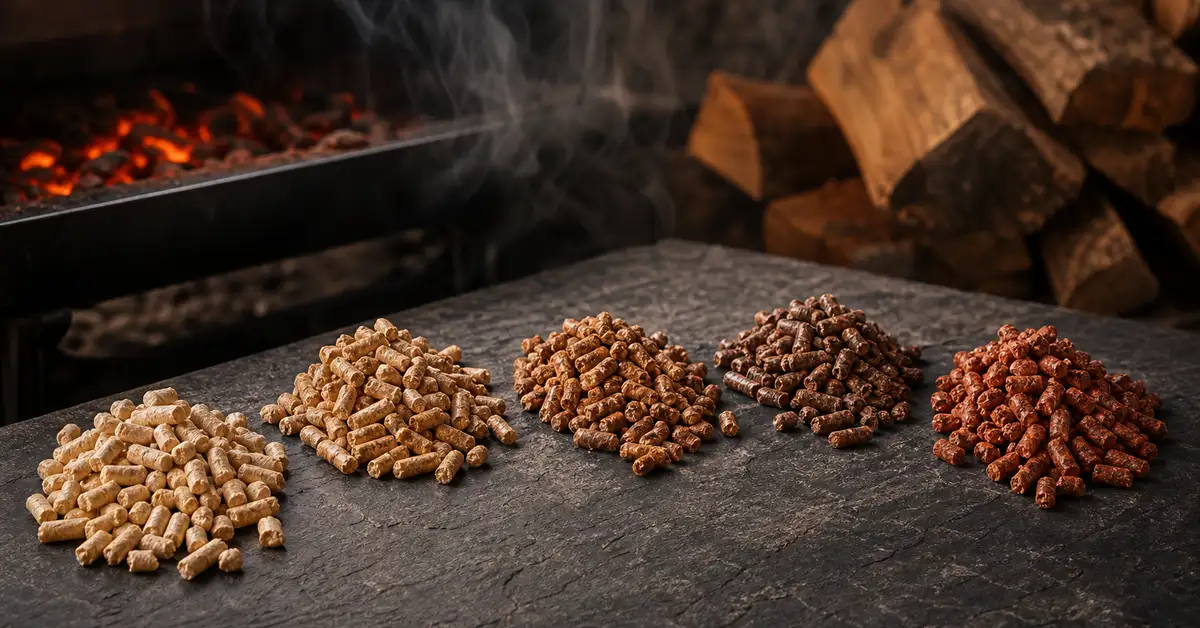
What matters when you’re choosing pellets
Composition & labeling honesty. Decide whether you want a pure single-species pellet or a versatile blend, then read the label for what it actually says (see above).
Species-to-meat match. Strong woods (hickory, mesquite) suit beef and rich pork; mild fruit and nut woods (apple, cherry, pecan, maple, almond) suit poultry, pork loin and fish; oak sits in the middle as an all-rounder. Our pairing table is below.
Ash, burn & pellet size. Kiln-dried, low-moisture pellets burn cleaner with less ash; bark-inclusive pellets (like Lumber Jack) give bolder smoke but can leave more ash. Smaller, uniform pellets tend to feed better and jam augers less.
Food-grade, no fillers. Reputable BBQ pellets are 100% hardwood with no oils, glues or binders. Never use heating-stove pellets in a grill — they can contain softwoods, additives or contaminants that aren’t food-safe.
Price per pound, bag size & storage. Over a season, fuel can rival the grill’s cost. Bigger bags (25–40 lb) usually cost less per pound — but only if you store pellets dry, because moisture ruins them.
Wood-to-meat pairing at a glance
| Wood | Smoke strength | Great with |
|---|---|---|
| Hickory | Strong, bacon-like | Beef brisket, ribs, pork shoulder |
| Mesquite | Very strong, earthy | Beef, Texas-style cuts |
| Oak | Medium, balanced | Almost anything; great all-rounder |
| Apple | Mild, sweet | Poultry, pork loin, ham, fish |
| Cherry | Mild–medium, sweet | Poultry, pork; adds color |
| Pecan | Mild, sweet, nutty | Pork, poultry, baking |
| Maple | Mild, lightly sweet | Bacon, ham, poultry |
| Alder | Mild, slightly sweet | Fish, light meats (often a base wood) |
| Almond | Mild–medium, nutty | Pork, poultry, specialty cooks |
The 13 best wood pellets for smoking in 2026
Ranked for a typical US backyard cook, but every entry says exactly who it’s for — jump to the flavor and budget that fit your cooking.
Transparency first: This guide contains affiliate links. If we’re enrolled in an affiliate program, we may earn a commission at no extra cost to you — it never affects how we research or rank. Read our full affiliate disclosure policy.
1. Bear Mountain Gourmet Blend
What it is: a versatile, mid-priced all-natural hardwood blend from a long-running Pacific-Northwest pellet maker, part of a huge flavor lineup.
Best for: the household that cooks a bit of everything and wants one reliable bag that won’t overpower lighter meats.
Why we rate it: it balances bold, clean smoke with a steady burn, handles beef, pork, poultry and veg, and Bear Mountain’s range (apple, cherry, hickory, mesquite, oak, pecan plus craft blends) means you can branch out without changing brands.
Watch-outs: like most blends it leans on base woods, so it’s versatile rather than a pure single-species hit.
The pellets: all-natural hardwood blend · all-round flavor · ~20 lb bags · Price band: under $50
2. CookinPellets Perfect Mix & 100% Hickory
What it is: an enthusiast brand built on transparency — the Perfect Mix (hickory, cherry, hard maple, apple) and a true 100% Hickory, both explicitly with no oak, no alder, no filler.
Best for: cooks who want real species character and honest labeling, and don’t mind buying big 40 lb bags.
Why we rate it: the 100% Hickory delivers pronounced, traditional smoke and bark for brisket, ribs and pork shoulder; the Perfect Mix is a richer-than-apple, lighter-than-hickory everyday blend. Low moisture, high BTU, minimal dust.
Watch-outs: premium price per pound; the pure hickory can be too strong for delicate poultry.
The pellets: true single-species + no-base-wood blend · strong, clean smoke · 40 lb bags · Price band: under $50
3. Lumber Jack Char Hickory
What it is: an enthusiast favorite that includes bark and cambium (not just core wood) for stronger smoke; the Char Hickory blends hickory, oak and charcoal.
Best for: cooks who find mainstream pellets too mild and want charcoal-like intensity and deep bark on beef and pork.
Why we rate it: owners consistently praise robust smoke and, thanks to a smaller pellet size, fewer auger jams and reliable feeding. Lumber Jack is also openly honest that it uses an oak or alder base by region.
Watch-outs: bark content can mean more ash — expect a bit more cleaning.
The pellets: bark-inclusive, small pellet · bold/char smoke · Price band: under $50
4. Green Mountain Grills Premium Texas Blend
What it is: an aromatic blend of black oak, American hickory and a hint of Texas mesquite, kiln-dried with no additives.
Best for: cooks who want robust, Texas-style smoke that still behaves on poultry, fish and veg.
Why we rate it: oak gives a stable backbone, hickory adds smoke, and just enough mesquite brings regional character without turning harsh — a genuinely versatile “one bag” blend sold in a large sack.
Watch-outs: mesquite fans wanting maximum punch may want to add a stronger pellet.
The pellets: oak/hickory/mesquite blend · robust but balanced · large bag · Price band: under $50
5. Traeger Signature Blend
What it is: Traeger’s all-purpose hickory-maple-cherry blend, part of a wide, food-grade hardwood range (Signature, Hickory, Mesquite, Apple, Cherry, Pecan and more).
Best for: Traeger owners and beginners who want a familiar, forgiving, widely-stocked pellet.
Why we rate it: reliable burn, easy to find anywhere, and a safe all-round flavor for mixed menus — a sensible baseline you can build from.
Watch-outs: some enthusiasts find the smoke milder than niche brands; usable in any pellet grill, not just Traeger.
The pellets: all-purpose hardwood blend · mild-medium · ~20 lb bags · Price band: under $50
6. Camp Chef Competition Blend & Oak
What it is: kiln-dried, ultra-low-moisture 100% hardwood pellets — a versatile Competition Blend plus a true 100% Oak option.
Best for: cooks who want clean, long burns and either a balanced blend or a dependable all-purpose oak.
Why we rate it: owners praise consistent smoke and low ash; the 100% Oak is a steady, forgiving everyday wood, and Camp Chef states its pellets work in any pellet grill.
Watch-outs: the oak’s medium intensity can read as mild if you were hoping for heavy smoke.
The pellets: kiln-dried blend + 100% oak · clean, low-ash · ~20 lb bags · Price band: under $50
7. Kingsford Grillmaster’s Choice
What it is: a hickory-oak-cherry blend from the charcoal giant, sold in a big 25 lb bag with 100% natural hardwood and no fillers, oils or additives.
Best for: everyday grillers who want dependable, widely-available fuel at a friendly price per pound.
Why we rate it: hickory for smoke, oak for a stable burn, cherry for a touch of sweetness — a clean-burning all-rounder in a value bag size.
Watch-outs: smoke is milder than specialist pellets; great for routine cooks, less so for heavy-smoke competition briskets.
The pellets: hickory-oak-cherry blend · 25 lb bag · clean burn · Price band: under $50
8. Pit Boss Hardwood Pellets
What it is: US-made 100% natural hardwood pellets, free of oils, glue and chemicals, in classic woods and competition blends.
Best for: budget-conscious cooks and Pit Boss owners who want simple, affordable, widely-stocked fuel.
Why we rate it: dependable everyday performance and value, easy to grab at big-box stores, with enough flavor variety for most cooks.
Watch-outs: like most mainstream brands it uses base woods in blends; smoke intensity is moderate.
The pellets: 100% natural hardwood · everyday value · Price band: under $50
9. Weber Hickory All-Natural Hardwood Pellets
What it is: Weber’s 100% all-natural hickory pellets, marketed as “0% fillers, 100% flavor,” in 20 lb bags.
Best for: cooks (especially Weber pellet-grill owners) who want a straightforward, bold, bacon-like hickory smoke.
Why we rate it: a clean, no-nonsense hickory with good burn performance and Weber’s reliability, ideal for ribs, brisket and pork shoulder.
Watch-outs: a relatively new pellet line, so less reviewed than specialist brands; hickory can overpower delicate meats.
The pellets: all-natural hickory · bold smoke · 20 lb bags · Price band: under $50
10. Jealous Devil Jax Legendary Blend
What it is: a premium cherry-maple-hickory blend, 100% natural hardwood with no fillers, binders or additives, engineered for minimal ash.
Best for: flavor-focused enthusiasts who want a sweet-but-structured smoke and easy cleanup.
Why we rate it: cherry and maple bring aromatic sweetness while hickory adds backbone, so it flatters poultry and ham yet still handles richer cuts — from a brand with a strong charcoal pedigree.
Watch-outs: premium price and sometimes limited to online/specialty retailers.
The pellets: cherry-maple-hickory blend · low ash · Price band: under $50
11. Knotty Wood 100% Almond
What it is: genuinely 100% pure almond-wood pellets, sourced from California orchards — a true single-species pellet with a distinctive profile.
Best for: cooks who want a sweet, nutty smoke for pork and poultry and something different from the usual hickory or fruitwoods.
Why we rate it: a mild, nutty character that burns hot and clean, with no base wood or fillers — a favorite for those chasing a signature flavor.
Watch-outs: some owners report clinkers/ash build-up, so clean the firepot regularly; premium price.
The pellets: 100% pure almond · sweet, nutty · 20 lb bags · Price band: under $50
12. Bear Mountain Apple & Cherry (single-species)
What it is: Bear Mountain’s single-wood Apple and Cherry pellets, for cooks who want a predictable, gentle fruit smoke.
Best for: chicken, turkey, pork loin, ham and fish — and smoked desserts.
Why we rate it: apple gives mild, sweet smoke; cherry is a touch stronger and adds appealing color. Clean burn and ash levels in line with other mid-tier pellets.
Watch-outs: too mild on their own for heavy beef; many cooks mix in a little hickory for balance.
The pellets: single-species fruitwood · mild, sweet · ~20 lb bags · Price band: under $50
13. Smokehouse Oak & Hickory Blend
What it is: pure-hardwood pellets from a brand focused solely on smoking products, with no artificial flavors or preservatives; the oak-hickory blend is its recommended starter.
Best for: first-time smokers who want a forgiving, balanced smoke across proteins and veg.
Why we rate it: oak’s stability plus hickory’s character make an easy, rich-but-not-overwhelming everyday pellet from a trustworthy hardwood specialist.
Watch-outs: less widely stocked than the big-box brands; may need ordering online.
The pellets: pure oak-hickory blend · balanced, forgiving · Price band: under $50
Burning these in? See our guides to the best pellet grill & smoker combos and best electric smokers, and pair them with a wireless meat thermometer. Cooking on charcoal or gas instead of a pellet hopper? See our guide to the best wood chips & chunks for smoking, browse the rest of our accessories & consumables guides, or season it right with one of our best BBQ rubs and seasonings.
Frequently asked questions
Are “flavored” pellets really 100% that wood?
Often no. Many pellets labeled “apple” or “cherry” are “100% hardwood” but built on an oak or alder base with the named wood added for flavor. That’s food-safe and burns consistently, but if you want pure species character, look for pellets that specifically say “100% [species]” — like CookinPellets 100% Hickory or Knotty Wood 100% Almond.
Can you mix different pellets in the same hopper?
Yes. Mixing food-grade hardwood pellets is completely safe and a great way to tune flavor — for example, blending strong hickory with milder apple or cherry. Just never mix in heating-stove pellets, which aren’t food-safe.
Do wood pellets go bad, and how should I store them?
Pellets don’t rot, but moisture ruins them — they swell, crumble and won’t feed or burn properly. Keep them in a sealed container in a dry, cool spot, and don’t leave them sitting in the hopper between cooks, especially in humid weather.
Can I use heating-stove pellets in a pellet grill?
No. Heating pellets are made for furnaces and may contain softwoods, recycled wood, bark with dirt, or adhesives — none of which are food-safe. Always use food-grade BBQ pellets, even though heating pellets might physically fit the hopper.
Do I have to use my grill brand’s pellets?
No. A few brands suggest their own pellets for best results, but virtually any quality, food-grade hardwood pellet works safely in any pellet grill. Most owners happily mix brands to chase specific flavors or better prices.
Which wood should I use for which meat?
As a rule of thumb: hickory and mesquite for beef and rich pork; oak as an all-round middle ground; and mild fruit or nut woods (apple, cherry, pecan, maple, almond) for poultry, pork loin, ham and fish. See the pairing table above for a quick reference.
How much ash do pellets make — is low ash always better?
Ash depends on species, bark content and manufacturing. Kiln-dried, clean pellets (e.g. Green Mountain, Camp Chef) tend to burn low-ash; bark-inclusive pellets (e.g. Lumber Jack) give bolder smoke but a bit more ash. Low ash means less cleaning, but some of the best-flavored pellets trade a little extra ash for stronger smoke. Either way, clean the firepot regularly.
How we choose
We don’t run a testing lab, and we never fake “as tested.” For this guide we combined manufacturer disclosures, reputable BBQ editorial and aggregated owner-review patterns, paid special attention to honest labeling (100% hardwood vs. 100% of the named species), and screened every brand against the US CPSC recall database in an October 2026 search. We use qualitative price bands rather than prices that go stale. Read more on the How We Choose page.
Sources
Manufacturer product pages: Bear Mountain BBQ, CookinPellets (Perfect Mix; 100% Hickory), Lumber Jack, Green Mountain Grills (Premium Texas Blend), Traeger, Camp Chef, Kingsford (Grillmaster’s Choice), Pit Boss, Weber, Jealous Devil (Jax), Knotty Wood, Smokehouse. Editorial and owner-review coverage: SmokedBBQSource, AmazingRibs, HeyGrillHey and specialist pellet reviews. Safety: U.S. Consumer Product Safety Commission (CPSC) recall database (October 2026 search; no recall found for any recommended wood pellets). Details were current at the time of research (2026); confirm specifications and current bag sizes with the manufacturer before buying.