Short answer: a warm brush-off after every cook is the habit that prevents almost every grate problem — but the right tool and the right deep-clean method depend entirely on what your grates are made of. Porcelain-enameled cast iron (most Weber grills) wants a nylon or brass brush and a baking-soda soak, never a metal scraper. Bare cast iron wants a warm brush and a light re-oiling, never a long soak. Stainless steel is the most forgiving of the three.
Most “how to clean grill grates” advice treats every grate the same way, and that’s exactly where it goes wrong: a scraper that’s fine on stainless can chip porcelain enamel, and a soak that’s fine on stainless can rust bare cast iron. Here’s the honest, material-first routine, plus what to do if you’re already looking at rust.
The three grate materials, at a glance
| Material | Routine clean | Deep clean / rust | Notes |
|---|---|---|---|
| Bare cast iron | Brush warm, wipe, re-oil | Steel wool + re-season from scratch | Never soak; re-season after any rust removal |
| Porcelain-enameled cast iron (incl. most Weber) | Nylon or brass brush only, warm | Baking-soda paste soak, no metal scraper | Chipping the enamel exposes bare metal to rust — treat any chip as an enamel problem, not a scrub-harder problem |
| Stainless steel | Brush + wipe, any direction | Degreaser soak, grain-direction scrub | Most forgiving material; still avoid steel wool if a brushed finish matters to you |
How to clean grill grates, step by step
1. Identify your grate material first
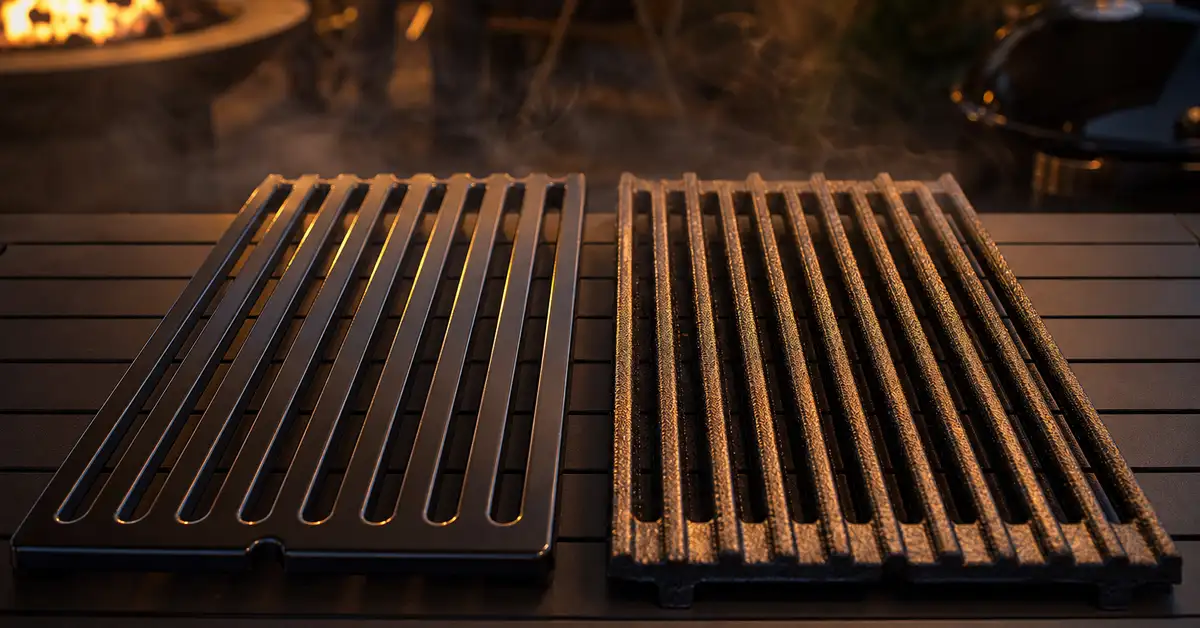
Check your owner’s manual or look at the finish: a glossy, dark, glass-like coating is porcelain enamel (used on most Weber grates and much mid-range/premium gas grill hardware); a matte, slightly rough dark-gray surface with no coating is bare cast iron; a bright, silvery finish is stainless steel. This decides which cleaning method is safe — don’t skip it.
2. Routine clean: brush warm, right after every cook
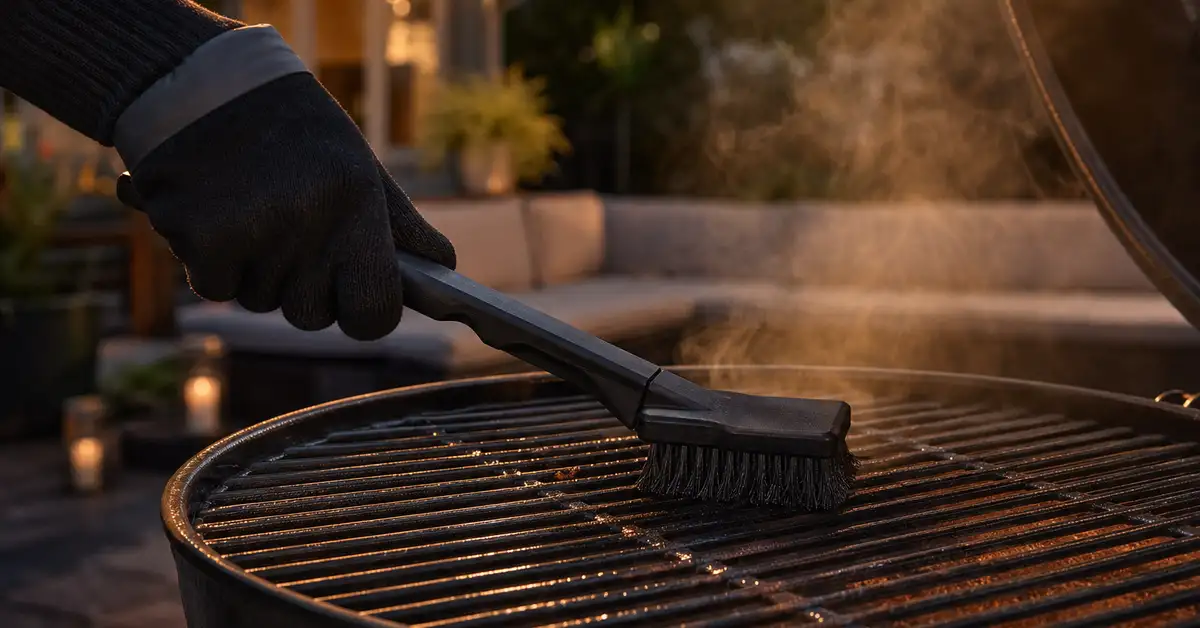
While the grate is still warm (not hot to the touch), brush it with a bristle-free brush — nylon or brass for porcelain enamel and stainless, a ball of foil or a bristle-free brush for bare cast iron — then wipe with a clean, lightly oiled cloth. Warm residue lifts far more easily than cold, hardened residue, which is why this step matters more than any deep-clean product.
3. Deep clean, porcelain-enameled cast iron: baking-soda paste, no metal scraper
For heavier buildup, make a paste of baking soda and water (or use a grate cleaner made for porcelain enamel), let it sit for a few minutes on the cooled grate, then scrub with a nylon or soft abrasive pad — never a metal scraper or wire brush, which can chip the enamel. Manufacturer care guidance for porcelain-enameled cast-iron grates centers on a hot preheat plus a stainless-steel-bristle grill brush for routine use; if you’d rather avoid any metal bristles at all given the wire-bristle recalls below, a nylon or brass brush plus the baking-soda paste for stuck-on buildup gets the same result more cautiously.
4. Deep clean, bare cast iron: brush and re-oil, never soak
Brush off carbon buildup while the grate is warm, wipe with a dry cloth, then apply a thin coat of high-smoke-point oil and wipe back the excess — the same thin-coat principle as initial seasoning. Never leave a bare cast iron grate soaking in water or a sink full of soapy water; standing moisture is exactly what starts rust on unprotected iron.
5. Deep clean, stainless steel: degreaser soak, scrub with the grain
Stainless tolerates the most: a degreaser soak for heavy grease, then scrub in the direction of the brushed-metal grain rather than across it if you want to keep the factory finish looking even. Stainless has no coating to protect, so it’s the one material here where a metal brush genuinely won’t damage the grate itself — the ingestion hazard below still applies to the brush, though.
6. Rust removal: check bare metal vs. coated metal before you scrub
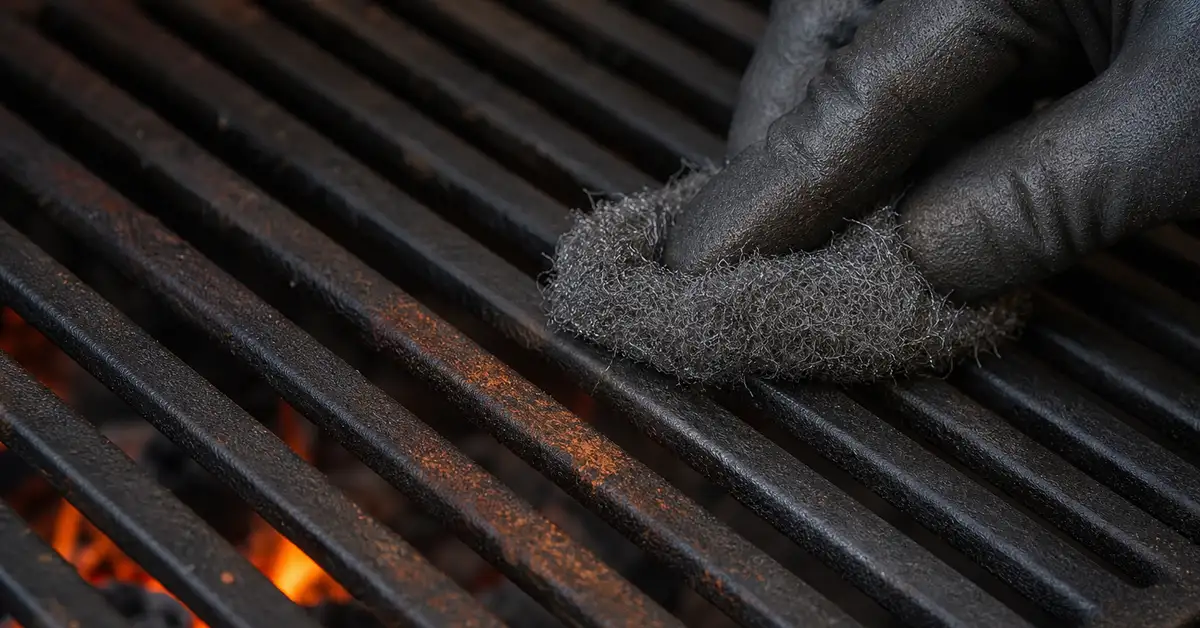
This is the fork most cleaning guides skip. On bare cast iron, rust is a normal maintenance event: scrub the rusty area with fine steel wool or a stiff brush until you’re back to clean metal, wipe it down, then re-season that area (thin oil coat, baked on) before your next cook. On porcelain-enameled grates, surface rust almost always means the enamel has chipped and exposed bare metal underneath — treat it as a coating problem, not a “scrub harder” problem. Gently clean the immediate area and keep it dry between uses, but understand that a chip won’t heal the way reseasoned cast iron does; a growing rust spot on porcelain enamel is when it’s worth planning a replacement grate rather than continuing to fight it.
7. What never to use, regardless of material
Skip oven cleaner and harsh chemical degreasers on porcelain enamel — they’re formulated for bare metal surfaces and can degrade an enamel coating over repeated use, even though the coating looks tough. And regardless of grate material, treat any wire-bristle brush with caution: see the safety section below before you reach for one.
8. How often, really: routine every time, deep clean seasonally
The honest answer isn’t “clean thoroughly every time” — it’s a warm brush-off after every cook (always), and a proper deep clean only seasonally, or as soon as you notice heavy carbon buildup or the first sign of rust. Treating every cook like it needs a full deep clean is more effort than the grate actually needs.
Safety: wire-bristle brushes, harsh chemicals and hot grates
Wire-bristle grill brushes are a real, documented ingestion hazard — the U.S. Consumer Product Safety Commission (CPSC) has recalled metal wire-bristle grill brushes from multiple major brands over exactly this problem: small metal bristles can detach, stick to the grill or to food, and pose a serious ingestion hazard that has sent consumers for emergency medical treatment. Weber recalled over 3.2 million metal wire-bristle grill brushes in February 2026, Nexgrill recalled over 10.2 million in March 2026, and Conair/Cuisinart’s recall was expanded to roughly 3.6 million brushes in August 2026 — all three for the identical detached-bristle hazard. The CPSC’s standing guidance is to stop using metal wire-bristle brushes and switch to a non-wire alternative (nylon brush, brass brush, a bristle-free scraper, or a ball of foil), and to visually check any brush you already own for loose or missing bristles before every use.
Skip harsh oven cleaners and aggressive chemical degreasers on porcelain-enameled grates — they’re made for bare metal and repeated use can degrade the enamel coating rather than help it. And handle any grate labeled “warm, not hot” literally: let a grate cool enough to touch briefly before you start scrubbing, to avoid a burn.
The gear that makes it easier
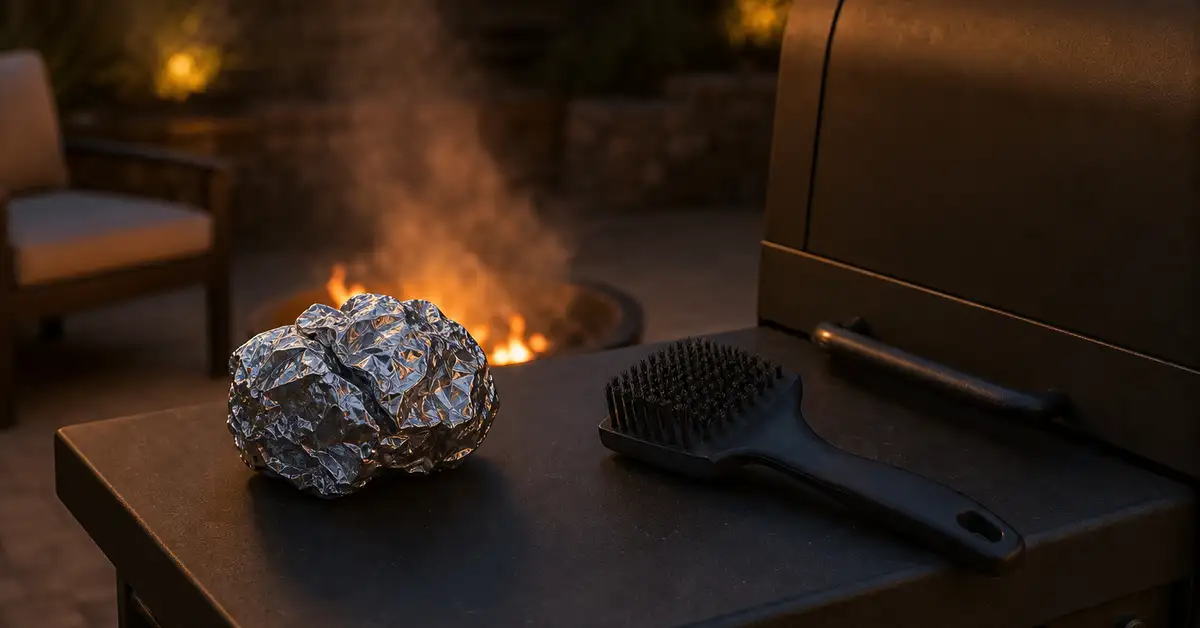
A bristle-free brush — nylon for routine cleaning, brass if you want a bit more scrubbing power without risking a wire brush’s ingestion hazard — covers most of what this guide asks for. A ball of foil handled with tongs works in a pinch on any material.
Transparency first: This guide contains affiliate links. If we’re enrolled in an affiliate program, we may earn a commission at no extra cost to you — it never affects how we research or rank. Read our full affiliate disclosure policy.
Check bristle-free grill brushes on Amazon →
Related guides
Grate looking too far gone to save? See our best grill grates guide for replacement and upgrade picks organized by grill family. New grate on the way, or just picked up a grill? See how to season a grill (and new grates) for the material-first seasoning routine that pairs with this one. This page covers the grates specifically — for the rest of the grill (exterior, burners, grease tray), see our how to clean a grill routine. Our How We Choose page explains the research behind every recommendation on this site.
Frequently asked questions
How do I clean grill grates without a wire brush?
Use a nylon or brass bristle-free brush for routine cleaning while the grate is still warm, and a baking-soda paste soak (porcelain enamel) or a light re-oiling (bare cast iron) for deeper buildup. A ball of foil handled with tongs also works on any material in a pinch.
Are wire-bristle grill brushes actually dangerous?
Yes. The CPSC has recalled metal wire-bristle grill brushes from Weber (February 2026), Nexgrill (March 2026) and Conair/Cuisinart (expanded August 2026) after bristles detached, stuck to food, and were swallowed — some cases required medical treatment to remove them. The standing guidance is to switch to a non-wire alternative and inspect any brush you keep for loose bristles before every use.
Can I use a metal scraper on porcelain-enameled grill grates?
Avoid it. Metal scrapers and wire brushes can chip the porcelain enamel coating, and once it’s chipped, the exposed bare metal underneath is prone to rust. A nylon or brass brush plus a baking-soda paste for stuck-on buildup is the safer routine.
How do I get rust off cast iron grill grates?
Scrub the rusty area with fine steel wool or a stiff brush until you’re back to clean bare metal, wipe it down, then re-season that spot with a thin coat of oil baked on before your next cook. This is normal, expected maintenance for bare cast iron, not a sign the grate is ruined.
My porcelain-enameled grate has a rust spot — is it ruined?
Rust on a porcelain-enameled grate almost always means the enamel coating has chipped and exposed bare metal underneath — it’s a coating problem, not something you can scrub and re-season the way bare cast iron rust works. Keep the area clean and dry between uses; if the rust spot keeps growing, plan on replacing the grate rather than continuing to fight it.
Can I use oven cleaner on my grill grates?
Skip it on porcelain-enameled grates specifically — harsh oven cleaners and aggressive chemical degreasers are formulated for bare metal and can degrade an enamel coating with repeated use. A baking-soda paste is a gentler, effective alternative for stuck-on buildup.
How often should I deep clean my grill grates?
Brush the grate warm after every cook — that’s the habit that matters most. A full deep clean (soak, scrub, re-oil) is only needed seasonally, or as soon as you notice heavy carbon buildup or the first sign of rust, not after every single use.
Can I soak my grill grates in water?
It depends on the material. Stainless steel and porcelain enamel tolerate a soak for deep cleaning. Bare cast iron should never be left soaking — standing moisture on unprotected iron is exactly what starts rust, so brush and wipe it instead, then re-oil.
How we choose
We don’t run a testing lab, and we never fake “as tested.” For this guide we combined manufacturer care instructions for porcelain-enameled, cast-iron and stainless grill grates with the U.S. Consumer Product Safety Commission’s current recall database on wire-bristle grill brushes, screened live at build time rather than assumed from memory. Every safety claim is sourced to a named manufacturer or government source below. Read more on the How We Choose page.
Sources
Manufacturer care guidance: Weber — How to Care For Your Cast Iron Cooking Grates, Weber — How to Prevent Rust on Cast Iron Grates, Weber — How to Clean Stainless Steel Grill Grates. Safety: U.S. Consumer Product Safety Commission recall notices — Weber Recalls Over 3.2 Million Metal Wire Bristle Grill Brushes (Feb 2026), Nexgrill Recalls Over 10.2 Million Metal Wire Bristle Grill Brushes (Mar 2026), Conair Expands Recall of Cuisinart Grill Brushes (Aug 2026). Details were current at the time of research (2026); confirm current recall status with the CPSC before assuming a brush is safe.